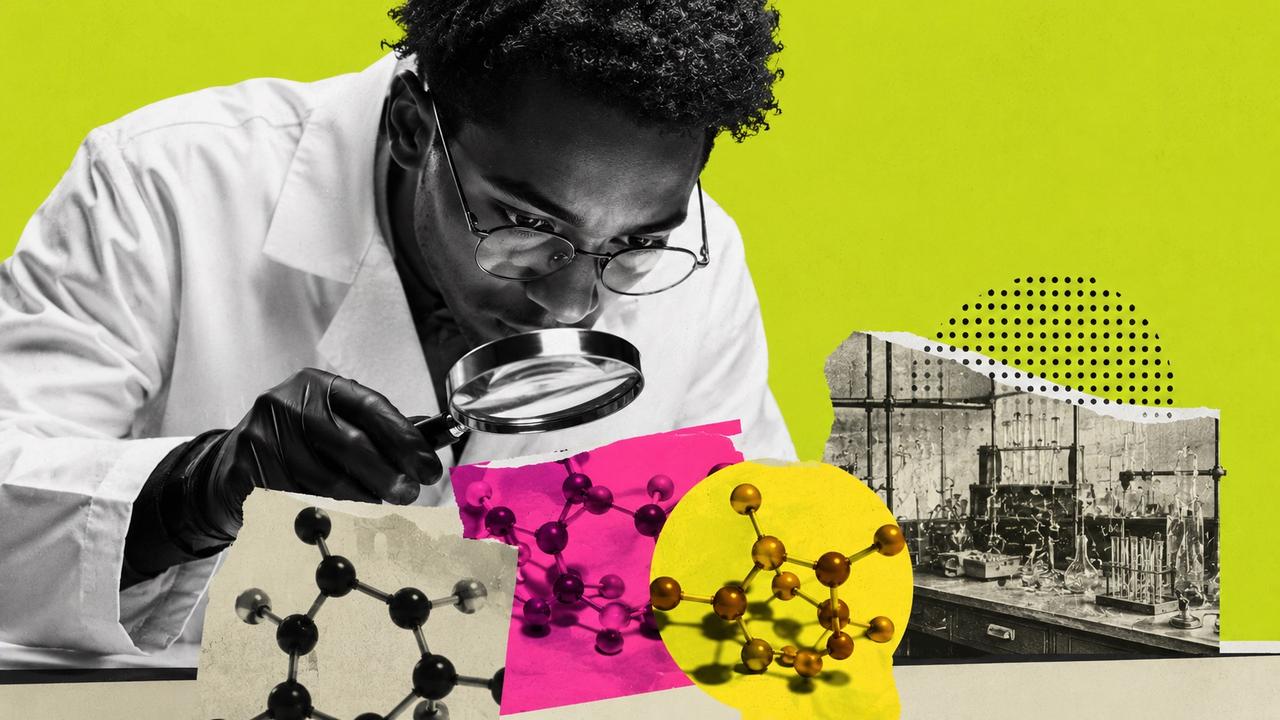
New Generative AI System Inspired by ChatGPT and Dall-E
The pharmaceutical industry has long been a game of expensive attrition, relying on high-throughput screening to sift through libraries of known compounds in hopes of a “hit.” The shift toward generative architectures—treating molecular design as a language problem rather than a search problem—is fundamentally altering the pipeline from discovery to lead optimization.
The Tech TL;DR:
- Shift in Paradigm: Moves from “screening” existing libraries to “generating” novel chemical entities (NCEs) via latent space exploration.
- Architectural Parallel: Leverages transformer-based and diffusion models, analogous to the token prediction in ChatGPT or pixel synthesis in DALL-E.
- Enterprise Impact: Drastically reduces the “wet lab” iteration cycle by filtering candidates in-silico before physical synthesis.
For the uninitiated, the analogy to ChatGPT or DALL-E isn’t just marketing fluff; it’s a description of the underlying tensor mathematics. Just as a Large Language Model (LLM) predicts the next token in a sequence based on probabilistic weights, generative chemistry models treat SMILES (Simplified Molecular Input Line Entry System) strings or 3D atomic coordinates as the “text” of biology. The bottleneck has never been the ability to imagine a molecule, but the ability to ensure that the imagined molecule is synthetically accessible and biologically active without causing systemic toxicity.
The Architecture of Molecular Synthesis: From Tokens to Atoms
The core challenge in generative drug discovery is maintaining chemical validity. A hallucinated word in a chatbot is a quirk; a hallucinated bond in a molecule is a chemical impossibility. To solve this, the industry is moving toward Equivariant Neural Networks and Diffusion models that respect the symmetries of 3D space. Instead of predicting a string of characters, these systems operate within a latent space—a multi-dimensional mathematical representation of chemical properties.

Deploying these models requires massive compute overhead. We aren’t talking about a few T4 GPUs; enterprise-grade molecular generation typically requires H100 clusters to handle the high-dimensional tensors involved in protein-ligand docking simulations. The latency issue here isn’t in the generation of the molecule itself, but in the validation—the compute-intensive process of predicting how a generated molecule binds to a target protein.

“The transition from discriminative AI to generative AI in chemistry is like moving from a library catalog to a 3D printer. We are no longer asking ‘what do we have?’ but ‘what do we need?'”
Because these models generate proprietary chemical structures, the security of the training weights and the resulting datasets is paramount. A leak of a lead candidate’s molecular structure is a catastrophic loss of intellectual property. Firms are increasingly deploying cybersecurity auditors and penetration testers to ensure that the air-gapped environments housing these models are truly isolated from external vectors.
Generative AI vs. Traditional High-Throughput Screening (HTS)
To understand the efficiency gain, we have to look at the throughput metrics. Traditional HTS is a brute-force approach. Generative AI is a targeted strike.
| Metric | Traditional HTS | Generative AI Approach |
|---|---|---|
| Search Space | Limited to physical libraries (~106 to 109 compounds) | Virtually infinite (estimated 1060 drug-like molecules) |
| Iteration Speed | Weeks/Months (Physical assay) | Seconds/Minutes (In-silico prediction) |
| Cost per Lead | High (Reagents, robotics, labor) | Low (Compute costs, GPU electricity) |
| Success Rate | Low (Stochastic “hit” discovery) | Higher (Optimized for specific binding affinity) |
Implementation: Interfacing with Molecular Generators
For developers integrating these generative systems into a pipeline, the workflow typically involves an API call to a model that returns a SMILES string, which is then parsed by a chemistry toolkit like RDKit for validity checks. The following example demonstrates a conceptual cURL request to a molecular generation endpoint, specifying the target protein pocket and the desired molecular weight constraints.
curl -X POST https://api.gen-chem-ai.internal/v1/generate -H "Authorization: Bearer $API_TOKEN" -H "Content-Type: application/json" -d '{ "target_protein_id": "PDB_6M0J", "constraints": { "max_mol_weight": 500, "logP_range": [1.0, 3.0], "rotatable_bonds": 7 }, "sampling_method": "diffusion", "num_candidates": 100 }'Once the SMILES strings are returned, the next step is containerization. To scale these predictions across a cluster, teams are utilizing Kubernetes to orchestrate pods of GPU-accelerated workers that run docking simulations in parallel. This infrastructure is complex and often requires the expertise of specialized software development agencies capable of optimizing CUDA kernels for non-standard biological workloads.
The “Black Box” Bottleneck and ADMET Risks
Despite the speed, the “black box” nature of generative AI introduces a significant risk: the generation of “synthetic nightmares.” These are molecules that look perfect in a simulation but are impossible to synthesize in a lab or, worse, are highly toxic. This is where ADMET (Absorption, Distribution, Metabolism, Excretion, and Toxicity) filters come in.

The current technical frontier is the integration of “Reinforcement Learning from Human Feedback” (RLHF)—similar to how ChatGPT was tuned—but using “Feedback from Wet-Lab Results.” When a generated molecule fails in a petri dish, that data is fed back into the model to penalize that specific region of the latent space. This creates a continuous integration (CI) loop between the digital model and the physical laboratory.
As we scale this technology, the focus will shift from simple generation to “multi-objective optimization.” The goal is no longer just to bind to a protein, but to do so while maintaining SOC 2 compliance for data handling and ensuring the molecule doesn’t interfere with off-target receptors. The trajectory is clear: the “wet lab” is becoming the validation layer for a process that is now primarily a computational engineering problem.
*Disclaimer: The technical analyses and security protocols detailed in this article are for informational purposes only. Always consult with certified IT and cybersecurity professionals before altering enterprise networks or handling sensitive data.*