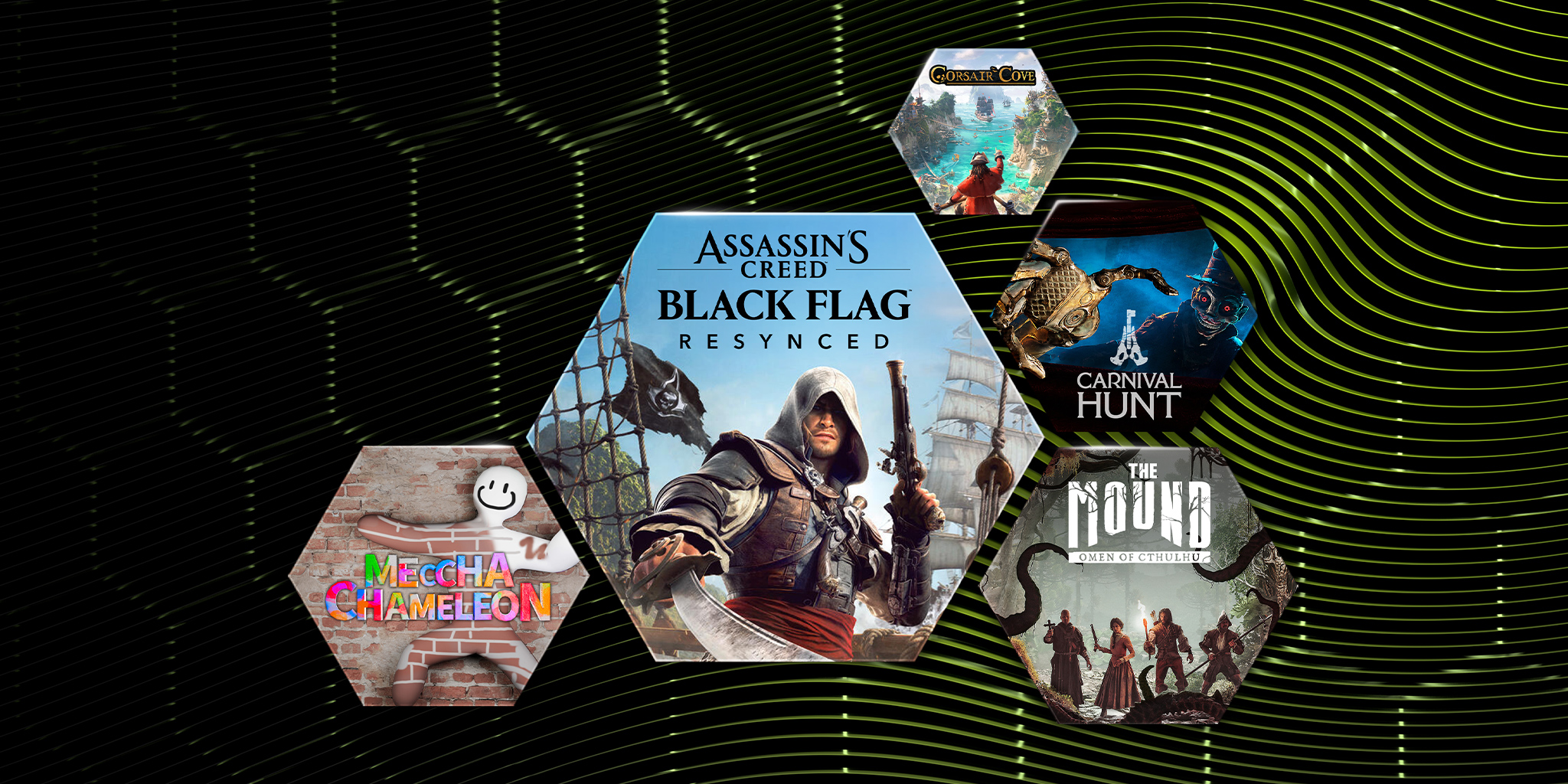
New Games and Summer Savings Coming to GeForce NOW
NVIDIA Expands GeForce NOW Library with 12 New Titles for July 2026
NVIDIA is adding 12 new games to the GeForce NOW cloud streaming service throughout July 2026, headlined by the June 30 release of Monopoly: Star Wars Heroes vs. Villains. The rollout includes a mix of Steam, Ubisoft Connect, and Xbox Game Pass integrations, while the company concludes its “Summer Sale” offering discounts up to $70 on high-tier memberships.
- Deployment: 12 new titles rolling out through July 31, 2026, across Steam, Ubisoft, and Xbox ecosystems.
- Hardware Scaling: Ultimate membership now leverages RTX 4080 and 5080-class GPU instances to minimize input latency.
- Cost Optimization: Final window for Summer Sale discounts ($35 off Performance; $70 off Ultimate annual plans).
The primary bottleneck for cloud gaming remains the “last mile” of connectivity—the physical distance between the user’s endpoint and the NVIDIA edge server. While NVIDIA utilizes DLSS (Deep Learning Super Sampling) and NVIDIA Reflex to mitigate perceived latency, the actual experience depends on the user’s local network stability. For enterprises or home offices experiencing packet loss, deploying a [Managed Network Service Provider] to optimize routing and QoS (Quality of Service) settings is often the only way to achieve the “ultra-low latency” promised by the Ultimate tier.
What is the July 2026 Game Deployment Schedule?
According to official GeForce NOW release notes, the July schedule is staggered by platform and release date. The month began with Monopoly: Star Wars Heroes vs. Villains and Meccha Chameleon, both available as of June 30 via Steam and Ubisoft.

The subsequent production push follows this timeline:
- July 9: Assassin’s Creed Black Flag Resynced (Steam/Ubisoft Connect)
- July 15: Denshattack! (Steam/Xbox Game Pass) and The Mound: Omen of Cthulhu (Steam)
- July 16: Heave Ho 2 (Steam)
- July 17: Fogpiercer (Steam/Xbox Game Pass)
- July 20: ZeroSpace (Steam)
- July 21: The Planet Crafter (Xbox Game Pass)
- July 23: Carnival Hunt (Steam)
- July 30: The Ranchers (Steam)
- July 31: Corsair Cove (Steam/Xbox Game Pass)
This expansion follows a June push that saw 28 total games added, including DOOM Eternal via the Epic Games Store and The Elder Scrolls Online via Xbox. This aggressive library expansion suggests a strategy of diversifying API support to ensure compatibility across various storefronts, reducing the friction of “walled garden” ecosystems.
How the RTX 5080 Tier Solves Hardware Bottlenecks
The “Ultimate” membership tier is no longer just about resolution; it is about the compute overhead provided by RTX 4080 and 5080-class hardware. By offloading the render pipeline to these high-TFLOPS GPUs, NVIDIA removes the need for local hardware upgrades. However, shifting to a cloud-based GPU creates a new vulnerability: the endpoint security. As users stream high-fidelity data to low-powered devices, the risk of man-in-the-middle (MITM) attacks on the stream increases. Firms are increasingly hiring [Cybersecurity Auditors] to ensure that home-office endpoints used for both gaming and corporate work are properly segmented via VLANs.
To understand the performance delta, consider the architectural shift from the Performance tier to the Ultimate tier:

| Feature | Performance Tier | Ultimate Tier |
|---|---|---|
| GPU Class | RTX-Powered (Standard) | RTX 4080 / 5080 Class |
| Key Tech | Standard DLSS | DLSS 3.x + NVIDIA Reflex |
| Latency | Standard Cloud Lag | Ultra-Low Latency Path |
| Target Hardware | Low-power PC, Mac, Mobile | High-end Display/Handhelds |
For developers testing the integration of these services or managing cloud-based assets, the interaction often occurs via API calls to the storefronts. While NVIDIA manages the stream, the session authentication typically flows through OAuth2 protocols. A typical request to verify a user’s library status might look like this in a development environment:
curl -X GET "https://api.storefront.com/v1/user/library/verify?game_id=monopoly_sw"
     -H "Authorization: Bearer YOUR_ACCESS_TOKEN"
     -H "Content-Type: application/json"
Comparing Cloud Gaming Architectures: NVIDIA vs. Competitors
Unlike some competitors that rely on custom-built, low-spec hardware (like the early iterations of Stadia), GeForce NOW functions as a virtualized PC. It essentially spins up a Windows-based instance with a high-end GPU. This allows for a more seamless “continuous integration” of existing Steam and Xbox libraries.
Tech Stack Comparison
- GeForce NOW: Virtualized x86 architecture; leverages NVIDIA’s proprietary CUDA cores for ray tracing and DLSS. High compatibility with existing PC binaries.
- Xbox Cloud Gaming (xCloud): Based on custom Xbox Series X hardware. Highly optimized for the Xbox ecosystem but limited to the Game Pass library.
- PlayStation Plus: Focused on legacy console emulation and specific PS5 streaming, with a more closed ecosystem regarding third-party PC launchers.
The “Ultimate” tier’s use of NVIDIA Reflex is a critical architectural choice. By reducing the time it takes for a mouse click to register as a pixel change on screen, NVIDIA is attacking the “input lag” problem that has historically plagued cloud gaming. According to NVIDIA’s official Reflex documentation, this is achieved by optimizing the render queue and reducing system latency.
The Economics of the “Summer Sale”
NVIDIA is currently leveraging a pricing strategy to lock in annual users. The Summer Sale offers $35 off the 12-month Performance membership and $70 off the 12-month Ultimate membership. This move is designed to increase the LTV (Lifetime Value) of the customer by shifting them from monthly churn to annual commitments.

One community member reported a significant drop in monthly costs, noting that their rate decreased from approximately 29 CAD to 17 CAD after applying the annual discount. For users on a budget, this makes high-end RTX performance accessible without the $1,500+ capital expenditure of a new GPU. However, for those whose hardware is simply failing—such as overheating laptops or corrupted SSDs—a [Computer Repair Specialist] is still required to ensure the local endpoint can actually handle the stream without thermal throttling.
As we move toward 2027, the trajectory of GeForce NOW suggests a move toward “invisible hardware.” The goal is a world where the local device is merely a thin client, and the entire compute stack—from the NPU to the GPU—resides in a SOC 2 compliant data center. This shift will likely force a total redesign of how we think about local device security and network architecture.
Disclaimer: The technical analyses and security protocols detailed in this article are for informational purposes only. Always consult with certified IT and cybersecurity professionals before altering enterprise networks or handling sensitive data.