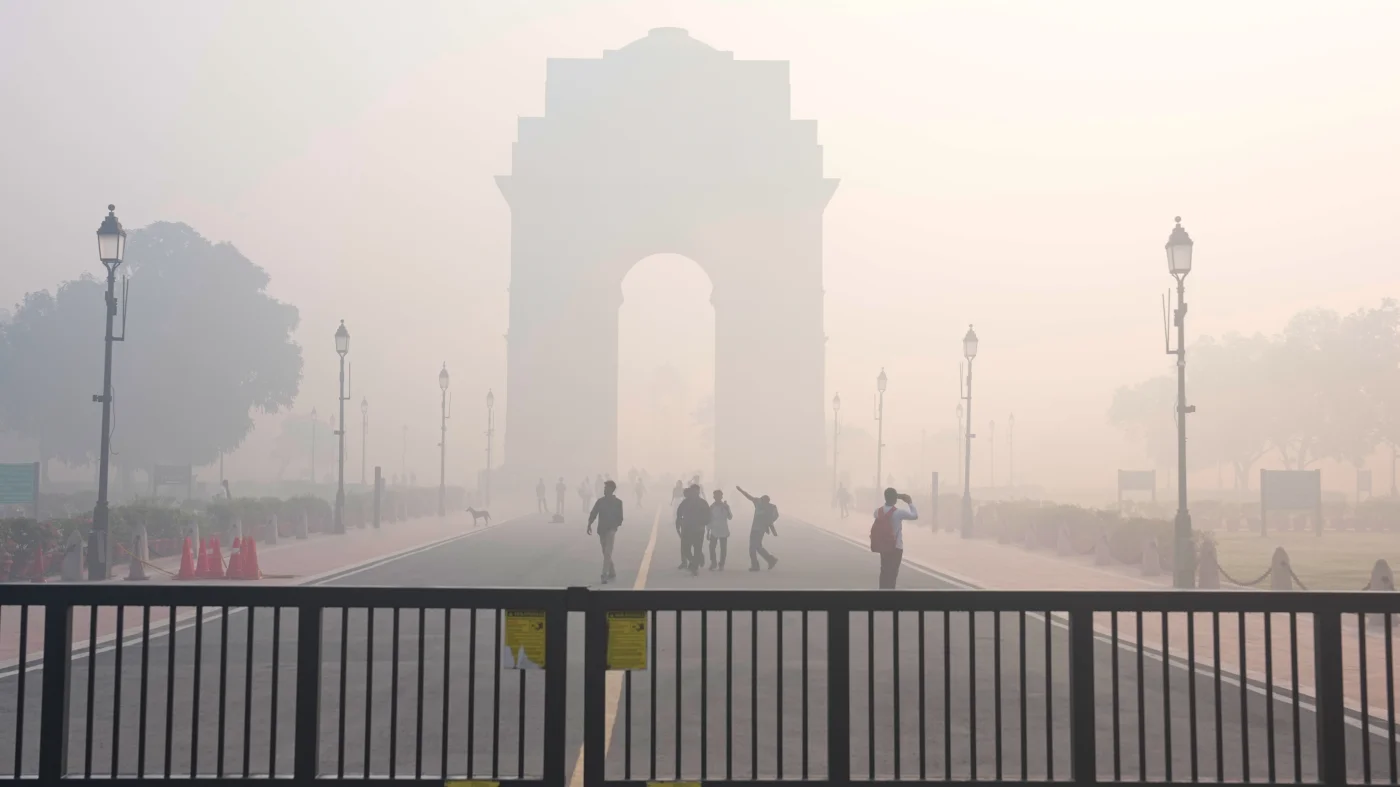
New Delhi Hit by Severe Smog and Toxic Air After Diwali Firecrackers
An air quality index exceeding 350 enveloped India’s capital on Monday morning, npr.org reported, as a thick blanket of smog settled over the city following Diwali celebrations.
Residents in New Delhi lit firecrackers on Sunday evening during the Hindu festival of lights, releasing smoke and fine particulate matter into the atmosphere, npr.org reported. Monitoring stations across the city recorded alarming pollution levels, while visibility deteriorated as a gray haze blanketed streets and high-rise buildings.
India’s Supreme Court had sought to limit Diwali pollution in October by restricting conventional firecrackers. The court allowed only approved green firecrackers under specified conditions for three-hour windows on Saturday and Sunday.
These specialized crackers produce fewer emissions but are not pollution-free, according to npr.org reporting. They still release particulate matter and other pollutants, adding to the city’s already hazardous air.
Isyad, a New Delhi resident who uses one name, described the physical toll of the toxic air to npr.org.

“Because of the pollution there is irritation in the throat and itching in the eyes,” he said.
During the winter months, New Delhi along with its surrounding metropolitan area—supporting a population exceeding 30 million—frequently places among the most heavily polluted regions globally. As reported by npr.org, the air quality deteriorates further when festive Diwali fireworks coincide with dropping temperatures and smoke drifting from agricultural stubble burning in the neighboring states of Punjab and Haryana.
After harvesting rice, farmers often burn leftover stalks to clear their fields for the next planting season. That smoke drifts toward New Delhi, compounding pollution from vehicles, industries, construction dust, and other local sources.
The problem becomes particularly acute in late October and November. Cooler temperatures, low wind speeds, and stagnant atmospheric conditions prevent pollutants from dispersing, causing a thick haze to linger over the capital and surrounding areas for days.
As noted by npr.org, municipal officials in New Delhi have rolled out various tactics to tackle the smog—such as capping construction work and placing bans on diesel generators—while the judiciary has pursued limitations on firecrackers.
According to Shweta Narayan, a public health specialist associated with the Global Climate and Health Alliance who spoke with npr.org, addressing this recurring annual emergency requires sustainable remedies like transitions to cleaner energy and tougher regulations on vehicular exhaust. She characterized the administration’s actions thus far as reactionary and short-term.

“A lot of interventions happen only because the government is pressured or pushed in a corner to do something,” she said.
Coverage from energy.economictimes.indiatimes.com noted that the pollution crisis intensified early Monday as the thick smog blanketed New Delhi following the fireworks displays.