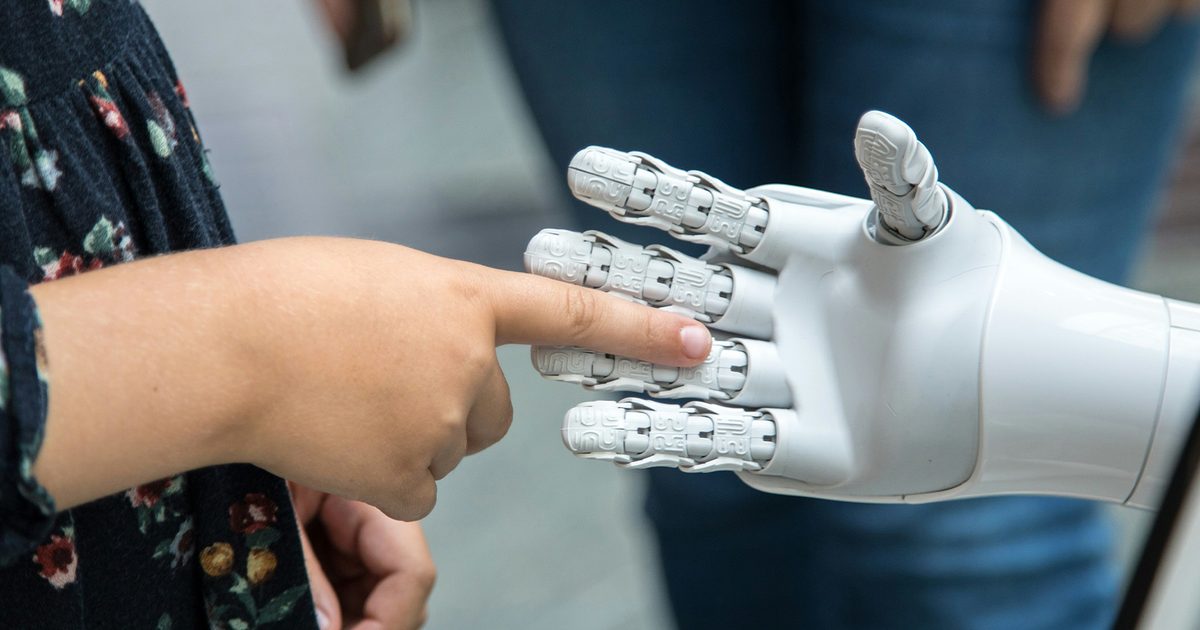
New Color-Changing Tactile Sensor Lets Robots See Touch
Researchers have developed a tactile sensor that allows robots to “see” touch by utilizing color-changing materials, effectively offloading the computational burden of touch processing to the physical hardware. According to reports from Digital Trends and Tech Xplore, this system translates mechanical pressure into visual data, enabling high-resolution touch perception without the latency associated with traditional electronic sensor arrays.
- Zero-Compute Sensing: Pressure is converted to color shifts, allowing standard cameras to interpret touch without complex tactile processing algorithms.
- Latency Reduction: By removing the need for massive data throughput from electronic skins, robots can react to physical contact in real-time.
- Hardware Integration: The system leverages existing computer vision pipelines, reducing the need for specialized NPU (Neural Processing Unit) hardware for haptic feedback.
The primary bottleneck in robotic dexterity isn’t the actuator; it’s the data pipeline. Traditional electronic skins require thousands of individual sensors, each generating a stream of data that must be processed by a central CPU or GPU. This creates a massive I/O bottleneck and introduces latency that makes delicate manipulation—like picking up a grape without crushing it—computationally expensive. As enterprise adoption of collaborative robots (cobots) scales, the need for efficient, low-latency haptic feedback has become a critical priority for [Industrial Automation Consultants].
How the Color-Changing Tactile Sensor Solves the Computational Gap
The new sensor operates on a principle of mechanochromism, where a material changes color in response to physical deformation. Per the technical breakdown provided by Neuroscience News, the sensor converts the magnitude and location of a touch into a specific visual signal. Instead of a robot “feeling” a voltage change, it “sees” a color change via a camera.

This shift moves the processing from the tactile domain to the visual domain. Because modern robots already utilize high-speed computer vision for navigation and object recognition, the tactile data simply becomes another layer of the visual feed. This eliminates the need for a separate, dedicated haptic processing stack, significantly reducing the system’s total power consumption and heat generation.
For developers integrating these sensors into existing ROS (Robot Operating System) environments, the data can be treated as a standard RGB image stream. A basic implementation for detecting a color shift in a tactile zone might look like this in Python using OpenCV:
import cv2
import numpy as np

# Define the color range for 'touched' state (e.g., shift to red)
lower_red = np.array([0, 100, 100])
upper_red = np.array([10, 255, 255])

def detect_touch(frame):
    hsv = cv2.cvtColor(frame, cv2.COLOR_BGR2HSV)
    mask = cv2.inRange(hsv, lower_red, upper_red)
    touch_intensity = np.sum(mask) / mask.size
    return touch_intensity

# Integration with robot control loop
while True:
    frame = camera.read()
    if detect_touch(frame) > 0.1:
        robot.stop_actuator() # Immediate halt on pressure detection
Hardware Benchmarks and Architectural Trade-offs
Comparing this to traditional capacitive or resistive sensors reveals a stark difference in architectural overhead. While electronic skins provide precise voltage readings, they scale poorly as surface area increases. The color-changing approach scales linearly with camera resolution.
| Metric | Electronic Tactile Skin | Color-Changing Sensor |
|---|---|---|
| Data Processing | High (per-pixel voltage polling) | Low (standard image processing) |
| Wiring Complexity | High (complex looms/bus systems) | Minimal (visual line-of-sight) |
| Latency | Variable (depends on polling rate) | Fixed (camera frame rate) |
| Compute Load | Heavy CPU/NPU utilization | Integrated into Vision Pipeline |
The reliance on visual data means that lighting conditions and camera occlusion are the new primary failure points. If a robot’s “view” of its own fingertips is blocked, it effectively becomes numb. This creates a new requirement for specialized lighting and camera placement, a challenge often managed by [Robotics Integration Specialists].
Integration with the Modern AI Tech Stack
This technology aligns with the current trend toward end-to-end learning in robotics. By converting touch to pixels, researchers can use Convolutional Neural Networks (CNNs) or Vision Transformers (ViTs) to interpret tactile data using the same weights and architectures used for visual recognition. This simplifies the software development lifecycle (SDLC), as developers no longer need to maintain separate API layers for haptics and vision.

The deployment of such systems requires rigorous testing for SOC 2 compliance when used in medical or sensitive industrial environments, as the visual feed of the sensor could potentially capture sensitive environmental data. Organizations are increasingly deploying [Cybersecurity Auditors] to ensure that the visual-tactile data streams are encrypted and that the camera feeds do not leak proprietary facility layouts.
Looking at the trajectory of this development, the move toward “zero-computational” sensing suggests a future where the physical properties of materials do the heavy lifting, reducing the reliance on raw teraflops. The next logical step is the integration of these sensors with soft robotics, where the material itself acts as both the actuator and the sensor. For firms looking to pivot their hardware strategy toward these efficiency gains, consulting with [Hardware Engineering Firms] is becoming a prerequisite for maintaining a competitive edge in the automation market.
Disclaimer: The technical analyses and security protocols detailed in this article are for informational purposes only. Always consult with certified IT and cybersecurity professionals before altering enterprise networks or handling sensitive data.