Nevada Solar Panel Recycling Plant Moves to Continuous 24/7 Operation
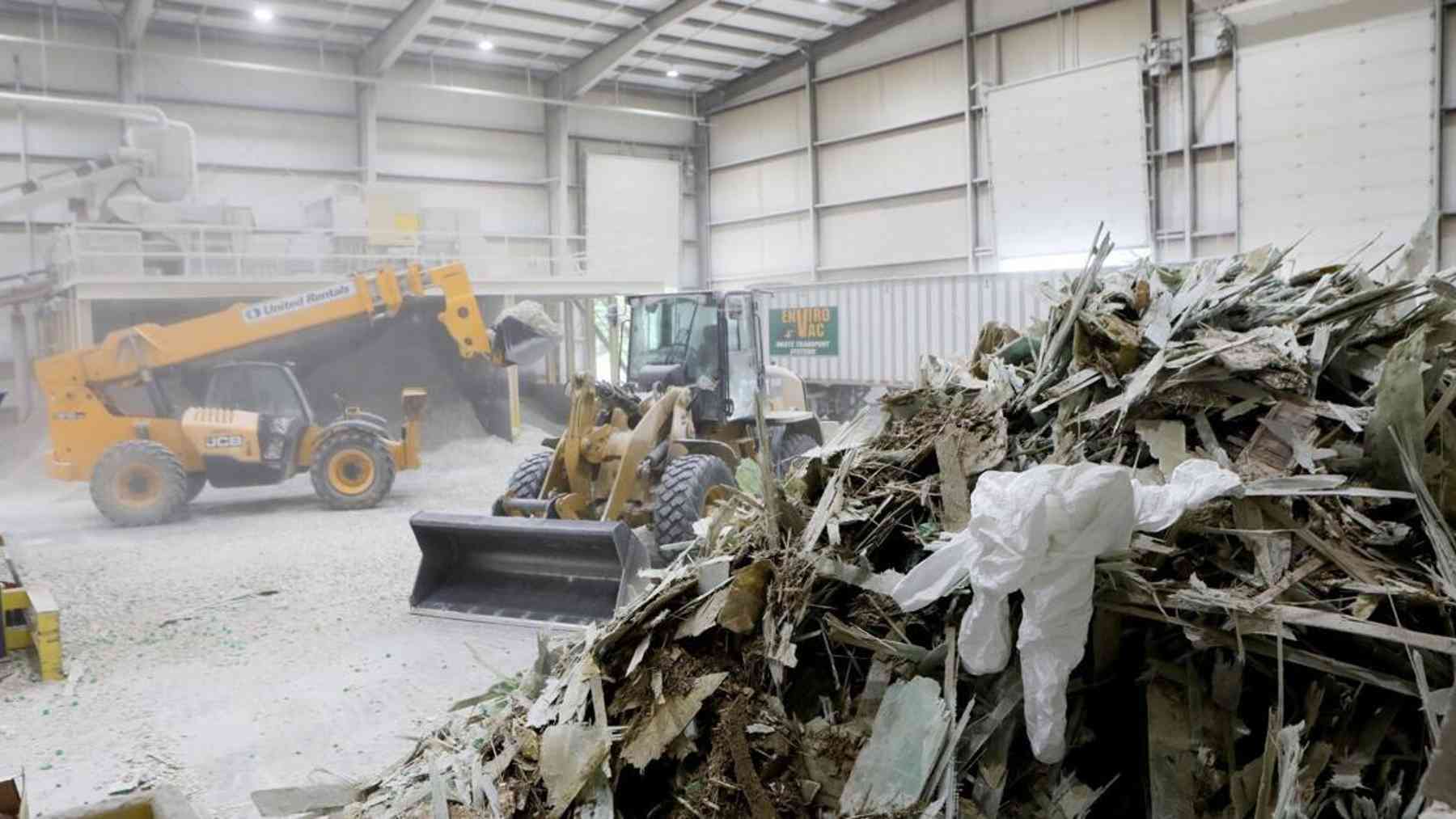
A solar panel recycling facility in Silver Springs, Nevada, has shifted to 24-hour, seven-day-a-week operations to handle a surging influx of decommissioned hardware. The plant is engineered to process approximately 3.3 million panels annually.
The facility tackles the primary hurdle of solar recycling: separating components bonded with heat-sensitive polymers. By utilizing a thermal stage to decompose these adhesives, the plant isolates materials into aluminum, glass, and metal-rich fractions. According to ecoportal.net, this process achieves a zero-landfill model, with plastics broken down into carbon dioxide and water vapor.
Commissioned in August 2026, the plant has undergone a phased transition from individual machine testing to a fully integrated line. Currently, the company is operating at 25 percent of its 100,000-ton annual capacity to ensure system stability. Management plans to ramp up output over the next two years as market activity accelerates. To maintain this continuous workflow, the plant is now staffed by four distinct shift teams.
To feed this pipeline, the company opened collection sites in Hanford, California, and Cambridge, Ohio. These centers aggregate retired panels before shipping them to Nevada, a strategy designed to bypass the industry standard of stripping frames and glass while discarding laminated interiors in landfills or sending them to overseas recyclers.
These facilities serve to collect and prepare the inbound volume, ensuring the Nevada plant has a steady supply of material to process.
The operation’s next phase focuses on the recovery of silver, silicon, and copper from the metal-rich residue. A pilot-scale metals recovery operation is slated for the Silver Springs site, with the goal of achieving continuous, reliable production by the end of 2026. The immediate milestone for this system is a pilot line capable of processing one ton of material daily.
Silver Springs is a census-designated place in Lyon County, Nevada, with a population of 5,629 as of the 2020 census. The area is served by the Silver Springs Airport and features Lahontan Reservoir and Lahontan State Recreation Area nearby, offering recreational opportunities. Its strategic location at the intersection of US 50 and US 95A positions it as a hub for regional connectivity, linking it to major cities like Fallon and Carson City.
The town’s geography includes the Carson River and Lahontan Reservoir, which form the southern and eastern edges of the community. With a total area of 77.1 square miles, 7.15% of which is water, Silver Springs blends natural landscapes with its rural character.
The transition to around-the-clock production marks the end of a lengthy testing period. Initially, engineers commissioned each unit operation individually, including the shredding systems, before finally linking them into a single, integrated production line. This shift represents the transition of the facility from a demonstration project into a fully functioning factory.