
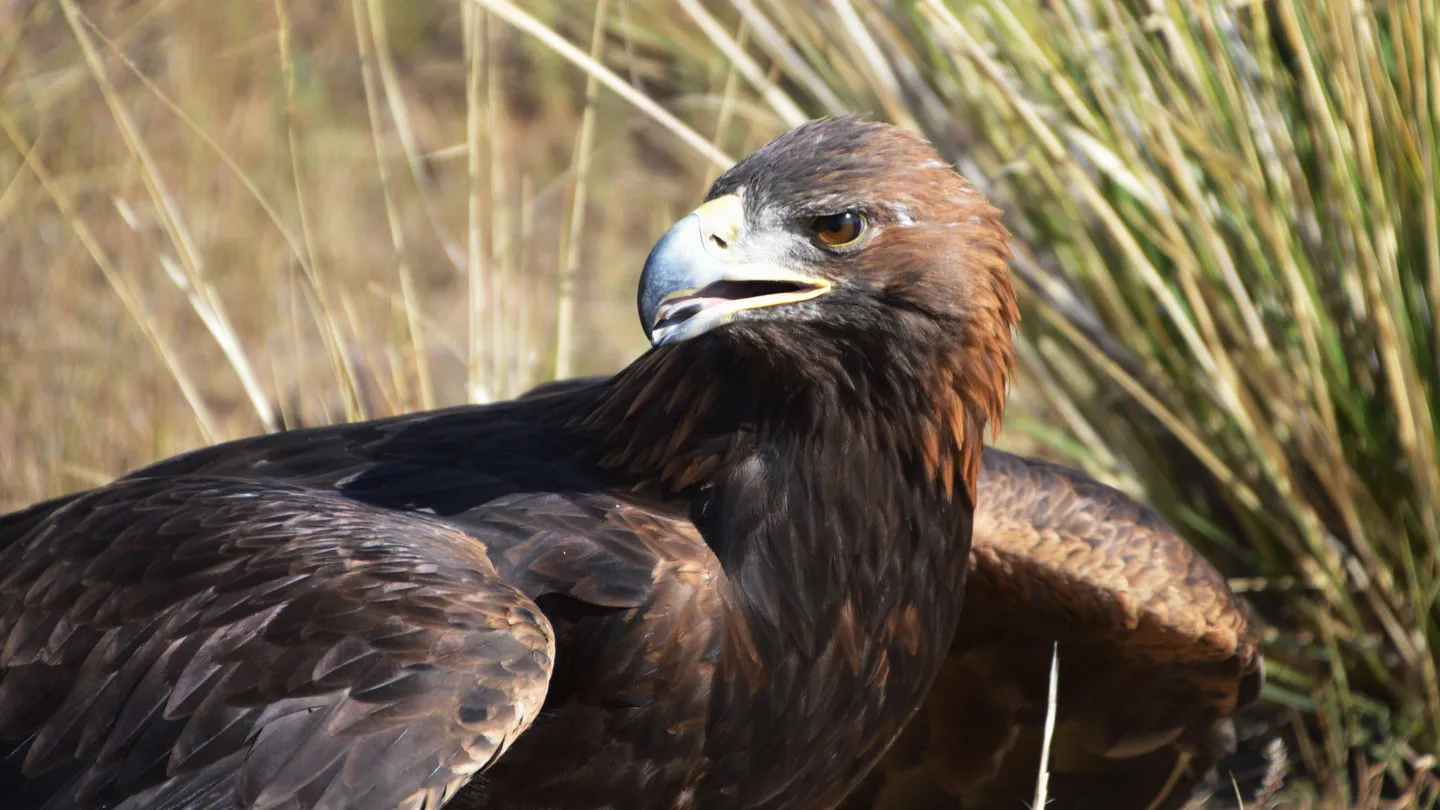
Golden eagles are dying at an alarming rate in Nevada’s Dry Lake Valley, a once-thriving breeding ground north of Las Vegas, with scientists struggling to pinpoint the cause of the escalating mortality. New data indicates the area has become a “population sink,” where eagles arrive to breed and hunt, only to succumb to a variety of threats.
Biologist Joe Barnes, with the U.S. Fish and Wildlife Service, has been tracking the decline. “There’s a 2 percent chance that everyone is happy and healthy, but 98 percent odds that they’re declining and it’s a fairly strong decline,” he said. The valley’s eagle population appears to be spiraling downward, and Barnes estimates a 10 percent loss of the statewide population since 2014, with further losses anticipated.
Tracking the eagles requires a meticulous and challenging process. Scientists rappel down cliffs to reach nests, attaching transmitter-containing backpacks to eaglets. James Golden, a wildlife researcher now at Colorado State University, described the process as requiring “guts,” recalling a particularly windy descent where the team had to assess the safety of young eagles before tagging them. The transmitters allow researchers to monitor the eagles’ movements, speed, direction, and altitude.
The data collected from 43 adult eagles—30 of whom have since died—revealed 18 distinct territories within Dry Lake Valley, a pattern previously obscured by the birds’ elusive nature. Barnes explained that without transmitters, eagles are indistinguishable, and the arrival of new birds to replace those that have died can be mistaken for population stability. “They’re obviously coming from somewhere else,” he said.
While a single cause for the decline remains elusive, a confluence of factors is suspected. Wildfires, prolonged drought, collisions with powerlines, and lead poisoning all contribute to eagle mortality. A recent virus that decimated the rabbit population, a primary food source for the eagles, has led to widespread starvation. Barnes noted that eagles can abstain from breeding for years when conditions are unfavorable, potentially exacerbating the population decline.
The proposed construction of a 104-square-kilometer solar energy field in Dry Lake Valley also raises concerns about habitat degradation. Barnes emphasized the need for careful planning to minimize the impact on the eagle population if the project moves forward.
Barnes recently returned from fieldwork in late January, assessing breeding activity and food sources. Despite observing “very low jackrabbit numbers, poor vegetation growth and extremely dry conditions,” he reported that the eagles continue to persist—for now.
