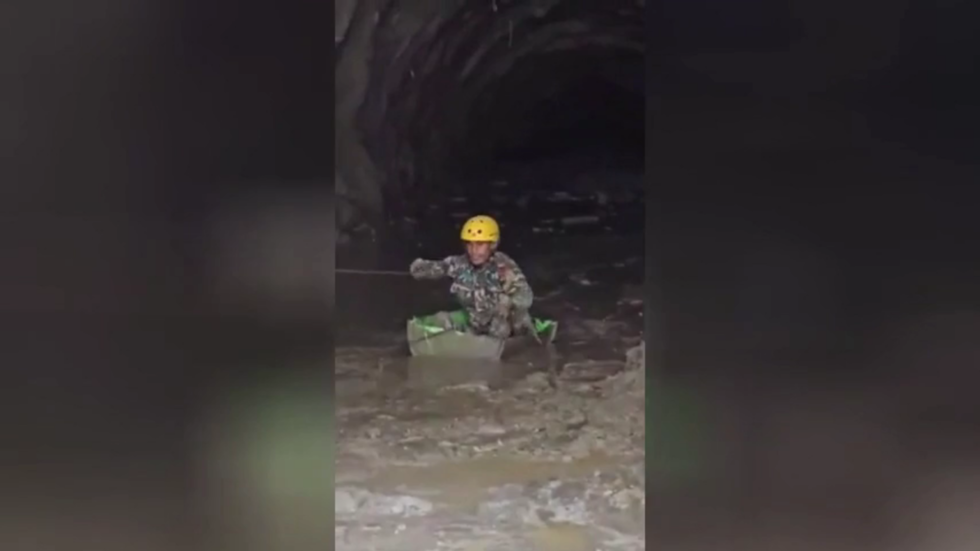
Nepal Flood Death Toll Exceeds 1,000 as Rescuers Race to Reach Workers Trapped in Hydropower Tunnels
Over seven days after the disaster struck the Rasuwa and Nuwakot districts, nearly 4,000 people remain missing, including hundreds of workers trapped inside a vast network of mud-filled hydropower tunnels along the Trishuli River corridor.
The Scale of the Disaster and Underground Rescue Operations
The disaster unfolded when intense monsoon rains triggered massive floods across mountainous river systems, damaging at least 11 hydropower projects either completed or under construction. According to the Independent Power Producers’ Association, Nepal (IPPAN), approximately 900 workers from these sites were initially unaccounted for. Mohan Kumar Dangi, president of IPPAN, estimated that at least 500 of those missing workers may be trapped deep within the infrastructure’s subterranean tunnels.
https://x.com/NDRRMA_Nepal/status/2094718083663552976
Rescuers are racing against time in brutal conditions. Jakob Steiner, a geoscientist at the University of Graz in Austria, noted that these tunnels are large enough to drive trucks through and could theoretically provide safe refuge with accessible oxygen. However, the sheer volume of debris has complicated every phase of the operation. Arnold Dix, a former head of the International Tunnelling Association who has been assisting operations remotely, described the landscape to BBC News as resembling a “lunar landscape” filled with boulders bigger than houses.
The Nepal Army has mobilized more than 21,000 security personnel to spearhead search and evacuation efforts. Specialized international teams—including 24 Indian tunnel-rescue experts, nine Chinese specialists, and personnel from South Korea and Australia—are actively assisting local forces. Rescuers have deployed heavy excavators, rock breakers, and explosives to blast through hillsides and clear blocked access points.
International Response and Logistical Hurdles
The Foreign Ministry reported that approximately 590 foreign nationals from 39 countries are among the missing. Authorities have delivered food, water, and relief supplies via 37 trucks, 37 utility vehicles, and nine helicopter flights to isolated survivors. Nepal has formally requested specialized equipment from international partners, including LiDAR systems, temporary bridge units, freezers, DNA testing kits, and high-capacity drones.

On the northern side of the border, Chinese state media broadcaster CCTV reported that reconstruction efforts are underway to repair roads leading to Gyirong Port, where floodwaters surged two to three meters deep and crippled transit routes.
Prime Minister Balendra Shah addressed the mounting climate crisis in a public statement late Monday, emphasizing that the sheer scale of the disaster points to intensifying risks across the Himalayan region. Navigating the immense logistical hurdles of structural damage requires immediate professional coordination.
Infrastructure Resilience and Recovery
As recovery operations transition slowly toward site rehabilitation, questions regarding the placement and resilience of critical energy nodes remain paramount. Workers clearing mud from damaged stations in Dhading noted that the regional power grid serves over 20,000 residents, underscoring the urgency of structural restoration. Rebuilding critical infrastructure safely demands rigorous compliance and oversight from specialized organizations to safeguard vulnerable mountain communities against future climatic shocks.
https://x.com/anandanepali99/status/2094555355594527016
Families waiting anxiously near project sites continue to demand faster extraction methods as hope dwindles with each passing day. While thousands remain unaccounted for, the joint military and civilian rescue coalition vows to maintain round-the-clock operations until every accessible tunnel and sector has been thoroughly cleared.