
Neanderthals Used Birch Tar as an Antibiotic, Study Finds
Cologne, Germany – An international research team led by the University of Cologne has discovered that birch bark tar, a substance commonly associated with Neanderthal toolmaking, possesses antibacterial properties that may have been intentionally exploited by these early humans for wound treatment. The findings, published March 18, 2026, in the journal PLOS One, offer a new perspective on the medical capabilities of the extinct hominin species.
The research, conducted by scientists from the University of Cologne, the University of Oxford, the University of Liège, and the University of Cape Breton in Canada, focused on analyzing the antimicrobial potential of birch bark tar using production techniques available to Neanderthals based on archaeological records. Birch bark tar, a viscous substance obtained from the bark of birch trees, is frequently found at European Paleolithic sites.
Traditionally, archaeologists have interpreted these finds as evidence of its use as an adhesive for hafting stone tools – a process of attaching different parts together to create a composite tool. However, new ethnographic data from around the globe, combined with increasing evidence of medicinal behaviors and plant use among Neanderthals, prompted researchers to reconsider the material’s functions.
“The interest in exploring the medical use of birch tar arose precisely from that convergence of clues,” explained Tjaark Siemssen, of the Universities of Cologne and Oxford, and lead author of the study. “New studies suggest the tar could have been used for other purposes. Ethnographic findings in global contexts show it also has medicinal applications. Given the increasing evidence of medical behaviors and plant use among Neanderthals, we were interested in exploring birch tar in this context.”
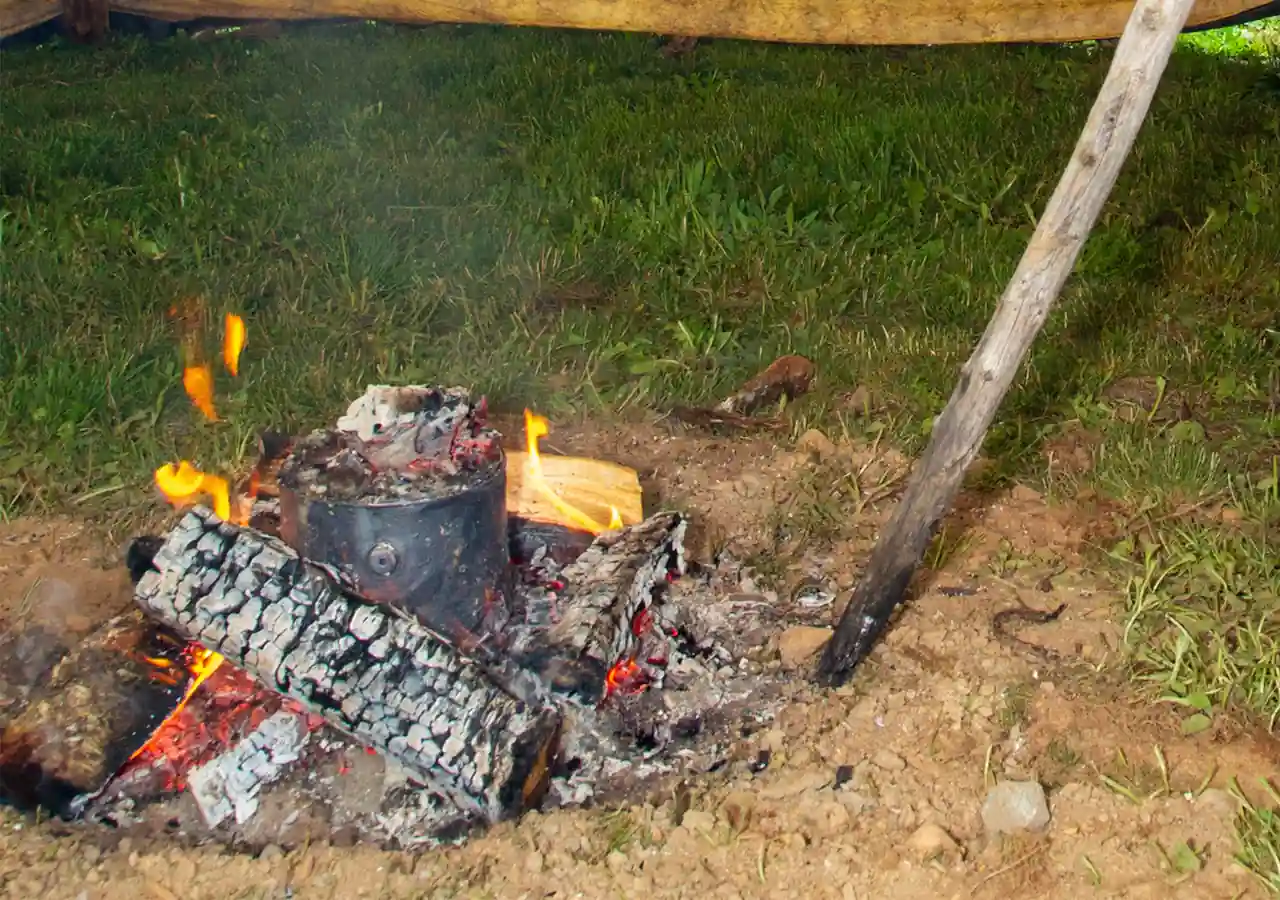
To conduct the research, scientists experimentally produced birch tar using two specific methods documented in the Neanderthal archaeological record. The first involved burying birch bark in a sealed pit underground and subjecting it to combustion in a low-oxygen environment. This dry distillation process allows the bark to decompose without completely burning, leaving behind only the tar. The second technique replicated the burning of bark on a hard surface, such as stone, where the product condensed during the burning process. Both methods utilized birch species that existed during the Pleistocene epoch, ensuring the samples obtained were comparable to those available to Neanderthals.
Once the experimental samples were obtained, researchers evaluated their antimicrobial properties in laboratory conditions. The results were conclusive: all birch tar samples produced using the Neanderthal methods demonstrated a significant ability to inhibit the growth of Staphylococcus aureus, a pathogenic bacterium central to wound infections and currently known for its multi-drug resistance, making it a major global nosocomial pathogen.
The antibacterial efficacy was consistent across all samples, regardless of the production method used, suggesting the antimicrobial properties are inherent to the material itself and not an accidental byproduct of a specific technique. This uniformity leads the authors to suggest that not only the availability of the material, but also its medicinal qualities, may have been a recognized and potentially exploited factor by Neanderthal groups. “The findings indicate that antimicrobial properties already played a role in the time of the early Neanderthals and could have been used intentionally,” Siemssen noted.
The relevance of this study extends beyond archaeology. While the results contribute to a more nuanced understanding of Neanderthal culture, moving away from views that limited their capabilities to purely technical functions, the authors also highlight the importance of these findings in the context of modern medicine. The global increase in antibiotic-resistant bacterial strains has created a growing need to explore new pharmacological sources. The investigation of compounds with antimicrobial properties present in ethnographic contexts, and as demonstrated by this function, even prehistoric contexts, opens avenues for the development of new therapeutic agents.
Siemssen concluded by emphasizing the relevance of this interdisciplinary approach: “Our results show that it may be worthwhile to examine specific-action antibiotics from ethnographic contexts more closely, or, as in this case, also from prehistoric contexts.”
The research provides solid experimental evidence of the medical capabilities of Neanderthals, and establishes a bridge between experimental archaeology and contemporary pharmacology, demonstrating that knowledge of the healing properties of certain natural resources could be much older than previously assumed.