NDR Report: AfD Uses “Neutrality” to Pressure Teachers With 250 Queries
The AfD used terms like “neutrality” in 250 parliamentary queries to pressure teachers between 2017 and today, an NDR report found.
“Oddly enough, the murder threats were much more frequent that week,” said Nicolas Schmelzer, a teacher in the German state of Hesse.
A verification report published by ndr.de on Thursday shows how the Alternative für Deutschland (AfD) has spent roughly a decade putting teachers under pressure in the name of school “neutrality” — and how the word itself, not any law, has become the weapon.
The report at a glance:
- ndr.de’s verification and fact-checking team counted 250 formal parliamentary queries in which the AfD used terms like “neutrality” or the “Beutelsbacher Konsens” against state governments between 2017 and now, often naming individual schools and asking about consequences for named teachers.
- The guideline the party cites most often, the Beutelsbacher Konsens, does not contain the word “neutrality” at all, according to the report.
- An 18-percent share of teachers surveyed in a recent Robert Bosch Stiftung study said they feel unsettled by an alleged neutrality requirement.
A flag in a classroom became a fighting term
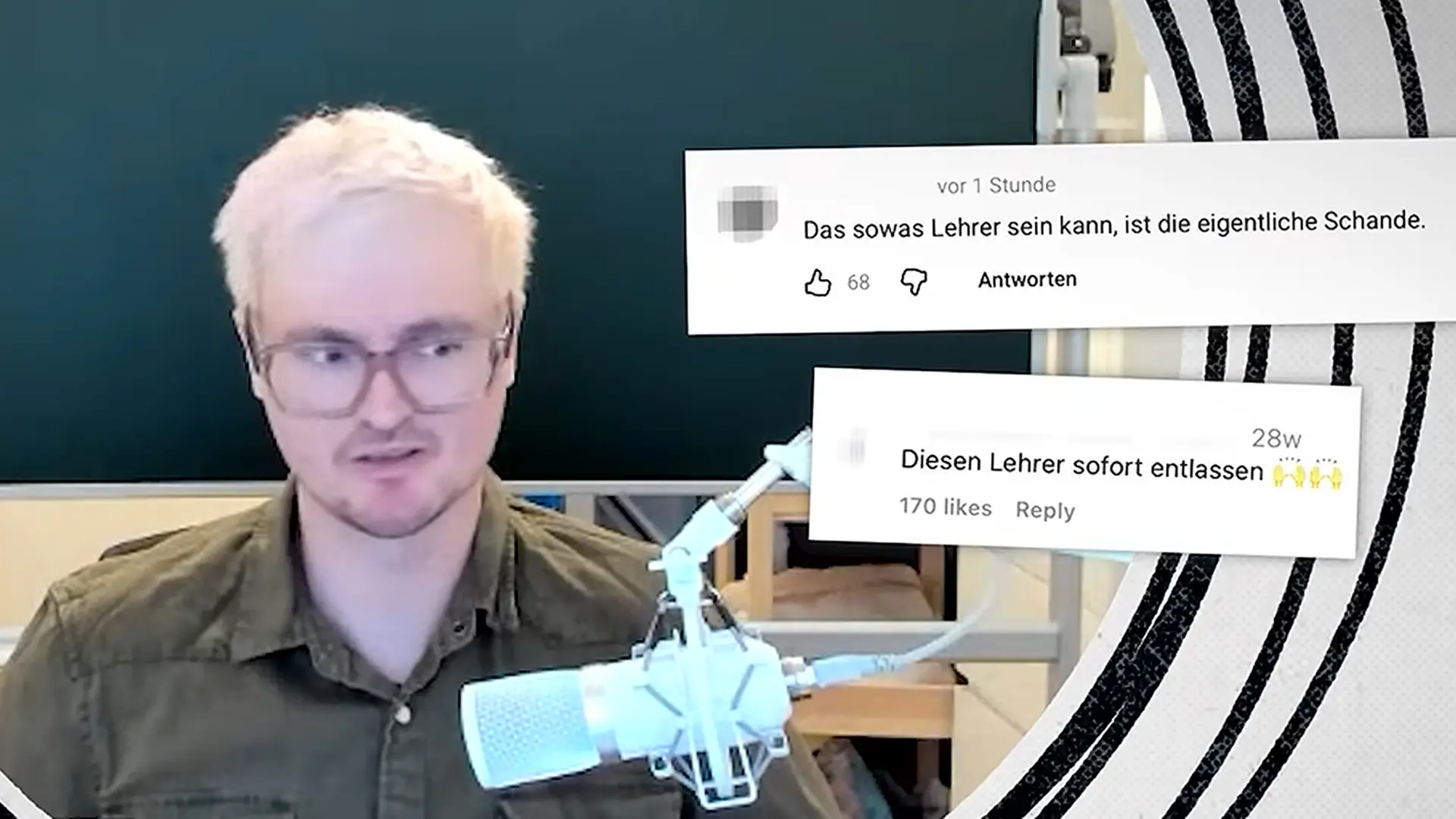
Schmelzer teaches in Hesse and reaches a large audience on TikTok, including with videos on political questions. He told ndr.de he is repeatedly criticized for the rainbow flag hanging in his classroom. “That has become a fighting term: ‘He’s not neutral,’” he said. He reports receiving insults and even death threats.
The pressure is not limited to one teacher. In comments on YouTube and Instagram, and in TikTok videos, students describe teachers who are “too left” and who allegedly violate a “neutrality requirement.” One student says in a TikTok clip cited by ndr.de: “Political education class simply isn’t neutral and doesn’t convey neutrality.” Many users agree with him.
Snitch portals started it, reporter says
The debate is about ten years old, education reporter Bent Freiwald of the platform Krautreporter told ndr.de.
It began with so-called reporting portals — websites with names like “Neutrale Schule” that the AfD set up in several German states. “The idea was that students could quite simply turn to the AfD if they felt their teacher was somehow too left or said something against the AfD, was politically not neutral,” Freiwald said.
Some of those portals were later banned or shut down by the party itself. In Mecklenburg-Vorpommern, one was banned on data-protection grounds. But the term “neutrality” had entered the school-politics debate and stayed there.
250 queries, schools named by name
Since then the party has pushed the demand on several tracks. AfD politician Maximilian Krah mocked “left teachers” in a viral TikTok video: “Your left-wing teacher may not like me. Because: he wants to keep selling you his bullshit.” Politicians including Heiko Scholz and Hans-Thomas Tillschneider repeat the claim in state parliament speeches that schools must be “politically neutral.”
The sharpest instrument, according to ndr.de’s data analysis, is the “Kleine Anfrage” — a formal written query a parliamentary faction can direct at a state government, which must then answer it. Between 2017 and today, the team found, the AfD used words like “neutrality” or “Beutelsbacher Konsens” in 250 such queries, according to Ndr.
The queries often name specific schools and ask what consequences await the teachers involved. The cited cases include a headmaster wearing a rainbow pin and students painting a poster for a climate demonstration.
Asked by ndr.de, the AfD wrote: “Within the pedagogical protective space of the school, teachers must not politically agitate and attempt to win over the students who depend on them for or against a particular political party. That is also what the still-valid Beutelsbacher Konsens says […].”
The consensus never says “neutral”
That citation is the report’s central finding of distortion. The Beutelsbacher Konsens is a guideline for political education drafted in the 1970s that still serves as orientation for all school subjects today.
The word “neutrality” does not appear in it. What it does say, per ndr.de, is that teachers must not overwhelm or indoctrinate students with their own opinions, and that controversial topics must be discussed controversially in class.
Some state school laws do contain a “neutrality requirement,” but it usually concerns religious or party-political neutrality. Under the federal civil-servant status law, teachers must be impartial — they may not act in the interest of individual parties. The same law obliges them, however, to actively stand up for the free democratic basic order.
“Teachers are obliged — by civil-servant law and because they have sworn their oath — to protect the constitution. And they have the pedagogical task of also protecting children affected by hostility toward others,” said Sabine Achour, professor of political education and democracy education at the Free University of Berlin, in the ndr.de report.
Threats, and a fabricated affair
The campaign’s effects on teachers go beyond parliamentary paperwork. In the Robert Bosch Stiftung study cited by ndr.de, 18 percent of teachers surveyed said an alleged neutrality requirement leaves them unsettled.
Schmelzer’s own experience has been more direct: abusive comments under his TikTok videos, and last year the right-wing extremist “Compact” magazine posted a video fabricating an affair between him and a student — and published his school’s email address alongside it.
A word the AfD planted, analyst says
Achour called the framing one of the AfD’s “greatest education-policy successes,” because the term “neutrality” is so easy to attach to almost any classroom situation, ndr.de reported. In her view, the goal is not neutral classrooms at all. “It isn’t about teaching people to think independently and question things — it is really about enforcing an ideology of one’s own,” she said.
The Alternative für Deutschland (AfD) was founded in April 2013 by Alexander Gauland, Bernd Lucke and others, many of them former members of the Christian Democratic Union, originally to oppose Angela Merkel’s eurozone policies — its very name a rejection of her slogan “Alternativlosigkeit,” or “there is no alternative.” From those economically liberal beginnings the party moved steadily rightward, especially after the 2015 refugee crisis, toward opposition to immigration and Islam.
After missing the Bundestag entirely in 2013, it entered the European Parliament in 2014 and became the third-largest party in the 2017 federal election; following the 2025 election it is now the second-largest, with 151 seats. In 2025 the Federal Office for the Protection of the Constitution classified it as a “confirmed right-wing extremist endeavor,” a ruling later suspended by a court injunction.
The AfD declined to respond to ndr.de’s request for comment on that analysis. The party’s own written statement to the outlet stands in the report alongside Achour’s: it insists teachers must not agitate within the school’s “pedagogical protective space,” and points to the Beutelsbacher Konsens — the same document that, as the verification team established, never uses the word on which the campaign rests.