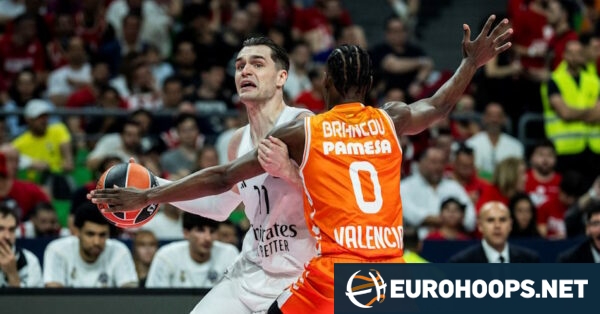
NBA Teams Scramble for Mario Hezonja Amid LeBron Pursuits
Mario Hezonja, the 31-year-old Croatian forward, has emerged as a significant target for multiple NBA franchises following his departure from Real Madrid. With championship contenders actively seeking roster upgrades, Hezonja’s versatile skill set and proven performance in top-tier European competition have made him a focal point of the current NBA offseason market.
Strategic Value in the Modern NBA Rotation
Hezonja’s transition back to the NBA hinges on his evolution as a perimeter threat and his defensive versatility. According to league scouting assessments, his ability to space the floor while providing secondary playmaking aligns with the tactical requirements of teams looking to maximize their championship windows. Unlike his initial stint in the league, Hezonja now brings a refined offensive profile, characterized by improved shot selection and consistent performance in high-leverage situations.
Front-office executives are currently evaluating how his European production translates to the NBA’s pace-and-space metrics. While the jump from the EuroLeague to the NBA requires adjustments in defensive rotation speed and physical conditioning, Hezonja’s experience in high-pressure environments offers a level of readiness that differentiates him from younger, unproven talent. Teams currently pursuing established stars, including those linked to LeBron James, view Hezonja as a high-value acquisition capable of stabilizing a rotation without requiring a significant share of the salary cap.
Financial Implications and Cap Flexibility
The financial landscape for this acquisition is dictated by the current Collective Bargaining Agreement (CBA), which incentivizes teams to find mid-tier contributors who can outperform their contract value. NBA front offices are balancing luxury tax thresholds against the need for depth. Hezonja’s status as a free agent allows teams to integrate him into their roster construction without the friction of trade assets or draft capital expenditure.
For franchises operating near the first or second apron, the efficiency of a veteran contract is paramount. The ability to secure a player with Hezonja’s tactical profile at a manageable price point allows general managers to preserve resources for other roster needs. This fiscal agility is a critical component of the modern championship-building strategy, where depth often proves as vital as top-line talent.
“The market for veteran wings who can shoot and handle is always hyper-competitive. Teams aren’t just looking for raw stats; they are looking for players who understand periodization and the demands of an 82-game season. Hezonja has the physical profile that fits the current wing-heavy tactical trend in the league,” notes a veteran NBA front-office consultant.
The Local Economic Impact of Roster Upgrades
The addition of a high-profile international player like Hezonja extends beyond the stat sheet to the local economy. Franchise investment in roster depth directly influences regional broadcast revenues and stadium attendance. When a team improves its probability of a deep playoff run, the ripple effect is felt in local hospitality, event security, and stadium-adjacent retail sectors.
Professional athletes often require specialized support systems to maintain peak performance during the grueling NBA schedule. While the franchise provides elite training staff, players frequently rely on private specialists for long-term health maintenance. For high-level amateur athletes or those looking to replicate professional standards, engaging with a vetted [Sports Medicine & Physical Therapy Clinic] is essential for injury prevention and structural recovery. Similarly, navigating the complex tax and legal requirements of international professional contracts necessitates professional guidance from a [Sports Contract Law Firm] to ensure compliance and long-term financial stability.
Market Outlook and Competitive Positioning
As the offseason progresses, the competition for Hezonja’s signature remains intense. Teams are weighing his specific fit against their internal depth charts and the potential for mid-season roster churn. The decision-making process is data-driven, utilizing advanced optical tracking and historical efficiency metrics to predict his impact on team-wide offensive ratings.
For the franchises currently in the hunt, the objective is clear: secure a reliable, high-IQ contributor who can survive the rigors of playoff-intensity defense. Whether Hezonja returns to the NBA as a primary rotation piece or a specialized floor spacer will depend on the specific tactical demands of the team that secures his commitment. As rosters solidify, his move will likely serve as a bellwether for how teams value international experience in an increasingly globalized talent market.
Disclaimer: The insights provided in this article are for informational and entertainment purposes only and do not constitute medical advice or sports betting recommendations.