NATO Allies Criticized by US General for ‘Free Riding’ Amid Review of Military Presence in Europe
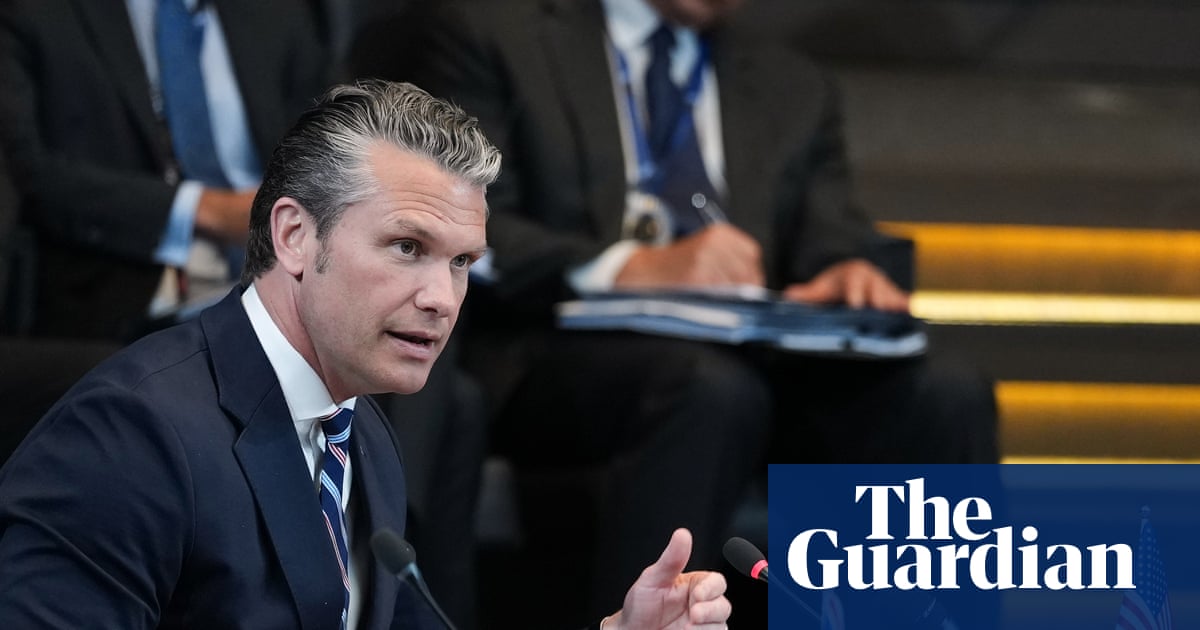
U.S. Secretary of Defense Pete Hegseth initiated a formal six-month review of American military commitments in Europe on June 18, 2026, amid a combative address labeling NATO allies as “free riders.” The policy shift follows sharp criticism of European contributions toward collective defense and specific accusations regarding intelligence-sharing failures.
The Strategic Pivot: Assessing the NATO Review
The Pentagon’s announcement marks a definitive departure from the traditional U.S. security posture in Europe. Secretary Hegseth claims the review is necessary to ensure that American military assets are not being leveraged to subsidize the security of nations failing to meet their financial and operational obligations. This evaluation is not merely a budgetary exercise; it is a fundamental challenge to the post-World War II security architecture defined by the North Atlantic Treaty.

The core of the dispute centers on the discrepancy between U.S. defense spending and that of European counterparts. While NATO guidelines suggest a target of 2% of GDP for defense, Hegseth has signaled that the U.S. may recalibrate its presence based on individual states’ adherence to these metrics and their support for American strategic objectives, such as the recent mission in Iran.
“Free Riding” and the Crisis of Confidence
Hegseth’s rhetoric has intensified, specifically targeting the perceived apathy of European capitals. In his recent address, he explicitly accused several member states of relying on the U.S. military “umbrella” while failing to invest in their own sovereign capabilities. This sentiment is echoed by the administration’s focus on the “shameful” response from allies during the Iran conflict, where the U.S. allegedly bore the brunt of both the tactical and financial burden.

“The era of American taxpayers footing the bill for a collective security apparatus that refuses to take its own defense seriously is coming to a close. We are not a global security service; we are a partner, and partnerships require reciprocity.” — Secretary Pete Hegseth, June 18, 2026.
The geopolitical ramifications are significant. For businesses and international organizations operating across the Atlantic, the uncertainty surrounding U.S. military presence creates a volatile environment. Firms must now account for potential shifts in regional stability that could impact supply chains and logistics. Engaging with [Global Risk Consultancy Services] has become a priority for corporations attempting to quantify the impact of these policy shifts on their European operations.
The Intelligence and Operational Divide
Tensions are not limited to budget sheets. The Telegraph has reported that Hegseth specifically criticized the United Kingdom, alleging that British intelligence failures and operational hesitation placed American personnel at direct risk. This public rebuke suggests that the U.S. review will examine more than just financial contributions; it will scrutinize the efficacy and reliability of intelligence-sharing protocols.
For legal and diplomatic stakeholders, this environment is increasingly complex. The potential for a “de-coupling” of U.S. and European defense interests necessitates a rigorous review of existing international contracts and defense cooperation agreements. Legal professionals specializing in [International Defense and Security Law] are currently advising clients on how to mitigate exposure to shifting treaty statuses and potential export control changes.
Macro-Economic Consequences of Defense Realignment
If the United States follows through on a reduced footprint, the immediate burden of regional security will shift to the European Union. According to data from the Stockholm International Peace Research Institute (SIPRI), a sudden withdrawal or significant reduction of U.S. forces would require a massive, immediate increase in European defense manufacturing and procurement. This transition is not seamless.
Dr. Elena Vance, a senior fellow at the Institute for European Strategic Studies, notes the structural fragility of the current situation:
"The rhetoric from Washington is not just political theater; it is a signal of a long-term strategic retreat. If Europe is forced to bridge the gap left by the U.S. in a period of fiscal austerity, the resulting defense spending will likely come at the expense of social programs and infrastructure investment, leading to potential domestic volatility in several member states."
Operational Stability in an Uncertain Climate
As the six-month review proceeds, the primary concern for both public and private sectors is continuity. Municipalities and regional governments in Europe are already beginning to assess the localized impact of potential U.S. base closures or military drawdowns. For those managing critical assets in proximity to these installations, the need for robust contingency planning has never been higher.

Organizations and private firms should consider the following steps to ensure resilience during this period of geopolitical adjustment:
- Reviewing international service agreements for “force majeure” or political risk clauses.
- Consulting with [Geopolitical Risk Analysts] to model the impact of reduced regional security on local market stability.
- Evaluating the necessity of private security and infrastructure hardening for facilities previously protected by high-level military presence.
The trajectory of the U.S.-NATO relationship is currently at its most precarious point in decades. While the official review is slated for completion in late 2026, the diplomatic fallout is already being felt in Brussels, London, and Berlin. Whether this move acts as a catalyst for European military autonomy or as the beginning of a fractured Western alliance remains the defining question of the current administration. For those tasked with managing the fallout of these high-level decisions, reaching out to [Corporate Crisis Management Specialists] is the most effective way to ensure operational continuity in an era where the old security guarantees are no longer ironclad.
The reality is that the security environment is shifting under the weight of fiscal reality and political friction. As the U.S. pivots toward a “pay-to-play” model of global security, the burden of proof has shifted to the allies to demonstrate their worth—not just in rhetoric, but in resources.