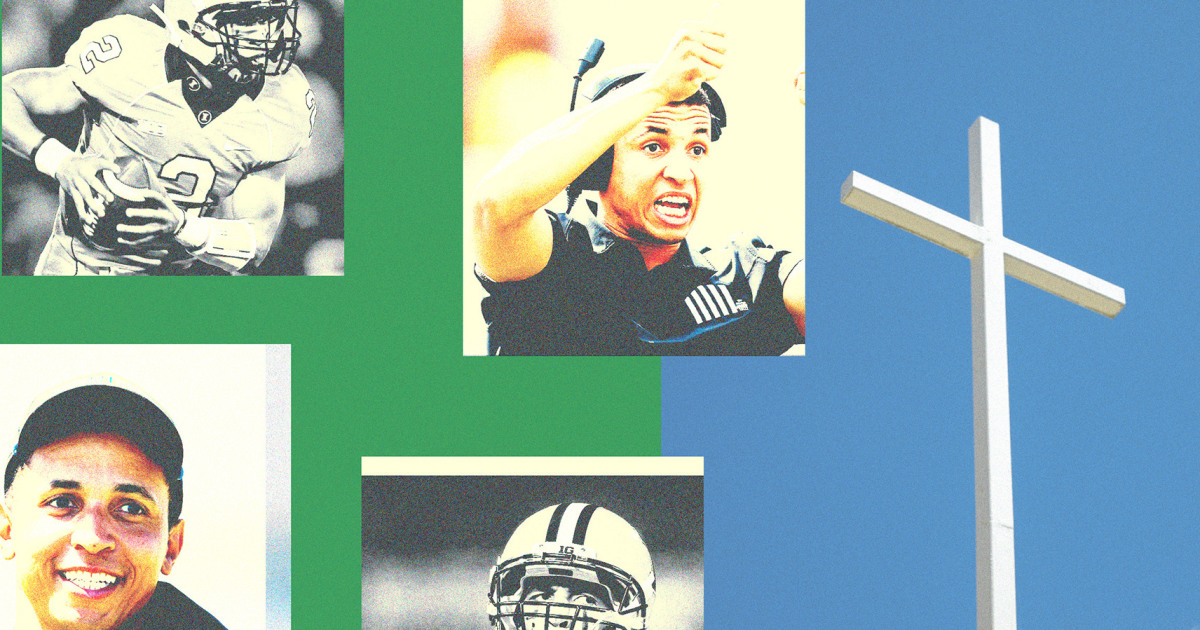
Nate Scheelhaase stepped into LA Rams OC role last winter
When Nate Scheelhaase stepped into the offensive coordinator position for the Los Angeles Rams last winter, he took over one of the most visible coaching roles in professional football without a conventional background in the sport’s traditional coaching ladder, nbcnews.com reported.
From Louisville Megachurch to NFL Sidelines
Fresh out of college after playing four years as a starting quarterback at the University of Illinois, Scheelhaase moved to Louisville, Kentucky, in 2014. He joined the staff at Southeast Christian Church, operating as a youth pastor working with teenagers. During that tenure, he visited dozens of local high schools and volunteered as a chaplain for two high school football teams. His responsibilities focused on building trust and establishing connections, a period he described as an impactful year.
That unconventional entry point stands in contrast to typical professional coaching tracks. Yet Scheelhaase noted that the interpersonal mechanics of ministry share significant overlap with professional sports environments. Meeting individuals from diverse backgrounds and understanding their personal journeys translates directly into the dynamics of a professional locker room, according to comments he made in an interview published by nbcnews.com.
A well-deserved promotion for our new Offensive Coordinator, Nate Scheelhaase! 👏 pic.twitter.com/mpFXVATttO
Historical Intersection of Faith and Football
The crossover between athletic strategy and religious ministry has deep roots in American sports history. Amos Alonzo Stagg studied divinity at Yale and shaped foundational football conventions—such as the huddle, numbered jerseys, and padded goalposts—to fulfill a vision of muscular Christianity. Similarly, James Naismith viewed basketball as a vehicle to embody Christian principles outside the pulpit.
Modern coaching staffs have often reflected this lineage. Rocky Seto spent 16 years on Pete Carroll’s staffs at the University of Southern California and with the Seattle Seahawks before leaving to become a pastor-in-waiting at Evergreen Baptist Church in suburban Los Angeles.
Transition From Mentorship to Coaching
Scheelhaase’s initial post-playing career path did not involve coaching. Following his marriage in late 2013 and encounters with corporate alumni in Chicago, he reached out to Jason Epperson, a local pastor and team chaplain for Illinois football. While serving in Kentucky, he crossed paths with local students, including Nate Hobbs, a future San Francisco 49ers defensive back. Andrew Coverdale, the offensive coordinator at Trinity High School at the time, noted that Scheelhaase approached high school mentorship with confident humility, recognizing the heavy burdens carried by teenagers.
A specific moment during a chapel service shifted his career trajectory. After delivering a speech about his athletic background that drew minimal reaction, he watched the school’s head coach command the room’s attention with a pregame speech. That observation triggered his interest in the distinct influence and impact a coach holds.

Accelerating Through the Ranks
By the start of the 2015 football season, Scheelhaase had joined the Illinois coaching staff to work with running backs.
By 2025, McVay publicly designated Scheelhaase as a special coach and a rising star.
Last winter, while interviewing for head coaching openings, Scheelhaase consulted interim Stanford coach Frank Reich. Reich, who also transitioned from a backup NFL quarterback career to seminary work, pastoral duties, and eventually NFL head coaching, noted the demanding hours shared by both professions. For Scheelhaase, a professional life that once revolved around Sundays in Louisville continues to do so in professional football.