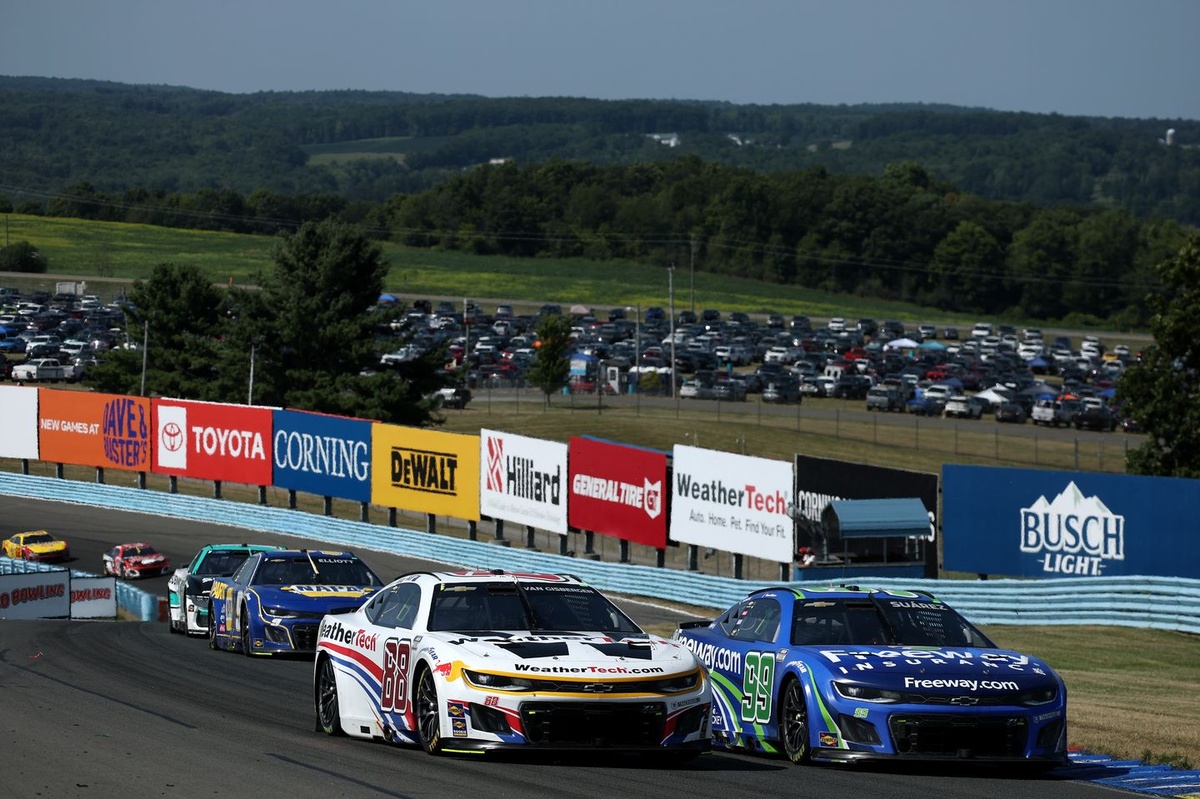
NASCAR to Move Watkins Glen to Fall Chase for 2027
NASCAR is shifting the Watkins Glen International Cup Series date to September 2027, integrating the historic road course into the Chase for the Championship. This move corrects a volatile 2026 spring experiment, aligning the race with peak regional tourism and high-stakes postseason rotation to maximize revenue and competitive tension.
The decision to pivot away from a May date reflects a pragmatic acknowledgment of the logistical and environmental friction inherent to the Finger Lakes region in early spring. For the 2026 season, NASCAR pushed the event into early May—the earliest the series has ever competed at the venue. The result was a clash with the local climate and economic cycle. Snow melt and spring rains transformed campgrounds into mud pits, while the regional tourism infrastructure remained in hibernation. With the main Gorge trail at Watkins Glen State Park typically closed during this window and local residents keeping campers in storage until Memorial Day Weekend, the “May experiment” fundamentally ignored the regional operational reality.
From a business perspective, this scheduling misalignment created a vacuum in local economic activity. When a premier sporting event fails to synchronize with local tourism peaks, the “halo effect” for regional hospitality is severely diminished. To mitigate such losses in future event planning, regional stakeholders often rely on regional event management firms to synchronize race calendars with local infrastructure readiness and tourism windows.
The Strategic Calculus of the Chase Integration
Moving Watkins Glen into the September postseason rotation transforms the event from a standard regular-season stop into a high-leverage playoff battle. Per the current schedule trajectory, WGI is poised to become the only road course featured in the Chase, especially following the removal of the Charlotte Roval from the postseason. This creates a massive strategic imbalance that favors “road course ringers” and specialists, potentially disrupting the championship trajectory for oval-dominant drivers.

In the modern era of the Next Gen car, the ability to maximize stage points on a road course can be the difference between advancing to the next round or facing a points haircut that ends a title run. The technical demands of WGI—high-speed braking zones and precision turn-in—require a specific aero-package setup that differs wildly from the intermediate tracks that dominate the Chase. Teams now face a periodization challenge: they must maintain peak performance on ovals while preparing for a singular, high-stakes road course outlier.
The business implications extend beyond the track. Moving the date to September optimizes gate receipts and sponsorship activations by hitting the region during its peak travel window. However, this shift also necessitates a complete renegotiation of vendor contracts and local lease agreements. Organizations navigating these complex shifts in scheduling often engage specialized sports contract attorneys to ensure that sponsorship obligations and venue agreements are adjusted for the change in seasonal value.
Operational Comparison: May Experiment vs. September Postseason
The following breakdown illustrates the operational and competitive delta between the failed spring experiment and the projected 2027 autumn alignment.

| Metric | May Schedule (2026) | September Schedule (2027) |
|---|---|---|
| Competitive Stakes | Regular Season / Points Accumulation | Chase for the Championship (Playoffs) |
| Environmental Risk | High (Snow melt, spring rains, mud) | Low/Moderate (Stable autumn weather) |
| Tourism Synergy | Poor (Gorge trail closed, low visitation) | Peak (High regional tourism volume) |
| Local Racing Sync | Clashes with Oswego Speedway start | Aligned with regional racing calendars |
| Visual Appeal | Barren trees / Early spring foliage | Peak autumn colors / Full canopy |
The Local Economic Ripple Effect
The scheduling of a NASCAR Cup event isn’t just about the 40 cars on the grid; it’s about the tens of thousands of visitors descending on the Finger Lakes. The early May date was fundamentally an “off-peak” event in a region that doesn’t wake up until June. By shifting to September, NASCAR is effectively leveraging the existing tourism momentum of the region. This ensures that local hotels, eateries, and retail outlets are operating at maximum capacity rather than struggling with a premature surge that the local labor market isn’t yet prepared to handle.
the timing of the race now aligns with the operational cycles of local tracks, such as Oswego Speedway, which typically doesn’t begin its season until late May. This alignment creates a more cohesive “racing month” for the region, encouraging fans to stay longer and spend more across multiple venues.
While the professional teams have massive logistics fleets to handle these shifts, the local amateur racing scene often struggles with the infrastructure required to support such surges. Local clubs and youth programs looking to professionalize their operations can find vetted athletic facility consultants to help optimize their venues for high-traffic event weekends.
Competitive Outlook and Championship Implications
The inclusion of WGI in the Chase introduces a volatile variable into the championship equation. If a driver is sitting on the playoff bubble, a poor showing at a road course—where a single mistake in a braking zone can result in a catastrophic loss of position—could be fatal to their season. Conversely, the “road course specialists” now have a direct path to crashing the party of the oval-track heavyweights.
Looking at the technical requirements, teams will likely shift their R&D focus toward road-course-specific dampers and braking cooling systems specifically for the September window. The lack of other road courses in the Chase means there is no “warm-up” event; WGI becomes a standalone technical challenge that could decide the final four.
As NASCAR continues to refine its schedule to balance commercial viability with competitive integrity, the move to September 2027 stands as a victory for logic over experimentation. The series is returning to a model that respects the geography, the economy, and the stakes of the sport. For those following the business of racing, the move signals a broader trend: the prioritization of “event-driven tourism” over arbitrary calendar dates.
Whether you are a team owner calculating the risk of a road course outlier or a regional business preparing for the September surge, the key to success lies in professional preparation. The World Today News Directory remains the premier resource for connecting sports entities with the legal, medical, and logistical professionals required to navigate the high-velocity world of professional athletics.
Disclaimer: The insights provided in this article are for informational and entertainment purposes only and do not constitute medical advice or sports betting recommendations.