
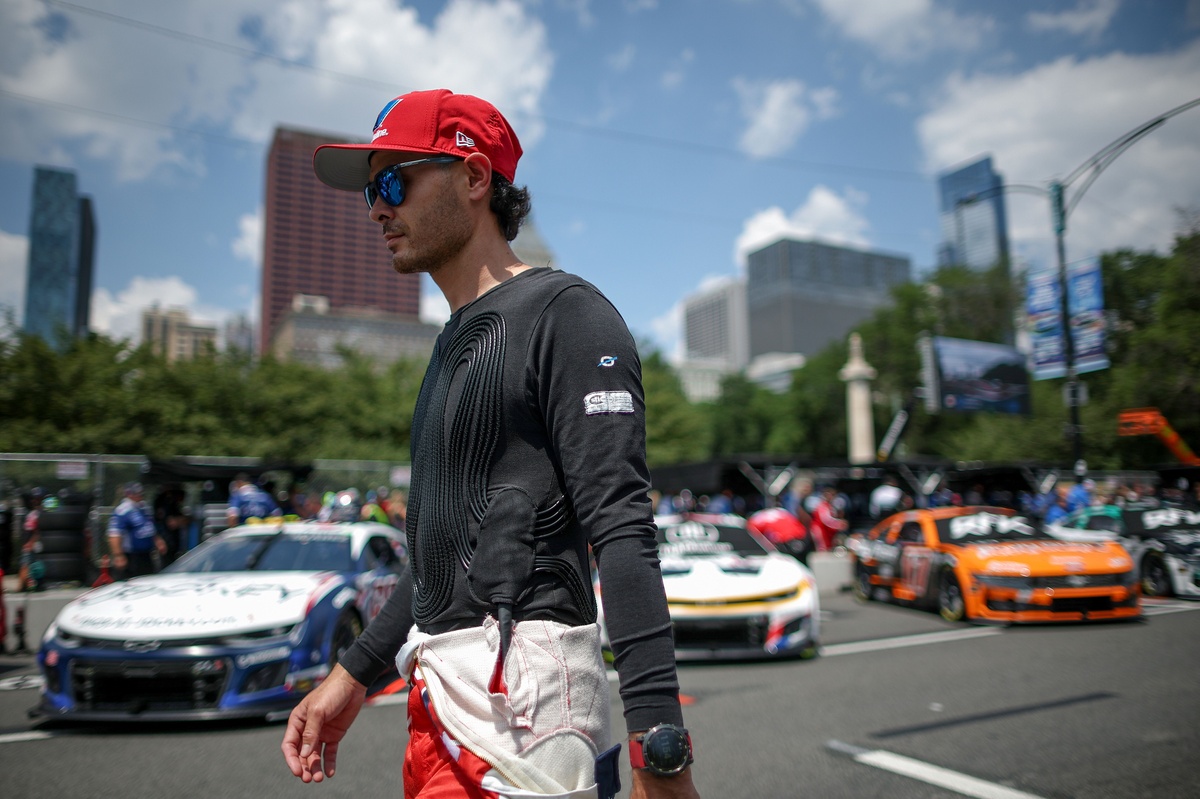
A cooling system malfunction during Sunday’s NASCAR Cup Series race at the Circuit of the Americas forced veteran driver AJ Allmendinger to receive medical attention after the event, sparking renewed scrutiny of driver safety and the complex technology intended to prevent heat exhaustion.
While initial reactions often point to hardware failures, experts say the root cause of recent cool suit issues isn’t necessarily faulty equipment, but rather choices made by racing teams in pursuit of performance. Cool suit systems are designed to regulate a driver’s core temperature by circulating chilled fluid through a network of hoses woven into a shirt worn beneath their fire suit. A miniaturized air conditioning unit chills the liquid before it’s pumped through the system.
When a cool suit system fails, the chilling function ceases, and the fluid circulating through the driver’s suit begins to warm. This can quickly become a dangerous situation, as the heated liquid then acts as an insulator, trapping body heat. According to analysis of the issue, drivers can be worse off with a failed cool suit than without one at all. Allmendinger’s experience at COTA exemplifies this risk, requiring him to be evaluated by medical personnel after the race.
The problem, sources indicate, often stems from a trade-off teams make between cooling efficiency and aerodynamic performance. The cool suit units require airflow for their condensers, typically drawing air from a quarter window duct. Teams, striving to minimize drag and maximize speed, frequently restrict the size of these ducts, limiting the airflow to the cooling unit. Reduced airflow leads to overheating of the compressor and pump, potentially causing system failure. Teams often prioritize engine power by minimizing electrical draw, sometimes supplying the cool suit units with only the bare minimum of voltage or cycling them on and off during the race, increasing the risk of malfunction.
The situation at COTA was compounded by aggressive fuel strategies, leaving drivers with limited opportunities to make pit stops long enough to drain the heated fluid from their suits. Without sufficient time to address the issue, drivers were forced to continue racing with the malfunctioning systems.
Interestingly, the cool suit systems used in NASCAR are among the smallest available in major racing series. IMSA teams utilize larger units with more robust cooling capabilities, experiencing far fewer failures. IndyCar and Formula 1 also employ similar, though slightly different, systems. Formula 1 teams have mitigated electrical load issues by powering their cool suit systems with dedicated batteries during testing.
NASCAR has responded by implementing rules requiring optimized routing of inlet and outlet hoses for cooling systems, prioritizing driver cooling over aerodynamic advantages. Teams are also now required to submit drawings detailing their hose routing. However, teams continue to seek ways to optimize every component of their cars, potentially negating the intended benefits of these regulations.
