
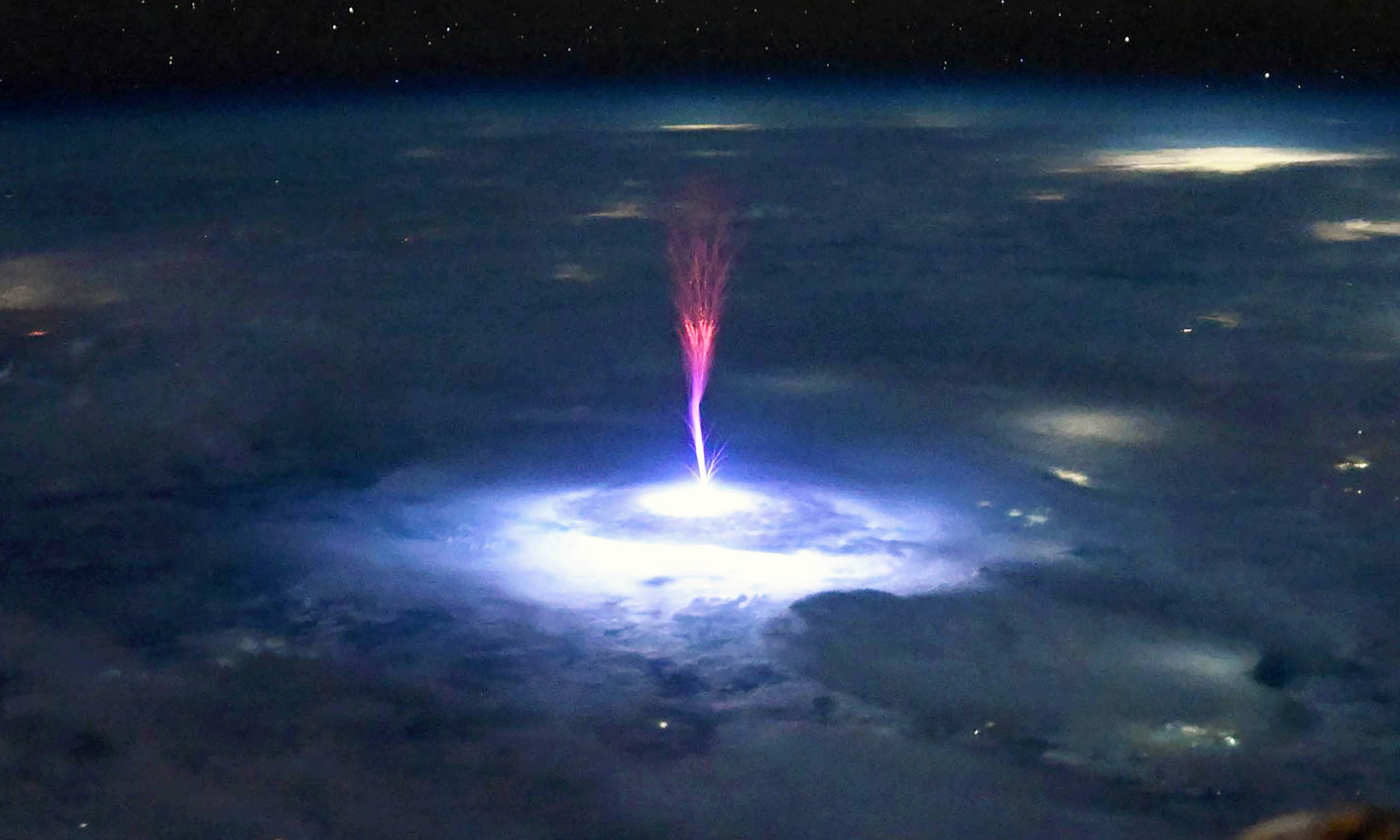
NASA Shares Rare Space Station Photos of Extraordinary Event
NASA just closed the loop on the Artemis II test flight, bringing four humans back from the lunar vicinity after a high-stakes deployment that pushed the Orion spacecraft and SLS rocket to their operational limits. This wasn’t a cruise; it was a stress test of deep-space telemetry and reentry thermal shielding.
The Tech TL;DR:
- Mission Scope: A nearly 10-day journey reaching a peak distance of 252,756 miles from Earth.
- Hardware Stack: Utilization of the Orion capsule and Space Launch System (SLS) for the first crewed lunar mission since 1972.
- Recovery Logic: Precision splashdown at 5:07 p.m. PDT on April 10, 2026, off the coast of San Diego, followed by extraction to the USS John P. Murtha.
From a systems architecture perspective, the Artemis II mission represents a massive leap in risk management. We aren’t talking about Low Earth Orbit (LEO) where a failure might result in a controlled descent or a quick rescue. At a distance of over 250,000 miles, the “blast radius” of a critical system failure is absolute. The mission’s success hinges on the Orion capsule’s ability to handle high-speed atmospheric reentry, essentially turning a spacecraft into a heat shield for four humans. Here’s the ultimate edge case in aerospace engineering: managing extreme thermal loads while maintaining structural integrity during a high-velocity descent.
The Hardware Stack: Orion and SLS Performance
The mission’s viability rested on the integration of the Space Launch System (SLS) and the Orion spacecraft. While PR focuses on the “historic” nature of the flight, the real story is the reliability of the telemetry and the physical endurance of the hardware. The crew—comprising commander Reid Wiseman, pilot Victor Glover, mission specialist Christina Koch, and CSA astronaut Jeremy Hansen—functioned as the primary sensors for this test flight, validating the spacecraft’s life support and navigation systems in a deep-space environment.
| Crew Member | Role | Agency |
|---|---|---|
| Reid Wiseman | Commander | NASA |
| Victor Glover | Pilot | NASA |
| Christina Koch | Mission Specialist | NASA |
| Jeremy Hansen | Mission Specialist | CSA |
The operational window was tight. After nearly 10 days in transit, the Orion capsule had to execute a precise reentry sequence to ensure the crew didn’t overshoot the recovery zone. This level of precision requires zero-latency coordination between ground control in Houston and the on-board flight computers. For enterprise IT leaders, this is the equivalent of a global failover event where there is no room for packet loss or synchronization errors. When dealing with such high-stakes deployments, organizations often rely on specialized systems integration consultants to ensure that disparate hardware and software layers communicate without friction.
Telemetry and Recovery Logic
The recovery phase is where the “last mile” problem becomes literal. Once the capsule splashed down at 5:07 p.m. PDT, the process shifted from aerospace engineering to maritime logistics. The transition from the Orion capsule to a small boat, and subsequently via helicopter to the USS John P. Murtha, mirrors the way critical data is moved from a volatile environment to a secure, audited state. The medical checks performed on the USS John P. Murtha served as the final validation step in the mission’s “production” cycle.
To visualize how the distance and timing might be handled in a telemetry logging system, consider a simplified Python implementation for tracking the mission’s farthest point and recovery timestamp:
import datetime # Artemis II Mission Parameters mission_data = { "crew": ["Wiseman", "Glover", "Koch", "Hansen"], "max_distance_miles": 252756, "splashdown_time": datetime.datetime(2026, 4, 10, 17, 7, tzinfo=datetime.timezone.utc), "mission_duration_days": 10 } def verify_recovery(current_time): if current_time >= mission_data["splashdown_time"]: return "Recovery Sequence Complete: Crew Extracted" return "In Transit: Monitoring Telemetry" # Simulation of recovery check print(f"Max Distance: {mission_data['max_distance_miles']} miles") print(verify_recovery(datetime.datetime.now(datetime.timezone.utc))) The sheer scale of this operation highlights the necessity of rigorous auditing. Whether it’s a lunar reentry or a massive cloud migration, the risk of “single point of failure” is the primary enemy. This is why high-compliance industries are increasingly deploying certified cybersecurity auditors to stress-test their critical infrastructure before it goes live. If a bug in the Orion flight software had triggered during reentry, there would be no “hotfix” available in deep space.
The Path to Production: Beyond the Test Flight
NASA officials, including Orion program manager Howard Hu and exploration ground systems program manager Shawn Quinn, have framed this as the “start of a new era.” From a technical standpoint, this means the “Beta” phase of the Artemis program is successfully concluded. The data harvested from this 10-day journey will now be ingested into the next development cycle to refine the hardware for future missions. Dr. Lori Glaze noted that this is the first of many missions, indicating a roadmap that favors iterative deployment over a single, monolithic launch.

The success of Artemis II validates the SLS and Orion stack for crewed deep-space operations. However, the transition from a “test flight” to a “sustained presence” will require a massive scale-up in logistics and support infrastructure. We are moving from a bespoke, high-cost prototype phase to a standardized operational model. For the tech sector, this is a reminder that the most complex systems in the world still rely on the fundamentals: redundant backups, rigorous testing, and a foolproof recovery plan.
As NASA moves forward, the focus will shift from simply surviving the trip to optimizing the mission. The industry’s ability to support these endeavors will depend on the continued evolution of high-reliability computing and autonomous systems. Those who can provide the necessary managed IT infrastructure to handle the massive data streams coming from lunar orbit will be the ones defining the next decade of exploration.
Disclaimer: The technical analyses and security protocols detailed in this article are for informational purposes only. Always consult with certified IT and cybersecurity professionals before altering enterprise networks or handling sensitive data.