NASA Rovers Find Potato Chip Crystals, Silica Rocks and Polygons on Mars
NASA rovers have spotted unusual geological formations on Mars, including potato chip-shaped crystals and pale silica rocks, Space reported.
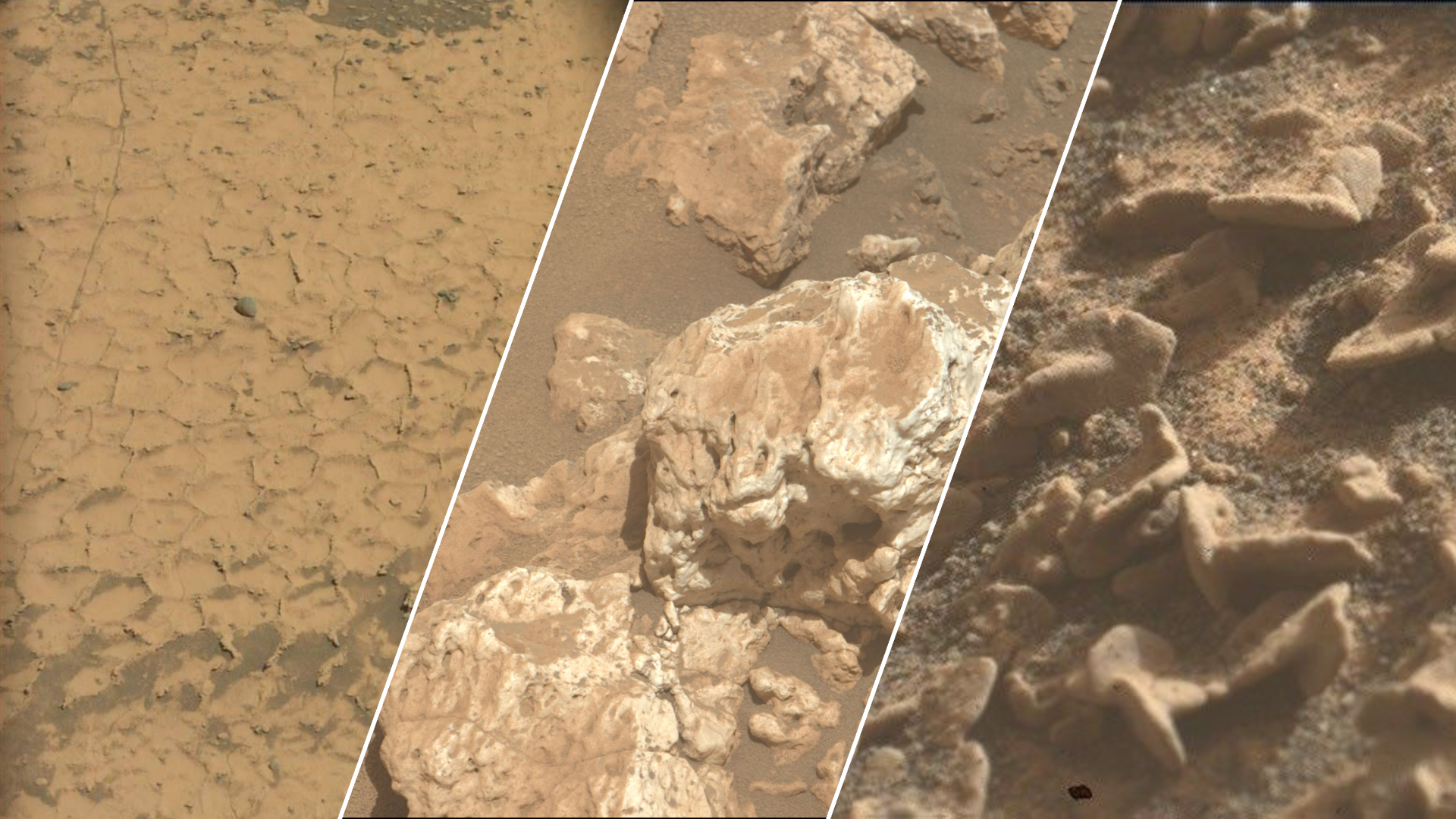
- Curiosity captured disk-shaped crystals at the “Nazca” drill site on Nov. 7, 2026.
- Perseverance found hydrated silica rocks in the “Idubi” area on Oct. 29, 2026.
- Curiosity photographed bedrock polygons on Mount Sharp on Nov. 13, 2026.
Martian Bedrock Crystals
NASA’s Curiosity rover completed a drilling campaign at a location named “Nazca,” where scientists examined disk-shaped crystal formations embedded in the bedrock. Fox News reported that NASA announced the findings in its Curiosity blog on Nov. 11, noting that the features feature irregular, curled shapes that resemble potato chips.
On Nov. 7, 2026, on Sol 5067, the rover used its Mars Hand Lens Imager to photograph the features. According to a statement, Curiosity also used its ChemCam instrument and delivered samples to its Sample Analysis at Mars instrument.
“This is an area characterized by bedrock containing disk-shaped (or, in a liberal interpretation, potato-chip shaped) crystal forms,” the NASA blog said. NASA said one of its key objectives is to “better characterize these chip-shaped features.” “ChemCam LIBS observations were planned for each sol including a cluster of crystal forms, a resistant layer in the side of the Nazca block and a dark float rock,” NASA’s blog stated.

Ghostly Rocks at Idubi
Perseverance investigated pale rock formations in an area called “Idubi” outside Jezero Crater. The rover captured images on Oct. 29, 2026, on Sol 2023, revealing bright formations that contrast with the dark Martian terrain.
Data from the rover’s SuperCam instrument showed that the rocks consist of hydrated silica. According to another statement, these deposits can form in hydrothermal environments or via groundwater and are capable of preserving microscopic fossils.
The Idubi area is located in the “Lac de Charmes” region outside Jezero Crater.
Perseverance Begins Deeper Study of Silica Rocks
Perseverance is now conducting a closer investigation of the Idubi formations using its instruments to gather detailed chemical and mineralogical data. Space.com reported that hydrated silica deposits on Earth can form in hydrothermal environments or via groundwater and are capable of preserving microscopic fossils.
Polygon Patterns on Mount Sharp
Curiosity also documented polygon-shaped patterns across the bedrock at Mount Sharp. The images, captured on Nov. 13, 2026, on Sol 5073, show small polygons outlined by raised ridges. A statement from NASA indicated these textures could form through mineral shrinkage as water evaporated, temperature changes, or sediment compaction.
Keep reading
- Amazon Fire TV Cube (3rd Gen) Falls to Record-Low $89.99 in Early Black Friday Deal
- Mr. and Mrs. Blizzard Welcome Daughter Harper; Texas Dairy Queen Operators Council Celebrates Birth With Treats and Custom Gifts
- NASA Rovers Find ‘Potato Chip’ Crystals and Hydrated Silica Rocks on Mars (newsy-today.com)