NASA Launches Lunar Grounding Challenge to Stop Static on Artemis Moon Suits
NASA Opens Lunar Grounding Challenge to Prevent High-Voltage Spacesuits
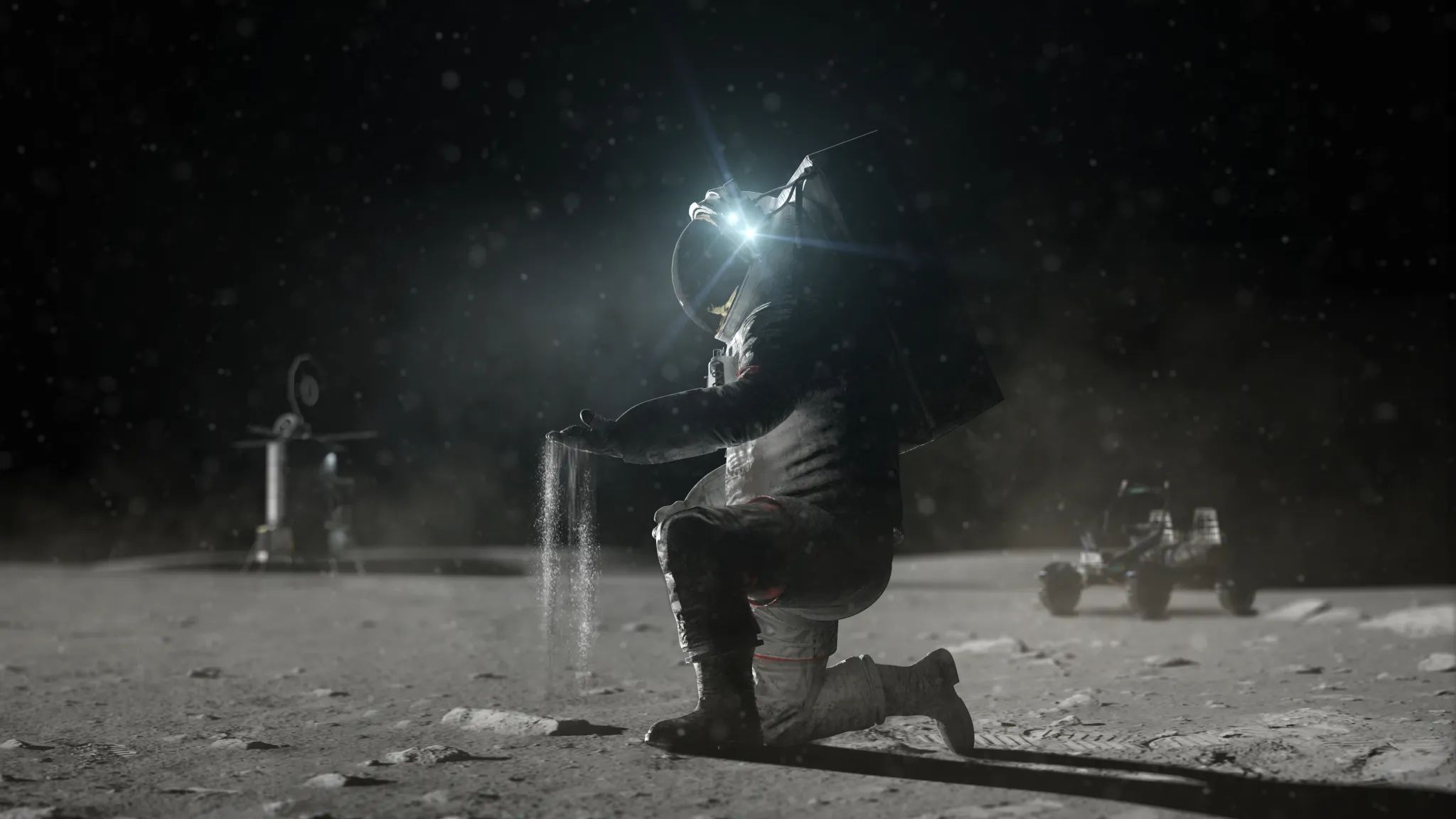
NASA opened a $150,000 competition called the Lunar Grounding Challenge to find technical solutions that prevent astronauts from becoming walking high-voltage capacitors on the moon. The initiative seeks ideas to stop static electricity from damaging critical hardware, sparking fires in oxygen-rich lander cabins, or delivering dangerous electrical shocks when returning crew members touch spacecraft during future Artemis missions.
The Tech TL;DR:
- NASA launched a $150,000 competition targeting electrostatic discharge risks on lunar missions, with submissions due January 15.
- Simulations show that tribocharging and ambient plasma charging accumulate dangerous negative charges on spacesuits, particularly inside permanently shadowed craters at the lunar south pole.
- Engineers must design low-mass, low-power discharge systems capable of surviving extreme temperature swings and heavy dust buildup across four moonwalks over a 10-day span.
Static Buildup Risks in Permanently Shadowed Lunar Regions
As NASA prepares to return astronauts to the lunar south pole in 2028 during Artemis 4 or 5—marking the first landing mission since Apollo 17 in 1972—simulations indicate severe electrical charging risks. Tribocharging, which involves electric-charge transfer between two objects, and plasma charging from ambient regional gas combine to build up electric charges on spacesuits. According to the agency, this problem is severely compounded when entering lunar shadows and permanently shadowed regions where the sun never reaches the surface.

These deeply cratered environments feature an excess of electrons compared to positive ions. When an astronaut returns to the vehicle, the lander develops a slight positive charge, creating a hazardous voltage differential as the negatively charged crew member approaches. NASA warned that this dynamic can trigger electrical arcs capable of damaging spacesuits, sparking fires in oxygen atmospheres, or causing severe electrical shocks. A similar Mars simulation in 2018 was reportedly derailed due to a crew experiencing electrical issues, proving the hazard is not unprecedented.
Technical Requirements for the Lunar Grounding Challenge
The competition requires designs that safely discharge the astronaut and their spacesuit prior to touching the lander. Solutions must maintain a minimal footprint in terms of mass, volume, and power while operating reliably across the extreme temperature swings found on the lunar surface. Hardware must endure up to four extra-vehicular activities over a 10-day period.
Suspended lunar dust and heavy dust accumulation on the suit significantly increase arcing lengths, permitting sparks to jump across larger gaps than they would in a clean vacuum. Consequently, entries must prevent sudden arcs from contacting the outer pressure garment or the lander itself. The challenge progresses through concept design, reviewer discussions, and final selection phases.
NASA Plans Long-Term Lunar Base for the 2030s
NASA plans to establish a long-term lunar base for astronaut missions that should be largely ready for operations in the 2030s if current schedules hold. While the agency did not release a specific target date for when the winning grounding technology will be integrated into flight hardware, the January 15 submission deadline marks the first step toward securing extra-vehicular gear for the upcoming Artemis landing manifest.