NASA Images Reveal Lunar Crater Created by SpaceX Rocket Impact
NASA Spacecraft Spots Lunar Crater Formed by SpaceX Falcon 9 Upper Stage Collision
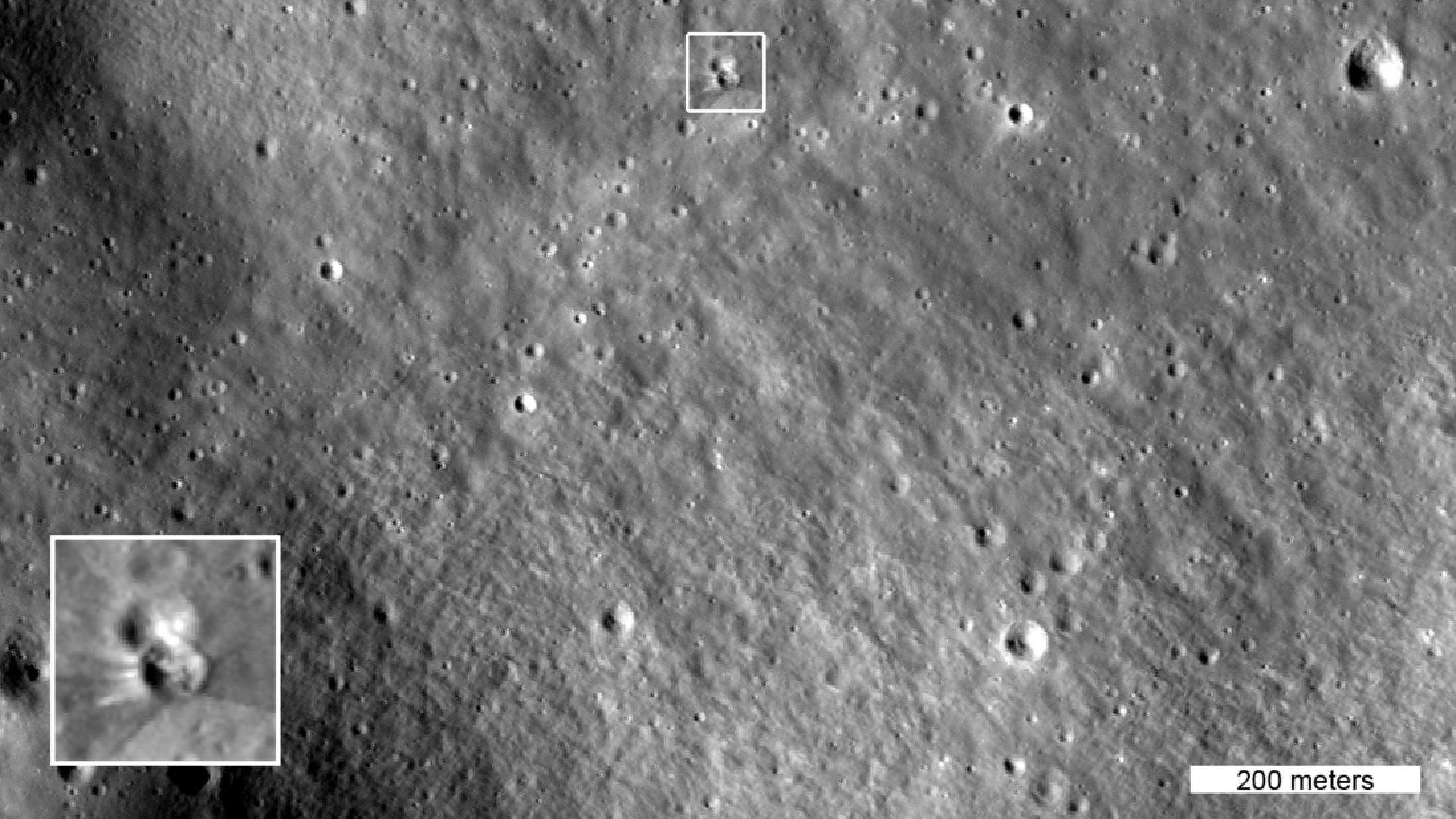
A derelict SpaceX Falcon 9 rocket stage that slammed into the far side of the moon has left behind a distinct impact crater now documented by NASA’s Lunar Reconnaissance Orbiter (LRO). According to NASA Science, the collision occurred following a multi-year orbital decay after the rocket launched in February 2015 to deliver the Deep Space Climate Observatory (DSCOVR) probe.
The Tech TL;DR:
- The Event: A 14-meter-long, four-tonne SpaceX Falcon 9 upper stage struck the lunar far side.
- The Result: NASA’s LRO confirmed the formation of a roughly 19-meter-wide impact crater via before-and-after imagery.
- Operational Context: The debris spent nearly seven years in an unstable orbit influenced by solar and lunar gravity before its uncontrolled trajectory terminated on the lunar surface.
Orbital Mechanics and the 2015 DSCOVR Launch Vector
The trajectory leading to the lunar impact began over a decade ago. Per reporting from Live Science, the Falcon 9 upper stage launched in February 2015 to position the DSCOVR probe 1.5 million kilometers from Earth towards the sun. However, the expended second-stage booster retained insufficient velocity to escape into an independent heliocentric orbit. Without fuel reserves remaining to execute a targeted de-orbit burn into Earth’s upper atmosphere—the standard procedure designed to induce thermal disintegration—the hardware remained trapped in a high-eccentricity Earth orbit.
Calculating the exact vector of the four-tonne cylindrical structure proved difficult due to gravitational perturbations from both the Earth and the sun. When it finally impacted the lunar surface, it traveled at approximately 2.6 kilometers per second, carving out a double crater measuring roughly 19 meters across, according to detailed analysis published by NASA Science and covered by AP News.
Comparative Impact Dynamics and Environmental Trade-Offs
When an expended stage burns up in Earth’s atmosphere, it disperses metal oxide particulates into the upper atmosphere. In contrast, the moon lacks a protective atmospheric shield, resulting in a continuous accumulation of natural impact structures.
Comparative data highlights the routine nature of lunar impacts. In March 2013, a natural asteroid impact weighing roughly half a tonne and traveling at nearly ten times the velocity of the Falcon 9 created a similar 18.8-meter-wide crater, documented by the Lunar Reconnaissance Orbiter team as reported by CNN and IFLScience. Historical precedents for intentional lunar strikes include NASA’s 2009 LCROSS mission, which targeted a permanently shadowed polar crater to confirm water vapor, and the Apollo program’s deliberate hardware crashes used to feed seismic data into surface seismometers.
Data Telemetry and Planetary Protection Protocols
Unlike previous intentional impacts monitored by Apollo surface instruments, the far-side location of the Falcon 9 collision limited immediate seismic data collection. While China’s Chang’e 4 lander operates on the far side, whether its instrumentation captured usable waveform telemetry remains unverified. Enterprise aerospace systems continue to evaluate planetary protection protocols to mitigate biological contamination risks, ensuring that hardware entering deep space environments avoids introducing terrestrial microbes to pristine celestial bodies.
from skyfield.api import Loader, EarthSatellite
import load

# Initialize ephemeris loader for orbital decay tracking
load_data = Loader('~/skyfield-data')
ts = load.timescale()
planet = load_data('de421.bsp')

# Parse satellite TLE data for tracking debris vectors
line1 = '1 40435U 15007A   22055.50000000  .00000000  00000-0  00000-0 0  9999'
line2 = '2 40435   0.0000 120.0000 0005000  90.0000 270.0000  2.00000000    05'
satellite = EarthSatellite(line1, line2, 'Falcon 9 Upper Stage', ts)

# Compute current position relative to Earth
t = ts.now()
geocentric = satellite.at(t)
subpoint = geocentric.subpoint()
print(f'Latitude: {subpoint.latitude.degrees}, Longitude: {subpoint.longitude.degrees}')