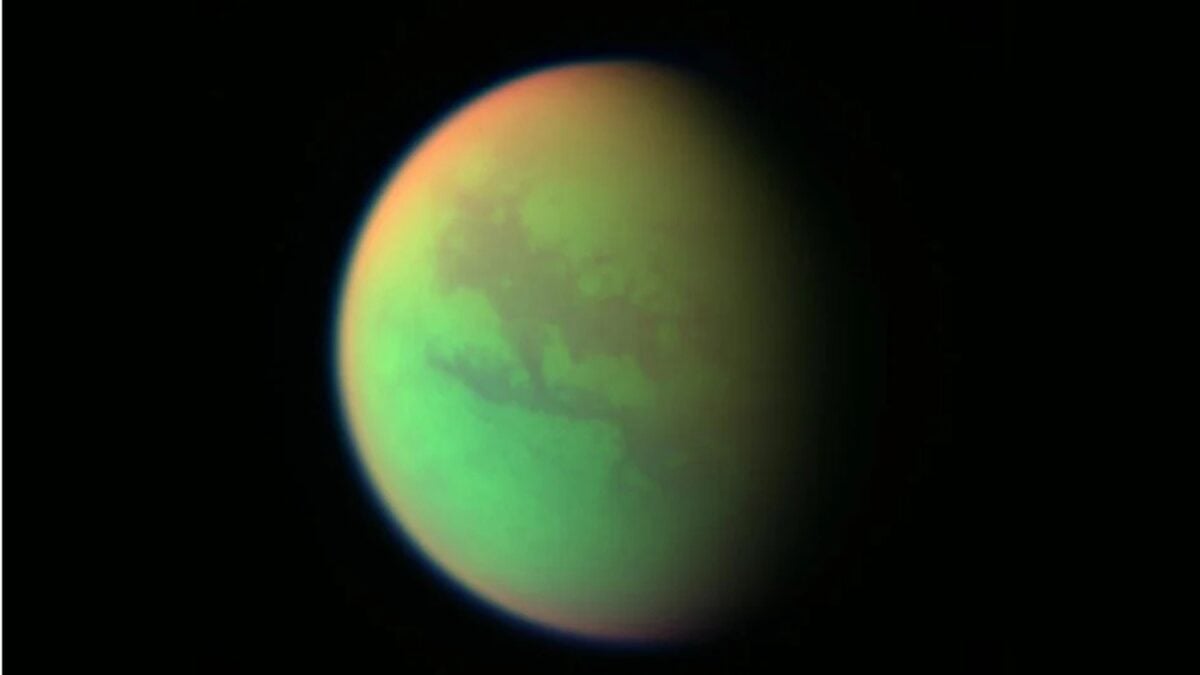
NASA-Funded Project to Explore Titan’s Caves With Aerobot Swarms
A NASA-funded project is developing swarms of small robotic airships, known as aerobots, to explore the hidden subsurface caves and dense hydrocarbon seas of Titan, Saturn’s largest moon. According to Gizmodo en Español, the initiative targets the complex organic chemistry and extreme environments of the outer Solar System without relying solely on traditional surface landers.
Engineering Aerobots for Titan’s Atmosphere
Titan features a thick, nitrogen-rich atmosphere that is four times denser than Earth’s, combined with surface gravity that is roughly one-seventh of our planet’s. These atmospheric conditions make aerial exploration uniquely viable. The NASA-backed concept utilizes buoyant, maneuverable aerobots capable of navigating regional wind patterns while carrying scientific instrumentation payloads.
According to project outlines covered by Gizmodo en Español, the robotic swarms are designed to descend into methane-filled caverns and sample regional chemical gradients. Because Titan’s surface hosts liquid methane and ethane lakes alongside vast dunes of organic sand, an aerial platform avoids the mobility hazards that typically trap wheeled rovers in loose terrain.
Subsurface Science and Organic Chemistry Targets
The primary scientific objective centers on investigating prebiotic chemistry. Titan’s atmosphere constantly generates complex organic molecules through sunlight interacting with methane and nitrogen. When these molecules precipitate onto the surface or wash into subsurface cavities, they provide a pristine record of chemical evolution.

By deploying networked swarms rather than a single monolithic probe, researchers can gather simultaneous readings across disparate geographical zones. The autonomous units communicate with one another to map cave networks and relay telemetry back toward orbital relay assets, according to mission planners cited in the reporting.
Engineering teams must design components that operate reliably in temperatures averaging minus 290 degrees Fahrenheit (minus 179 degrees Celsius). The next phase of development focuses on power systems resistant to extreme cold and autonomous navigation software capable of operating without real-time human intervention due to signal delay times across the Saturnian system.