NASA Discovers Largest Recent Lunar Impact Crater
Scientists have discovered a crater on the moon that exceeds the size of the Roman Colosseum, resulting from a powerful impact two years ago that initially went undetected, according to reports published in the journal Science Advances.
The Tech TL;DR:
- The Event: A steep-sided lunar impact crater measuring roughly 728 feet (222 meters) across and up to 141 feet (43 meters) deep formed in May 2024.
- The Discovery: NASA’s Lunar Reconnaissance Orbiter (LRO) spotted the structure in wide-angle images, which were identified in data from August 2025 and confirmed in early 2026.
- Operational Impact: Researchers note that events of this scale occur roughly once every 132 years, necessitating structural hardening for planned lunar bases against ejected regolith.
Lunar Reconnaissance Orbiter Detects Rare Impact Structure
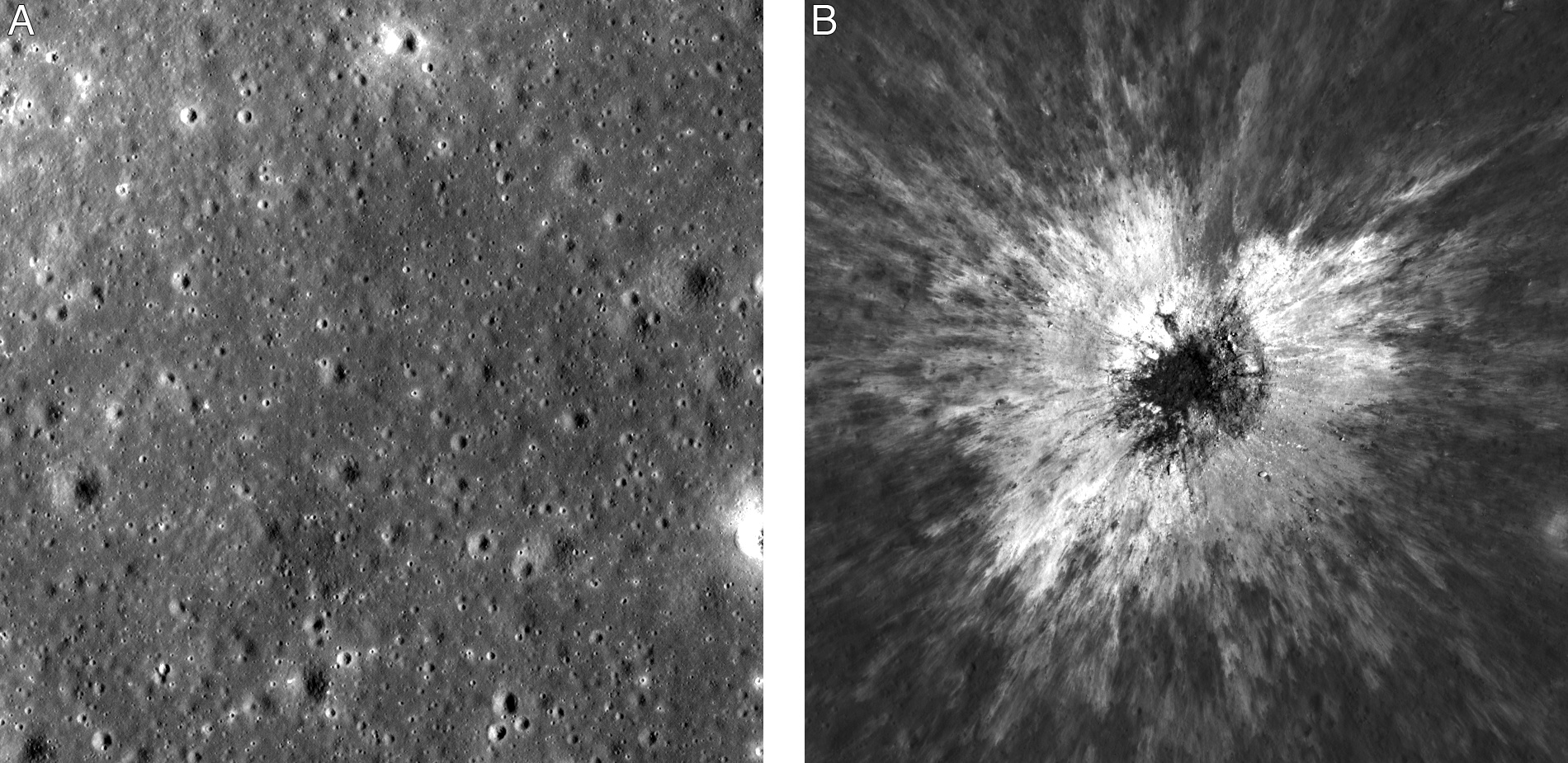
According to findings detailed by the Associated Press, the impact occurred on the moon’s near side in May 2024 from an incoming fragment of an asteroid or comet. Real-time telescopes on Earth and in space missed the event entirely. Wide-angle images gathered by NASA’s Lunar Reconnaissance Orbiter (LRO) sat within data archives until August 2025, when researchers finally flagged them. The spacecraft captured higher-resolution imagery last fall, leading to formal confirmation early this year.
Researchers named the depression after the late Thomas McGetchin, former director of Houston’s Lunar and Planetary Institute. The structure is three times larger than the previous record-holder discovered by the LRO a decade ago. Data indicates the impact churned the lunar surface across a span of more than 66 miles (100 kilometers), hurling dust and rocky soil at higher angles than anticipated, according to Mark Robinson, chief scientist for the LRO’s cameras at Intuitive Machines and lead author of one of the studies.
Regolith Dynamics and Surface Gardening Mechanics
A separate study published alongside the primary findings identified a 4-mile-wide (7-kilometer-wide) cold spot surrounding the new crater. Co-author David Paige of the University of California, Los Angeles, described the phenomenon as a natural form of gardening that loosens the top layer of soil. By churning sediments and bringing subsurface material upward, impact events actively reshape the upper crust.
Observational data collected by the LRO since its 2009 launch indicates that the moon’s top inch (2 centimeters) of soil is overturned by ejecta every 80,000 years—a rate faster than prior estimates suggested. Addressing the longevity of historical artifacts, Robinson noted via email that the famous footprints left by Apollo astronauts will not last forever under these geological conditions, and will “definitely be long gone in that time frame.”
For enterprise architects and mission planners designing surface assets, these impact frequencies dictate strict engineering tolerances.
Evaluating Ejecta Risk for Infrastructure Deployments
With statistical models showing that impacts of this magnitude occur roughly once every 132 years, mission engineers face the task of quantifying structural risk. Robinson stated that calculating the trajectory and distribution of ejected crater material will allow engineers to harden future habitats and equipment against potential debris strikes.

# Sample telemetry processing check for impact ejecta risk modeling
def evaluate_ejecta_risk(distance_km, particle_size_mm):
    threshold_limit = 5.0
    if distance_km < 50.0 and particle_size_mm > threshold_limit:
        return "CRITICAL: Structural hardening required."
    return "nominal: Within baseline safety parameters."