NASA Curiosity Rover Discovers Rare Pure Sulfur Crystals on Mars
NASA Curiosity Rover Discovers Native Sulfur Crystals on Mars
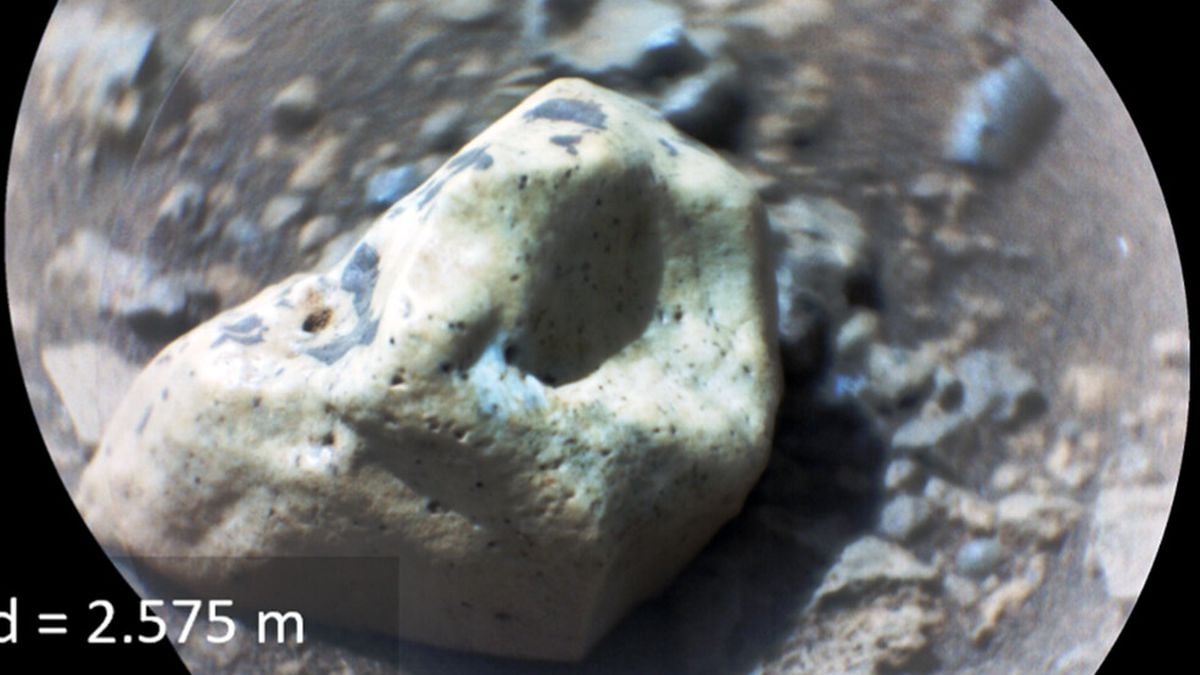
During a routine traverse through the Gediz Vallis Channel on Mount Sharp, NASA’s Curiosity rover inadvertently cracked open a Martian rock to reveal bright yellow crystals of pure elemental sulfur, a discovery that marks the first time native sulfur has been observed on the red planet, according to reports published by ScienceAlert and VICE.
The Tech TL;DR:
- The Discovery: Curiosity crushed a rock with its heavy wheel in the Gediz Vallis Channel, exposing never-before-seen pure elemental sulfur crystals.
- The Geological Context: While sulfate minerals salts are common on Mars, native sulfur forms under strict chemical parameters that researchers did not expect in this region of Gale Crater.
- The Scientific Impact: The find forces planetary geologists to rethink past aqueous environments on Mars, opening new avenues for astrobiological analysis.
Decoding Martian Mineralogy and Surface Mechanics
Mars rover telemetry and instrument payloads rely on high-precision mechanical navigation, yet automated hardware routing occasionally yields serendipitous data collection. According to VICE reporting, Curiosity was traversing an ancient channel carved by debris flows on the flanks of Mount Sharp when its titanium-spoked wheel ran directly over an unremarkable pale stone. The resulting fracture exposed a glittering interior of brimstone.
Geological Anomalies and Thermal Modeling Challenges
Sulfur itself is not novel to Mars. For years, Curiosity has traversed regions dense with sulfate minerals, which precipitate when sulfur-bearing water evaporates. However, elemental sulfur requires a distinct, tightly constrained genesis mechanism. Project scientist Ashwin Vasavada noted via VICE that finding a field of stones composed of pure sulfur in this specific landscape is akin to encountering an unexpected oasis, stating that it “shouldn’t be there, so now we have to explain it.”

Back on Earth, research teams are utilizing thermodynamic simulation models to calculate how a cold, arid planet could concentrate and preserve pockets of native brimstone near the surface.
Rover Telemetry and Future Navigation Paths
Following the discovery, Curiosity captured high-resolution photographic sweeps of the surrounding terrain, which is dotted with similar pale rocks indicating a broader distribution of sulfur across the Gediz Vallis floor. According to ScienceAlert and VICE coverage, the rover has since moved along the channel’s edge, concluding imaging operations of the sulfur field before steering toward its next waypoint on Mount Sharp.