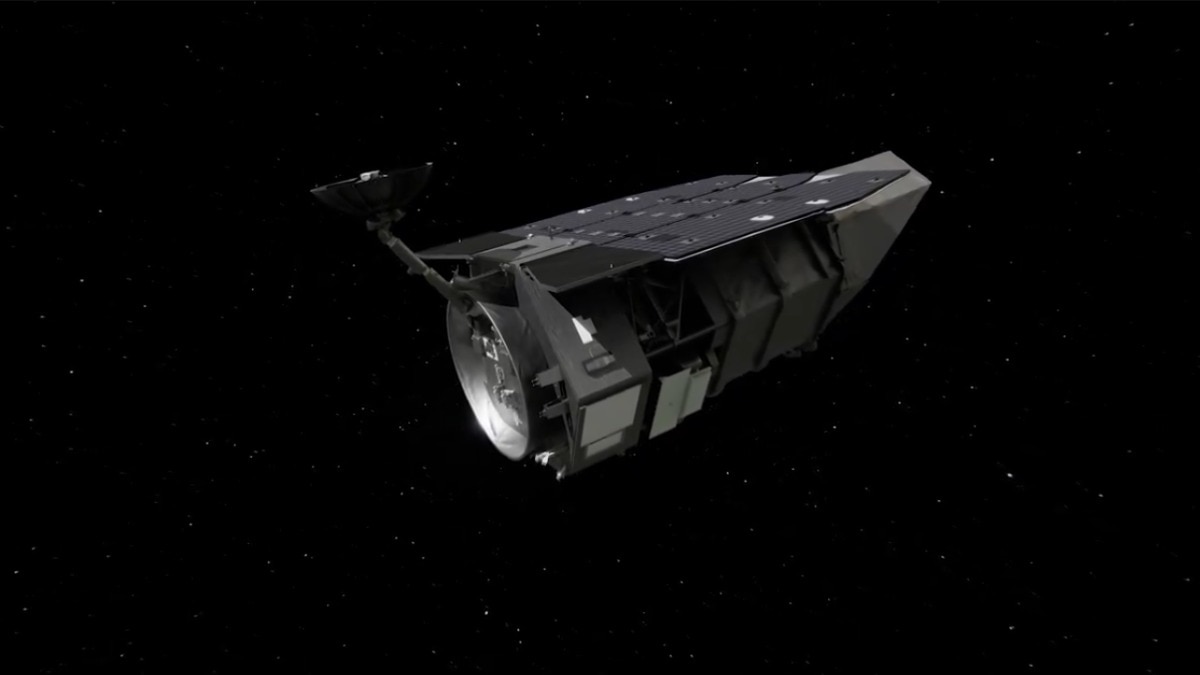
NASA Completes Assembly of Nancy Grace Roman Space Telescope Ahead of 2026 Launch
Engineering the L2 Insertion: NASA’s Roman Space Telescope Deployment Timeline
NASA’s Nancy Grace Roman Space Telescope is currently undergoing final integration and environmental stress testing at the Goddard Space Flight Center in Maryland. Following the completion of its physical assembly on November 25, the observatory is scheduled for a launch window opening as early as the fall of 2026, with a baseline target of May 2027. The mission will utilize a SpaceX Falcon Heavy launch vehicle to transit 15 lakh km—roughly 1 million miles—from Earth to reach its operational orbit at the second Lagrange point (L2).
The Tech TL;DR:
- Deployment Logistics: The observatory will transit to the Sun-Earth L2 point, a gravity-stable location providing an optimal thermal environment for infrared deep-space observation.
- Instrumentation Specs: The platform features a 288-megapixel Wide Field Instrument (WFI) for high-cadence galactic surveys and a Coronagraph Instrument designed for high-contrast imaging of exoplanetary systems.
- Operational Impact: By offloading complex survey tasks that previously required centuries of exposure time, the Roman telescope is expected to catalog hundreds of millions of stars and billions of galaxies within its initial five-year mission cycle.
Architectural Overview and Payload Capabilities
The Roman Space Telescope represents a shift in observational architecture, prioritizing high-throughput data acquisition. According to NASA, the Wide Field Instrument serves as the primary data engine, capturing massive, high-resolution swaths of the sky that allow for the study of dark energy and dark matter distribution.
The secondary payload, the Coronagraph Instrument, functions as a high-contrast technology demonstration. By utilizing an occulting mask to suppress the glare of host stars, it enables the direct observation of orbiting exoplanets.
Computational Deployment and Telemetry Management
The mission’s success hinges on the transition from ground-based integration to autonomous operation in the L2 environment.

Mission Objectives and Scientific Throughput
Nicky Fox, NASA’s Associate Administrator for the Science Mission Directorate, noted that the mission is specifically designed to address the accelerating expansion of the universe. By mapping the history of cosmic structure, the Roman telescope aims to provide empirical data on dark energy.
As the Roman mission moves toward its 2026/2027 launch window, the focus shifts from hardware assembly to the final verification of the mission’s software stack, which must ensure seamless operation in a high-radiation, vacuum-stable environment.
Strategic Trajectory for Space-Based Observatories
The deployment of the Roman Space Telescope will likely redefine the baseline for deep-space survey missions. By combining the wide-field survey capabilities of the WFI with the high-contrast imaging of the Coronagraph, NASA is building a multi-modal data pipeline that will generate petabytes of data for the scientific community.
*Disclaimer: The technical analyses and security protocols detailed in this article are for informational purposes only. Always consult with certified IT and cybersecurity professionals before altering enterprise networks or handling sensitive data.*