
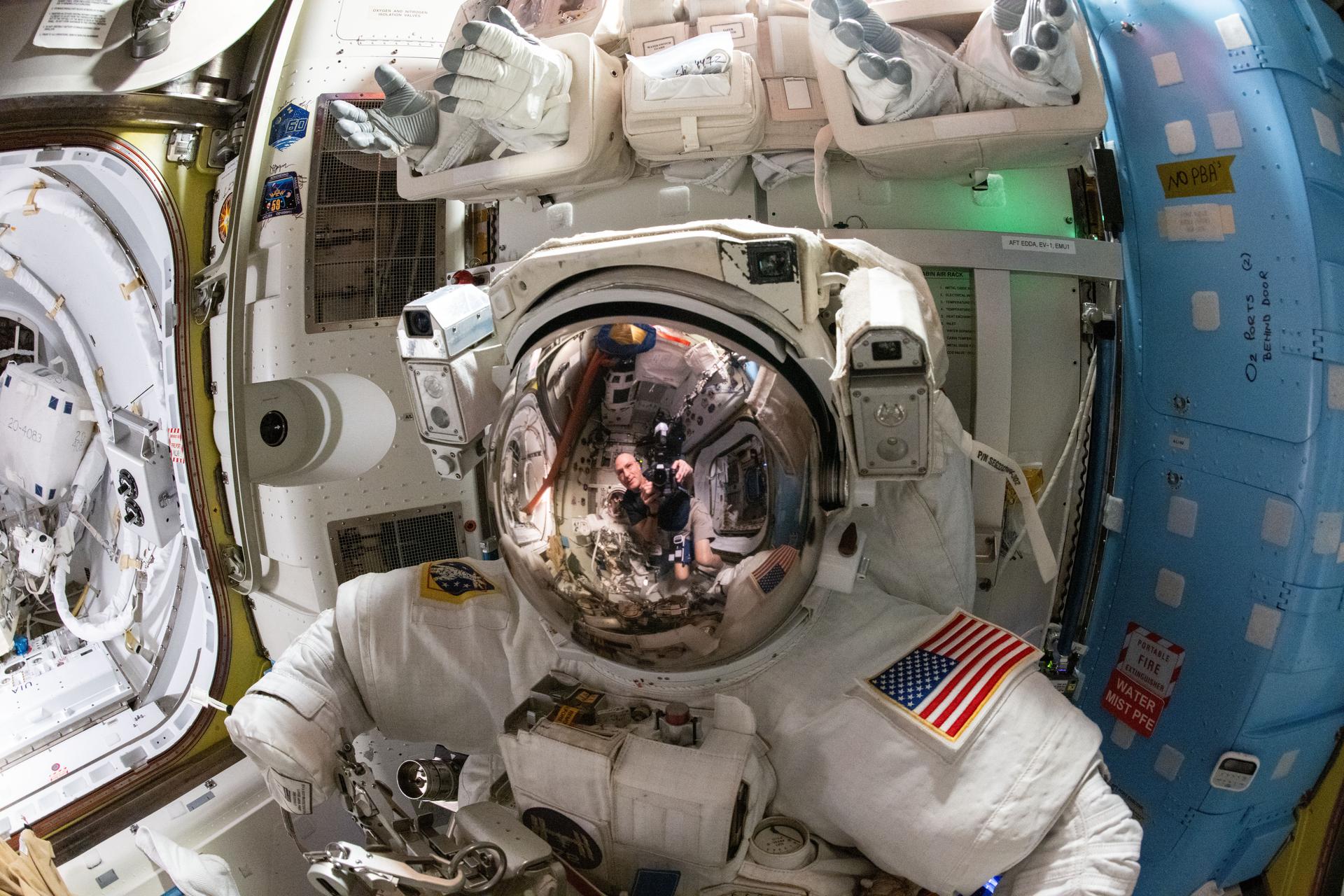
NASA astronaut Koch’s Moon return reveals inner ear gravity struggles
The Inner Ear’s Gravity Problem
The vestibular system, composed of fluid-filled canals and sensory cells in the inner ear, plays a crucial role in maintaining balance and orientation. On Earth, it continuously sends signals to the brain about movement and spatial positioning. However, in microgravity, these signals become inconsistent, leading to confusion in the brain’s interpretation of motion.
Koch described the experience in a social media post, noting that prolonged exposure to microgravity causes the brain to disregard signals from the vestibular system. Upon returning to Earth, astronauts rely heavily on visual cues to compensate for the disrupted inner ear signals. This dependence explains why Koch struggled more when her eyes were closed—without visual input, her brain had difficulty processing the conflicting information from her inner ear.
The result was a noticeable challenge in maintaining balance during a tandem walk, with attendants nearby to assist if needed. Astronauts have long documented similar difficulties upon returning to Earth, with some describing the first few days as particularly disorienting.
European Space Agency astronaut Andreas Mogensen reported feeling “wobbly” during his initial days back on Earth, while NASA’s Jasmin Moghbeli mentioned neck strain from the effort of holding her head upright. These accounts illustrate how the body adapts to the loss of spatial awareness in space and the time required to readjust to gravity.
From Spaceflight to Earthbound Medicine
Koch’s experience offers insights into how the brain adapts to sensory disruptions, both in space and on Earth. The vestibular system’s response to microgravity shares similarities with conditions like vertigo and concussions, which also involve balance and orientation challenges. Researchers study these parallels to develop better treatments for patients with neuro-vestibular disorders.
Koch emphasized the potential for spaceflight research to inform medical treatments, suggesting that understanding these mechanisms could lead to improved therapies for conditions affecting balance. On Earth, vestibular disorders often result from damage or dysfunction in the inner ear, leading to symptoms such as dizziness, disorientation, and difficulty walking. While astronauts eventually recover, patients with chronic conditions may face long-term challenges.
For more on this story, see NASA Artemis II Astronauts Return from Moon Mission: Health Effects, Thermal Shield Findings, and Biological Experiments Revealed.
NASA’s research into the physiological effects of spaceflight has provided valuable data on bone loss, muscle atrophy, and even genetic changes. The vestibular system’s response to microgravity, however, remains a particularly complex and immediate challenge. While exercise and medical countermeasures can help mitigate some long-term effects, there is currently no quick solution for the brain’s readjustment to gravity. For now, time remains the most reliable factor in recovery.
The Human Toll of a Historic Mission
Koch’s stumble occurred shortly after her return from the Artemis 2 mission, which marked a significant milestone in space exploration. According to NASA, the mission took her and her crew farther from Earth than any previous human spaceflight. Officials noted that Koch was among the first to achieve certain milestones, including becoming one of the first women to leave low Earth orbit, while her crewmate Victor Glover was recognized as the first person of color to do so.
Despite the mission’s historic achievements, the crew faced the physical realities of spaceflight. Even shorter missions like Artemis 2, which lasted 10 days, can disrupt the body’s balance, proprioception, and spatial awareness. While the International Space Station provides exercise equipment and medical protocols to help astronauts cope, the Artemis 2 crew relied on a smaller “flywheel” device and a carefully managed diet to maintain their health.
Koch’s career reflects the resilience required for space exploration. After earning degrees in physics and electrical engineering, she conducted research in remote locations such as Antarctica and Greenland before joining NASA’s astronaut corps in 2013. Her role as a mission specialist on Artemis 2 involved overseeing experiments and equipment, further demonstrating her contributions to space exploration.
This follows our earlier report, Artemis II Astronauts: The Challenge of Readapting to Earth’s Gravity.
Yet, despite technological advancements, the human body’s limitations remain a persistent challenge. Koch’s viral video served as a reminder that even highly trained astronauts are subject to the same physiological constraints as everyone else, albeit in more extreme conditions.
What This Means for the Future of Space Travel
As NASA plans for longer missions to the Moon and Mars, the challenges of readjusting to gravity will become increasingly significant. The vestibular system’s disruption is one of many physiological hurdles astronauts will encounter, alongside bone loss, muscle atrophy, and the psychological effects of isolation.
Current solutions remain basic, focusing on exercise, time, and patience. However, Koch’s experience and the research it supports may contribute to developing better treatments for both astronauts and patients with vestibular disorders. Scientists continue to study how the brain readapts to gravity, with the potential to improve therapies for balance-related conditions on Earth.
For now, Koch’s plans to surf will have to wait. In a lighthearted remark, she noted that her return to normal activities would take time. For astronauts, the path to recovery is rarely straightforward.