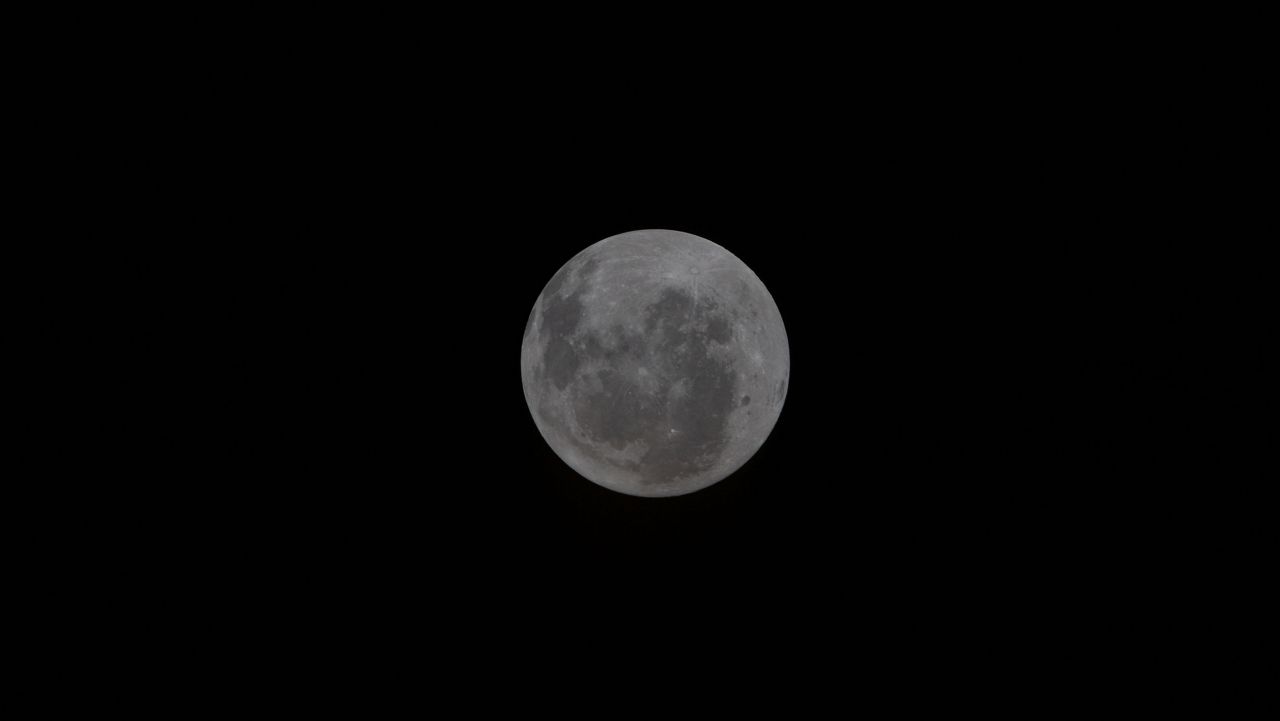
NASA Artemis II Mission: First Photos of the Moon’s Far Side
NASA’s Artemis II mission has released the first photographs of the far side of the Moon, marking the first time in half a century that human crew members have captured images of the lunar surface’s hidden face.
The images, captured from the Orion spacecraft, provide a new visual record of the lunar terrain that remains permanently turned away from Earth. This milestone represents a critical phase of the Artemis program, as the crew utilizes the Orion capsule to navigate a trajectory that allows for the observation of the lunar far side, a feat not achieved by crewed missions since the Apollo era.
Strategic Lunar Competition
The release of these images occurs as the Moon becomes the primary theater for a renewed space race between the United States and China. Both nations are accelerating their lunar programs, transitioning from orbital reconnaissance to the establishment of permanent presences on the lunar surface.

While the Artemis II mission focuses on crewed flight capabilities and the verification of life-support systems during a lunar flyby, China is advancing its own lunar exploration roadmap. This competition is centered on the strategic acquisition of lunar resources and the establishment of research bases, particularly near the lunar south pole, where water ice is believed to exist.
Mission Objectives and Technical Execution
The Artemis II mission serves as the first crewed flight test of the Orion spacecraft’s deep-space capabilities. The primary objective is to demonstrate that the spacecraft can safely transport astronauts around the Moon and return them to Earth. The ability to capture high-resolution imagery of the far side is a secondary but significant achievement, providing data on the lunar topography and environment.
The mission’s trajectory is specifically designed to carry the crew beyond the lunar horizon, enabling the observation of the “hidden” side of the satellite. This operational success validates the navigation and communication protocols required for future missions that intend to land humans on the lunar surface.
NASA has integrated these findings into the broader Artemis framework, which aims to return humans to the Moon and eventually facilitate a crewed mission to Mars. The current phase focuses on the iterative testing of the Space Launch System (SLS) and the Orion spacecraft to ensure astronaut safety during extended durations in deep space.
The next scheduled phase of the program involves the transition from flyby missions to the Artemis III mission, which is slated to land the first woman and first person of color on the lunar surface.