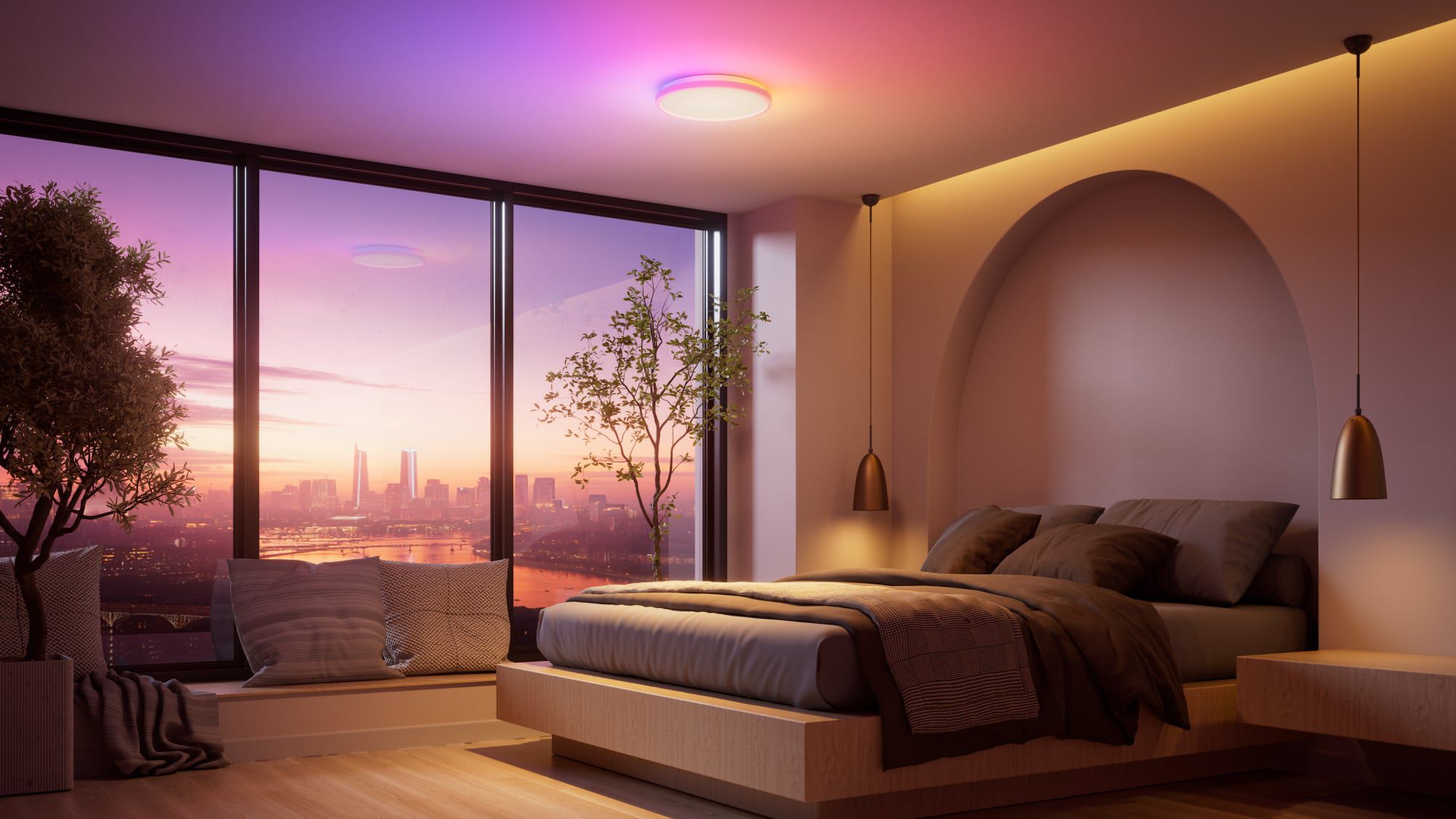
Nanoleaf Launches Affordable Smart Multicolor Ceiling Light With Matter and HomeKit Support
Nanoleaf’s New $80 Smart Ceiling Light: Architectural Specs and Matter Integration
Nanoleaf has expanded its smart lighting portfolio with the release of a $80 Multicolor Ceiling Light, a dual-sided fixture featuring Matter-over-Wi-Fi connectivity and granular control via the Nanoleaf application. The device, which functions as a hard-wired installation, utilizes 196 LEDs to achieve a maximum output of 2600 lumens, targeting both ambient and primary lighting use cases for smart home environments.
The Tech TL;DR:
- Matter-First Architecture: Native support for Matter-over-Wi-Fi ensures seamless interoperability with HomeKit and other Matter-certified controllers, abstracting away proprietary hub dependencies.
- Optical Specifications: The unit features a 2600-lumen output and a 95 CRI, utilizing RG0 Low Blue Light technology to minimize retinal strain in high-intensity settings.
- Operational Constraints: While basic toggles and white-point adjustments are compatible with HomeKit, advanced multi-color gradient scenes require the Nanoleaf app due to current limitations in the HomeKit API for addressable lighting zones.
Hardware Specifications and Thermal Efficiency
The Nanoleaf Multicolor Ceiling Light occupies a slim physical footprint, measuring 13.8 inches in diameter with a thickness of just 1.18 inches. Internally, the assembly supports a color temperature range of 2200K to 6500K. The dual-sided design—comprising a downward-facing primary light and an upward-facing ambient backlight—allows for layered illumination, which can be addressed individually via the Nanoleaf API.
From an engineering perspective, the use of RG0-rated LEDs is a significant decision for residential lighting. By adhering to the IEC 62471 standard for photobiological safety, the manufacturer ensures that the device minimizes blue-light hazard, a common bottleneck in high-CRI, high-intensity LED arrays. The following table provides a breakdown of the technical specifications versus market standards for entry-level smart lighting:
| Metric | Nanoleaf Specification |
|---|---|
| Max Brightness | 2600 Lumens |
| Color Rendering Index (CRI) | 95 |
| Color Temperature | 2200K – 6500K |
| Connectivity | Matter over Wi-Fi |
| Physical Dimensions | 13.8″ x 1.18″ |
Integration Bottlenecks and API Limitations
While the product is marketed as Matter-compatible, users integrating the device into complex automation scripts should note the limitations of the current HomeKit implementation. HomeKit, as of the current SDK, does not natively support the multi-color gradient scenes enabled by the light’s 28 independent color zones. Consequently, developers or power users requiring synchronized, multi-zone lighting effects must maintain a persistent connection to the Nanoleaf application layer, which acts as the abstraction controller for the device’s proprietary scene engine.
For those looking to integrate this hardware into existing home automation stacks, the following cURL request structure demonstrates how to interact with the device if it were exposed via a local bridge or Matter-compliant gateway:
curl -X PUT http://[DEVICE_IP]/api/v1/state
  -H "Content-Type: application/json"
  -d '{"on": true, "bri": 255, "ct": 366, "effect": "none"}'
IT Triage: Managing Smart Home Infrastructure
Deploying smart lighting in high-density environments—such as multi-tenant office spaces or automated residential complexes—introduces significant network overhead. As devices transition to the Matter standard, the reliance on stable local Wi-Fi becomes a critical point of failure. Organizations requiring robust uptime for smart peripherals should consult with a [Managed Service Provider] to segment IoT traffic via VLANs, preventing broadcast storms from affecting primary data throughput.
Furthermore, because these devices are inherently “always-on” endpoints, they represent a potential, albeit small, attack surface for network lateral movement. Cybersecurity auditors, specifically those found at [Cybersecurity Auditing Firm], recommend isolating smart home devices on a guest network with client isolation enabled. This architectural choice ensures that even if the device firmware faces a zero-day vulnerability, the impact remains contained within the IoT subnet.
The Future of Matter-Enabled Lighting
The move toward Matter-over-Wi-Fi by manufacturers like Nanoleaf signals a departure from the “walled garden” approach that characterized the early era of IoT. However, as the industry matures, the focus must shift from basic connectivity to protocol-level efficiency. Future iterations of these lights will likely require deeper integration with Thread networking to reduce latency and power consumption, moving away from the higher energy requirements of Wi-Fi-based smart lighting. For ongoing maintenance and hardware troubleshooting, users should engage with professional [Smart Home Integration Specialists] who can manage firmware update cycles and network topology at scale.
Disclaimer: The technical analyses and security protocols detailed in this article are for informational purposes only. Always consult with certified IT and cybersecurity professionals before altering enterprise networks or handling sensitive data.