
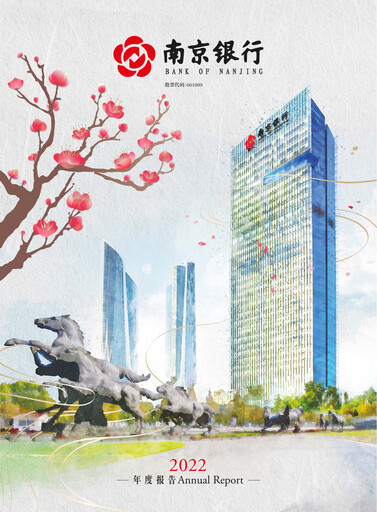
Nanjing Bank Reports 2025 Annual and Q1 2026 Results: Assets Exceed 3 Trillion Yuan with Dual Growth in Performance and Quality
Nanjing Bank announced on April 22, 2026 that its total assets surpassed 3 trillion yuan for the first time as of December 31, 2025, with net profit reaching 6.6 billion yuan in Q1 2026, up 8.05% year-on-year, signaling sustained asset quality improvement and operational efficiency gains amid China’s evolving financial landscape.
Asset Scale Milestone Triggers Liquidity Management Demands
The bank’s asset base now exceeds 3.02 trillion yuan, up 12.3% from 2024, driven by a 15.1% increase in corporate loans and a 9.7% rise in retail mortgage exposure, according to its 2025 annual report filed with the Shanghai Stock Exchange. Net interest margin stabilized at 1.84% in Q1 2026 despite downward pressure on loan yields, reflecting disciplined pricing and improved deposit structure. Non-performing loan ratio fell to 1.18%, down 15 basis points year-on-year, while provision coverage ratio rose to 285%, indicating resilient risk buffers. These metrics suggest Nanjing Bank is transitioning from pure scale expansion to precision underwriting, a shift that creates immediate demand for advanced credit risk modeling and real-time portfolio analytics tools.


“We’re seeing provincial banks like Nanjing Bank prioritize asset quality over headline growth, which means they require partners who can deliver dynamic stress testing frameworks—not just static Basel III compliance engines.”
This operational pivot highlights a critical B2B problem: as regional banks scale beyond 3 trillion yuan in assets, legacy risk systems struggle to monitor sector-specific exposures in real time, particularly in property-linked lending and supply chain finance. The solution lies in enterprise-grade risk management platforms that integrate alternative data streams—such as satellite imagery for construction progress or IoT sensor data from logistics hubs—to enable predictive default modeling. Without such tools, banks face blind spots in emerging risk corridors, especially as China’s property sector deleverages and local government financing vehicles (LGFVs) undergo restructuring.
Profitability Surge Fuels Demand for RegTech and Capital Optimization
Nanjing Bank’s Q1 2026 net profit growth of 8.05% outpaced the 5.2% average for joint-stock commercial banks, driven by a 22% increase in net fee income from wealth management and investment banking services. Cost-to-income ratio improved to 38.6%, down 2.1 points, reflecting successful digital branch transformation and automation of back-office processes. However, this efficiency gain raises a new challenge: how to deploy excess capital efficiently under Basel IV’s stricter output floors, which will seize effect in China in 2027. The bank’s CET1 ratio stood at 11.3% at end-Q1 2026, above regulatory minimums but leaving limited room for aggressive balance sheet expansion without triggering higher capital charges.
This capital constraint creates a clear B2B opportunity for RegTech providers specializing in capital allocation optimization under evolving prudential frameworks. Firms offering AI-driven RWA (risk-weighted asset) forecasting and regulatory scenario planning can help banks like Nanjing Bank identify underutilized capital pools and reallocate them toward higher-margin businesses such as green finance or cross-border trade settlement. As one institutional investor noted during a recent roadshow:
“The real alpha for Chinese regional banks now isn’t in gathering more deposits—it’s in squeezing more return from every unit of risk-weighted asset under Basel IV. Banks that ignore this will see ROE compress, no matter how clean their balance sheets look.”
the bank’s growing reliance on non-interest income underscores the need for sophisticated wealth management technology platforms that can scale advisory services while maintaining compliance with China’s new asset management regulations (AMR 2023). These platforms must support personalized portfolio construction, real-time suitability checks and seamless integration with core banking systems—capabilities that legacy core processors often lack.
Macro Implications: Provincial Banks as Bellwethers of Financial Stability
Nanjing Bank’s performance reflects a broader trend: China’s provincial commercial banks are increasingly acting as shock absorbers for local economic activity, particularly in Tier 2 and Tier 3 cities where they dominate lending markets. Their combined assets now represent over 40% of total banking sector assets in China, up from 32% a decade ago, according to PBOC data. This systemic importance means their operational resilience directly affects regional financial stability—a concern amplified by rising local government debt and uneven post-pandemic recovery.
For global investors and counterparties, this elevates the need for transparent, auditable ESG and governance data from regional banks—a gap that specialized ESG reporting and verification firms are uniquely positioned to fill. As Nanjing Bank expands its green loan portfolio (which reached 280 billion yuan in Q1 2026, up 34% year-on-year), credible third-party validation of environmental impact metrics becomes essential to avoid greenwashing accusations and maintain access to international sustainability-linked funding.
The dual growth in asset scale and operating efficiency demonstrated by Nanjing Bank is not merely a success story—it is a leading indicator of where China’s banking sector is headed. Institutions that fail to modernize their risk, capital, and client service infrastructures will find themselves outperformed by more agile peers, regardless of size. For B2B providers serving the financial sector, the message is clear: the next wave of opportunity lies not in chasing the largest banks, but in empowering the rising middle tier—those provincial powerhouses quietly reshaping China’s financial architecture from within.
To connect with vetted vendors specializing in risk analytics, RegTech, wealth management platforms, and ESG verification for regional banks, explore the World Today News Directory’s Financial Technology & Enterprise Services section.