
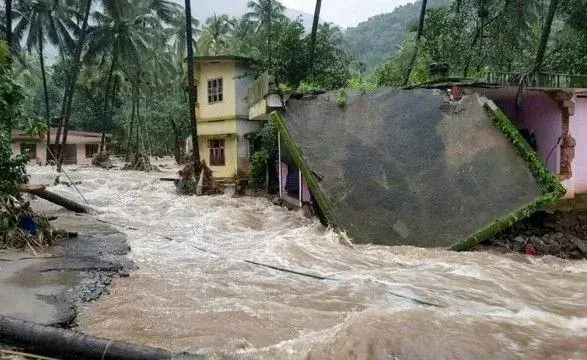
Mozambique Floods: $1.6 Billion Needed for Reconstruction & Climate Resilience
Mozambique faces a $1.6 billion reconstruction bill following catastrophic 2026 floods. The disaster exposes critical infrastructure vulnerabilities in Southern Africa, threatening regional supply chains and demanding immediate intervention from global logistics and climate finance sectors to stabilize the macro-economic fallout.
The numbers do not lie. On March 24, 2026, Maputo released a stark fiscal reality: the cost to rebuild the nation has more than doubled since January, ballooning from $644 million to 102.4 billion meticais (approx. $1.6 billion USD). This is not merely a humanitarian crisis. it is a macro-economic shockwave rippling through the Southern African Development Community (SADC). When a nation’s infrastructure budget is wiped out by climate volatility, the vacuum is filled by sovereign debt risks and logistical paralysis.
For the global market observer, the destruction of Mozambique’s road and rail networks signals a deeper fracture in the regional trade architecture. The Beira Corridor, the vital artery connecting the Indian Ocean to landlocked Zimbabwe, Malawi, and Zambia, is currently compromised. When Mozambique sneezes, the regional economy catches pneumonia. The interruption of this trade route forces multinational corporations to recalibrate their supply chains, often turning to specialized international logistics and freight forwarders to navigate the sudden bottlenecks and reroute essential commodities.
The Escalating Cost of Climate Volatility
Government spokesperson Salim Valá confirmed that the rainy season, which began in October, is expected to persist until mid-April. This extension of the hydrological cycle is the primary driver behind the spiraling reconstruction costs. The initial damage assessment in January failed to account for the compounding erosion of soil stability and the secondary collapse of bridges that appeared intact during the first wave.
This pattern is becoming endemic across the continent. Natural disasters now consume an average of 2% of Mozambique’s GDP annually. In a global economy where margins are thin and efficiency is paramount, a recurring 2% drag on national output is unsustainable. It transforms Mozambique from a growth market into a high-risk zone for Foreign Direct Investment (FDI). Investors are no longer asking about labor costs or tax incentives; they are asking about flood plain topography and drainage engineering.
The human toll provides the grim context for these economic figures. With 298 confirmed deaths and over one million citizens displaced, the social fabric is fraying. More than 21,000 homes are partially destroyed, and 10,000 have been razed completely. This displacement creates a labor shortage in the highly sectors needed for reconstruction, creating a vicious cycle of stagnation.
Regional Infrastructure Vulnerability Matrix
To understand the severity of this event within the broader Southern African context, we must compare the exposure levels of key trade hubs. The following data illustrates why Mozambique remains the most fragile link in the regional chain.
| Metric | Mozambique (2026 Projection) | Regional Average (SADC) | Global Emerging Market Avg |
|---|---|---|---|
| Infrastructure Damage Cost (% of GDP) | ~5.8% (Acute Event) | 1.2% | 0.8% |
| Reconstruction Timeline | 36-48 Months | 18 Months | 12 Months |
| Climate Risk Premium on Sovereign Debt | High | Moderate | Low |
The data indicates that Mozambique is bearing a disproportionate burden. The reconstruction timeline of 36 to 48 months suggests a long-term disruption to trade flows. During this window, the country requires not just cement and steel, but strategic oversight. This is where the role of global risk management and geopolitical consultants becomes critical. Multinational entities operating in the region must engage these experts to hedge against prolonged operational downtime and to structure contracts that account for force majeure events driven by climate change.
The Financing Gap and Sovereign Resilience
Maputo’s objective is clear: build back better. The government aims to transition from reactive emergency response to proactive resilience. Yet, the financing mechanism for this transition is broken. Traditional aid models are insufficient for a $1.6 billion hole. The gap requires innovative financial instruments—green bonds, catastrophe bonds, and blended finance facilities.
Dr. Amina J. Mohammed, Deputy Secretary-General of the United Nations, has frequently highlighted the disparity in climate financing for the Global South. In a recent address regarding African infrastructure, she noted,
“We cannot ask developing nations to build resilience with one hand tied behind their back. The cost of inaction is exponentially higher than the cost of adaptation. We need a financial architecture that treats climate shocks not as anomalies, but as predictable fiscal line items.”
This quote underscores the shift in diplomatic rhetoric. The conversation has moved from “charity” to “structural adjustment.” For Mozambique, securing this capital requires rigorous financial modeling. The state must engage with sovereign debt advisors and infrastructure finance specialists to negotiate terms that do not mortgage the country’s future growth. The danger lies in taking on high-interest reconstruction debt that could trigger a sovereign default within five years.
Supply Chain Entropy and the Beira Corridor
The logistical implications extend far beyond Mozambique’s borders. The Beira Corridor handles a significant portion of Zimbabwe’s imports and exports. With the N1 highway and the Sena railway line compromised, freight costs have spiked by an estimated 40% in the last quarter. This inflation is passed directly to the consumer, destabilizing the broader regional economy.

International shippers are currently scrambling to secure alternative routes through the Nacala Corridor, but capacity there is limited. The bottleneck creates a rare opportunity for specialized logistics firms to intervene. Companies capable of managing intermodal transport—shifting seamlessly between rail, road, and short-sea shipping—are seeing a surge in demand. This is a tangible example of how geopolitical instability drives B2B service requirements.
the destruction of agricultural land threatens food security. Mozambique is a key producer of cashews and cotton. The loss of this harvest impacts global commodity prices, however marginally. For agribusiness giants, the volatility necessitates a re-evaluation of sourcing strategies. They are increasingly turning to agricultural supply chain auditors to verify the resilience of their supplier networks against future climatic shocks.
The 2026 floods in Mozambique are a stress test for the entire African development model. The $1.6 billion reconstruction bill is a down payment on a new reality where climate adaptation is the primary driver of fiscal policy. As the waters recede, the true challenge begins: restructuring the economic engine of a nation while the rains are still falling. For the global directory of business and diplomacy, this event serves as a reminder that in the 21st century, the most valuable asset is not oil or gold, but resilience. Navigating this new landscape requires partners who understand that the map is no longer static; it is fluid, and those who can chart the course through the floodwaters will define the next decade of African growth.