Morocco Diversifies Security Partnerships Under Hammouchi to Fight Transnational Crime
Morocco is aggressively diversifying its global security footprint through a series of strategic partnerships led by the Director General of National Security (DGSN).
These agreements, which span continents from Scandinavia to Brazil, aim to use Moroccan safety models to strengthen international stability and fight transnational crime. The expansion operates as a comprehensive strategy to enhance global intelligence sharing and human capital development across diverse jurisdictions.
These cross-border diplomatic actions establish Morocco as a growing hub for security cooperation, positioning Rabat as a reliable strategic partner in global risk mitigation. The consistent signing of Memorandums of Understanding (MoUs) by DGSN and DGST has created a strong legal foundation for deep, long-term collaboration in intelligence and law enforcement capabilities.
Diversification of Global Security Agreements
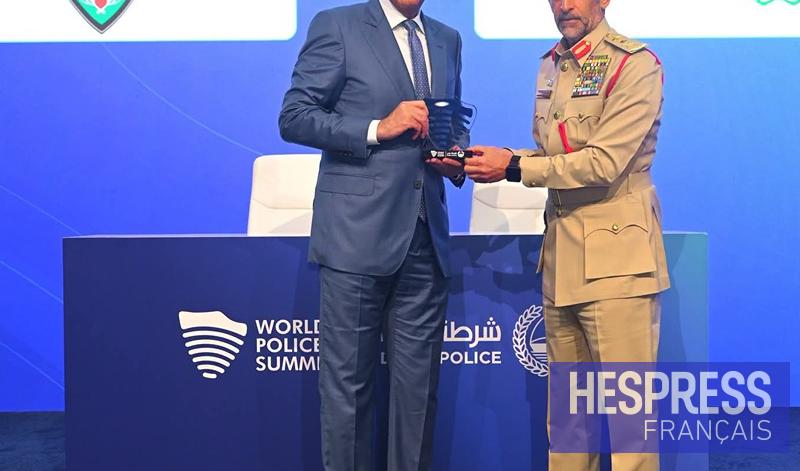
The expansion of these agreements under the direction of Abdellatif Hammouchi involves a variety of cooperative formats. The recent bilateral agreement with the General Command of the Dubai Police outlines a framework for cross-border security and intelligence operations. This partnership focuses specifically on the fight against various forms of organized crime, alongside the exchange of best practices concerning border security.
A separate, yet equally significant, MOU with the General Command of the Abu Dhabi Police emphasizes investment in human capital. This cooperation provides the necessary legal and organizational basis for long-term efforts dedicated to training, police qualification, and capacity building within the police force.
This strategic investment in institutional capacity represents a long-term view of security diplomacy. It is not an isolated incident but a deliberate component of a broader, integrated strategy. This approach is designed to consolidate existing ties with “brother and friend” nations while actively seeking new international partners to serve the Kingdom’s interests through security diplomacy.
Geographic Scope of DGSN Partnerships
The reach of the DGSN’s collaborative efforts extends across geographically disparate regions. In May 2024, the DGSN finalized a security and cooperation MOU with the Federal Police of Brazil. This showed a willingness to work with diverse international law enforcement agencies outside of traditional Western security blocs.
The African continent has also seen significant fortification of ties. On November 24, 2025, a similar security cooperation memorandum was signed with the Federal Police of Ethiopia in Marrakech, on the sidelines of the 93rd General Assembly of Interpol. The DGSN then signed another agreement with the National Police of Liberia in May 2026 in Rabat, during the 7th edition of the DGSN Open Days.
These agreements underscore a pivot toward global South engagement, which is crucial for managing transnational crime and ensuring regional stability across multiple economic corridors.
Northern Europe: Advanced Intelligence Exchange
Moroccan security diplomacy has also penetrated Northern Europe, initiating novel partnerships in Scandinavia.
Building on that initial momentum, Abdellatif Hammouchi signed a similar MOU with the Swedish National Police in April 2026 during a working visit to Stockholm. This bilateral agreement established a solid cooperative foundation. It has already led to coordinated efforts resulting in the arrest of several individuals sought by the Swedish justice system in cross-border organized crime cases.
The Swedish government and its security services have been vocal in commending the Moroccan security services. They specifically recognized the role the DGSN plays in tracking wanted persons internationally and preventing them from utilizing stable bases or safe havens.
In a neighboring jurisdiction, the DGSN’s Tangier Police Prefecture signed a “letter of intent” with the Dutch National Police’ Center of the Netherlands Police Unit on November 12. This instrument is intended to create a durable framework for bilateral cooperation, focusing on the exchange of knowledge and best practices in security.
Strategic Ties with France and the Middle East
The relationship with France remains a cornerstone of Morocco’s security policy. On June 24, 2025, Abdellatif Hammouchi signed a joint action plan with his French counterpart, Louis Laugier, the Director General of the French National Police, according to Hespress Français – Actualités du Maroc. This plan elevated the Morocco-France security cooperation to the level of strategic bilateral relations.
This established partnership has yielded immediate operational results. In mid-November, French authorities arrested four individuals wanted by the French judiciary in cases relating to homicide and organized crime gang formation. These actions occurred within a single week.
The initial partnerships established with the United Arab Emirates represent a high-level commitment to institutional standardization. The Abu Dhabi agreement specifically targets the qualification and training of police personnel, whereas the Dubai MOU focuses on intelligence sharing and fighting criminal syndicates. These two agreements demonstrate a dual strategy of capacity building and operational enforcement.
The strategic deployment of these agreements across the globe highlights a clear institutional objective: to project and strengthen Morocco’s security model as a viable partner for international stability.
The Architecture of Global Security Cooperation
The variety of agreements—ranging from simple letters of intent to comprehensive bilateral memorandums—demonstrates a nuanced approach to international diplomacy.
Chronology of Security Developments
A view of the recent strategic agreements illustrates the rapid pace of Morocco’s diplomatic security outreach:
- 2024-05: Signed a security cooperation memorandum with the Federal Police of Brazil.
- 2026-04: Signed a memorandum with the Swedish National Police in Stockholm.
- 2025-06-24: Signed a joint action plan with France’s National Police in Rabat.
The ability of the DGSN and DGST to secure and implement such diverse bilateral agreements reflects a sophisticated operational capacity.
Hammouchi, born in 1966 in Taza, studied law at the Dhar El Mehraz Faculty of Sidi Mohamed Ben Abdellah University in Fez before joining the DGSN in 1993, where he was assigned directly to the Directorate of Territorial Surveillance. He specialized in analyzing Islamist movements and jihadist networks, took part in the investigations following the 2003 Casablanca bombings, and rose to head the intelligence service in December 2005.
He now holds a rare dual mandate, serving concurrently as head of Morocco’s national police service and of its domestic intelligence service, the DGST, making him one of the central figures in the Kingdom’s security architecture.
The trajectory of these partnerships suggests a deepening commitment to using security cooperation as a primary engine for international soft power.