
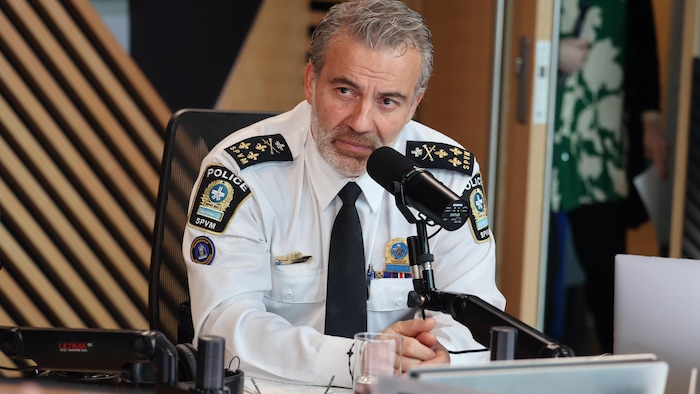
Montréal Considers Ban on Insulting Police After Viral Video
Montreal city officials are evaluating a novel municipal bylaw after a resurfaced 2025 video showed a police officer subjected to severe misogynistic abuse by a motorist. While the driver received a minor fine for vehicle infractions, current regulations lack specific penalties for verbal assaults on duty, prompting the Montreal Police Service (SPVM) and Mayor Soraya Martinez Ferrada to review legal protections for public servants.
This incident exposes a critical gap in municipal governance. A police officer stood calm while a citizen screamed threats of enslavement and degradation. The law caught the driver for tinted windows, not the hate speech. That distinction matters. It defines the boundary between a traffic stop and a human rights violation. Now, the City of Montreal must decide if verbal violence against uniformed officers warrants a specific legislative response.
The video, originally recorded in June 2025, circulated widely across social media platforms in March 2026. It captures a stark power dynamic inversion. The officer, tasked with enforcing order, endured slurs including commands to “shut your mouth” and declarations that she was a “slave.” The Montreal Police Service authenticated the footage immediately. They condemned the language as misogynistic and degrading. Yet, the legal consequence for the motorist remained a $186 ticket for window tinting violations. The insults themselves carried no weight under current city bylaws.
Fady Dagher, Director of the SPVM, labeled the content repugnant. He linked the rhetoric to broader masculinist movements targeting women in authority. His stance is clear. The police union, the Fraternal Organization of Montreal Police Officers, demands a municipal regulation to criminalize such insults. They argue that existing criminal harassment codes are too cumbersome for street-level interactions. They want a tool that fits the speed of modern conflict.
Legal analysts point to Section 264 of the Criminal Code of Canada regarding criminal harassment, but note that municipal bylaws offer a faster, administrative route to accountability that does not require the threshold of “fear for safety” proven in criminal court.
This distinction creates a complex landscape for civic order. Municipal bylaws operate differently than federal criminal law. They focus on community standards and administrative penalties rather than imprisonment. Several municipalities on the West Island of Montreal already enforce regulations prohibiting insults against officers. This patchwork enforcement creates confusion. A citizen might face fines in Dorval for speech that carries no penalty in downtown Montreal. Uniformity remains the goal.
Mayor Soraya Martinez Ferrada cautions against haste. She stated It’s too early to determine if a new regulation is necessary. Her priority balances respect for citizens with respect for police. She intends to ensure the police have the means to work effectively. This balancing act requires precise legal drafting. Overreach risks chilling legitimate criticism of police conduct. Underreach leaves officers vulnerable to psychological warfare.
For legal professionals monitoring this development, the implications extend beyond traffic stops. This debate touches on freedom of expression versus public order. Navigating these penalties becomes a logistical minefield for both the accused and the municipality. Developers and civic leaders are consulting top-tier criminal law specialists to shield their assets and understand liability. Clarity in legislation protects everyone. It ensures officers can enforce laws without abuse, and citizens can criticize without fear of arbitrary punishment.
The human cost of this legal ambiguity is measurable. Verbal abuse contributes to burnout and PTSD among first responders. The SPVM praised the officer’s emotional and intellectual restraint. She completed the intervention without lowering herself to the motorist’s level. That professionalism comes at a price. Continuous exposure to degradation erodes mental health. It impacts retention rates in law enforcement agencies globally.
Support systems must evolve alongside legislation. As municipalities consider stricter penalties for abuse, they must also fund better support for victims within the force. Access to specialized care is not optional. It is operational necessity. Departments are increasingly partnering with psychological support networks to provide trauma counseling for first responders. Protecting the mind is as vital as protecting the body.
| Jurisdiction | Current Status on Verbal Abuse Bylaws | Penalty Type |
|---|---|---|
| Montreal (Central) | Under Review (March 2026) | None Currently |
| West Island Municipalities | Active Regulations | Administrative Fines |
| Quebec Provincial Law | Criminal Code Applies | Criminal Charges (High Threshold) |
Civil liberty monitors watch these developments closely. Any new bylaw must withstand constitutional scrutiny. The Canadian Charter of Rights and Freedoms protects expression, even offensive expression, unless it crosses into hate speech or harassment. civil liberty monitors often engage when municipal powers expand. Their oversight ensures that new regulations do not become tools for suppressing dissent. Transparency in the drafting process is essential.
The SPVM confirmed they are analyzing the situation. They will contact the City of Montreal to evaluate appropriate future steps. This process involves stakeholder consultations. It requires data on frequency and impact. It demands input from legal experts, union representatives, and community leaders. The goal is a regulation that deters abuse without infringing on rights. Quebec municipal law frameworks provide the structure for such bylaws.
Broader context matters. This incident is not isolated. It reflects a global trend of declining respect for institutional authority. Similar debates occur in federal criminal justice systems across the Commonwealth. The question remains consistent. How does a society protect its servants from those it serves? The answer lies in clear, enforceable, and fair rules.
Mayor Martinez Ferrada insists misogynistic and disrespectful remarks have no place in Montreal. She hears the union’s demand. The administration must now translate sentiment into statute. The video serves as evidence. It proves the necessitate for discussion. Whether it proves the need for a law depends on the next few months of analysis. The Montreal Police Service official portal will likely host updates on the consultation process.
this story is about dignity. It is about the woman in the uniform who stood still while someone tried to break her spirit. It is about the city that must decide what behavior it tolerates. Laws are not just text. They are signals. They tell citizens what is acceptable. They tell officers what support they have. As this review unfolds, the directory of civic solutions grows. Legal firms, advocacy groups, and health services stand ready to assist.
We watch this space. The decision made in Montreal will ripple outward. Other cities will watch. They will observe if a bylaw works. They will see if it holds up in court. For now, the officer’s professionalism stands as the standard. The city’s response will define the future. Those affected by similar disputes should seek verified professionals equipped to handle this developing story through the World Today News Directory. The rule of law depends on clarity. And clarity starts now.