
Montreal‘s Bike Paths: A Divisive Issue as Mayoral Candidates Weigh In
The expansion of Montreal’s bicycle network continues to be a point of contention as the city heads towards a mayoral election, sparking debate over whether bike paths are a boon to the economy and public health, or a burden on businesses and drivers. Recent experiences on St-Denis Street illustrate the complex impact of these changes.
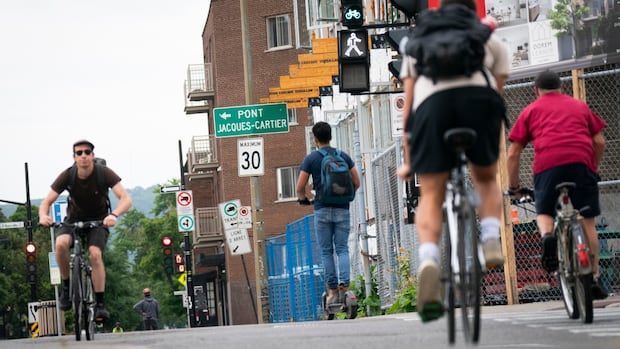
the REV (Réseau vélo express) project, implemented on St-Denis Street in 2020, initially met with resistance from some business owners. Jean Savoie, owner of Salaison Saint-André butcher shop on Henri-Bourassa Boulevard, recounted how the removal of parking spaces impacted his clientele. “The somewhat older clients, 75 years old and up, who came for a lot of homemade dishes – well, we lost them,” he said, highlighting the difficulties faced by customers who rely on driving.
However, the initial anger has largely subsided. Pauline Béchu, executive director of SDC St-Denis, notes that shop owners have “come around” after “seeing that the REV has had a positive impact on the economy of the street.” She points to a commercial occupancy rate of 87 per cent,a meaningful increase from 75 per cent in 2019,and a perception of St-Denis Street as a “more welcoming place.” Interestingly, current requests from business owners now focus on increasing cycling infrastructure – specifically, more bicycle stations to attract cyclist customers.
This shift in outlook is playing out against the backdrop of the mayoral campaign, with candidates offering varied approaches to the city’s cycling network.
Ensemble Montréal Leader Soraya Martinez Ferrada is campaigning on a temporary halt to bike path construction. She has pledged to order an audit of existing bike paths within her first 100 days in office to determine which should be maintained or removed, while still maintaining she is “pro-bikes.”
projet Montréal Leader Luc Rabouin, succeeding Valérie Plante, has promised to substantially expand access to the Bixi bicycle-sharing service. His plan involves adding 1,000 Bixi stations over the next four years, ensuring all Montrealers live within a 15-minute walk of a station.
Transition montréal Leader Craig Sauvé, a former Projet Montréal councillor, frames bike paths as essential for “public safety and public health.” He proposes adding baby seats to Bixi bikes and increasing the availability of electric-assist bikes.
futur Montréal Leader Jean-François Kacou proposes limiting new bike path construction to residential streets,green corridors,and parks,arguing this would improve safety.
Action Montréal Leader Gilbert Thibodeau is the most direct in his opposition, committing to increasing on-street parking and promising to “remove or adjust” bike paths that impede traffic flow or reduce parking availability.
