
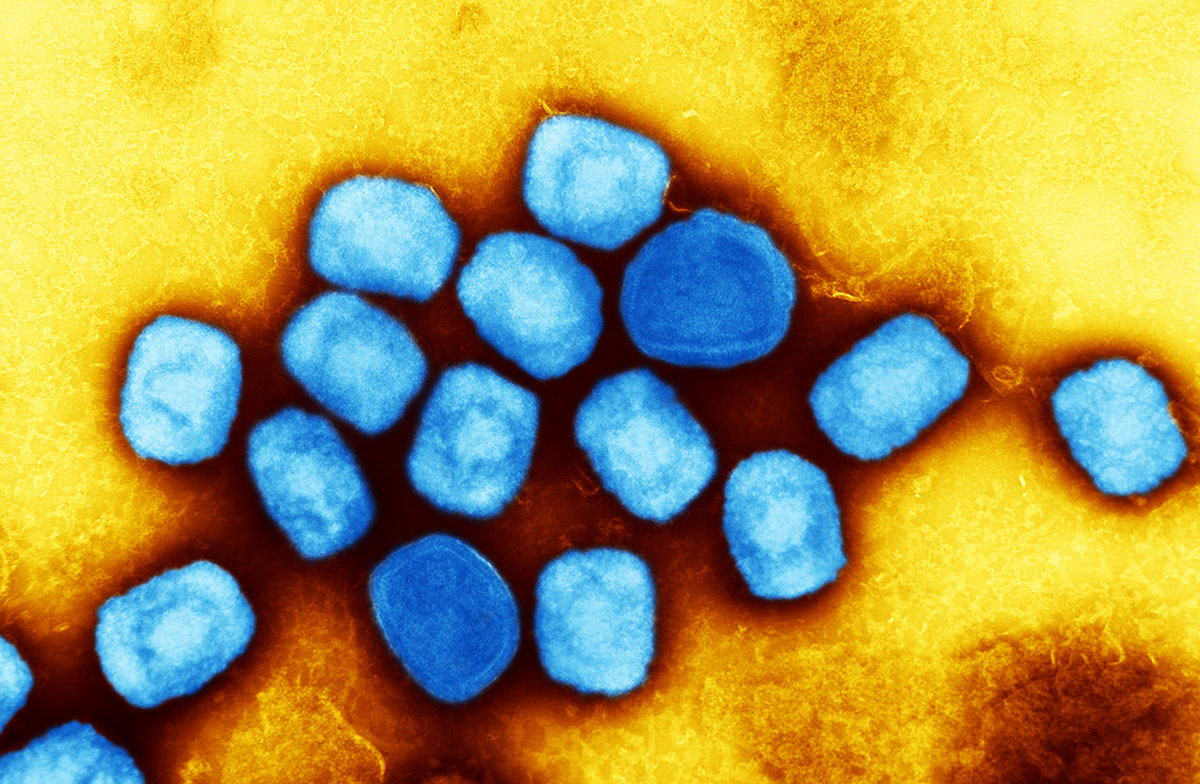
Monkeypox Virus Uses Protein to Evade Immune System
New research reveals how MPXV subverts early defenses, suggesting novel therapeutic targets.
A newly published study uncovers the mechanism by which monkeypox virus (MPXV) sidesteps the body’s initial immune responses. This breakthrough offers possibilities for creating innovative treatments and more potent vaccines against the virus and its relatives.
Key Discovery: OPG147’s Role
Researchers at Wuhan University and the Wuhan Institute of Virology found that the viral protein OPG147 is crucial in preventing immune detection during the early stages of infection. While OPG147 facilitates cell entry for poxviruses, the study demonstrates its secondary function: deactivating the host’s immune alarm.
This research illuminates how MPXV and related poxviruses, including vaccinia virus (VACV) used in smallpox vaccines, avoid triggering a robust antiviral response.
The illness caused by monkeypox virus is now designated mpox, a change implemented by the World Health Organization in 2022 to lessen stigma and enhance public communication. Although mpox is the name of the disease, monkeypox virus (MPXV) remains the scientific nomenclature.
MITA/STING Pathway: The Body’s Alarm System
Innate immunity relies on the MITA/STING pathway to detect infections before symptoms arise. When a virus infects a cell and releases DNA, the cGAS sensor identifies the foreign material. It then produces a molecule activating MITA (also known as STING), which triggers a chain reaction producing interferons and antiviral proteins to control the infection.
MITA/STING serves as the body’s built-in alarm system for DNA viruses. Without it, the immune system might not respond quickly enough to halt the spread of the virus. According to the WHO, as of May 2024, over 97,000 cases of mpox have been confirmed globally (WHO).
How OPG147 Silences the Alarm
The study reveals that OPG147 from monkeypox virus, along with similar proteins in other poxviruses, can directly interfere with MITA/STING. Instead of blocking initial detection, OPG147 quietly disrupts the necessary steps for MITA/STING to activate a full immune response. OPG147 hinders ISGylation, a chemical process essential for MITA activation. It also impedes MITA from forming necessary structures for sending immune signals and traps MITA within the cell’s endoplasmic reticulum, preventing it from raising the alarm.
By interfering with these processes, OPG147 enables the virus to establish an infection without immediately alerting the immune system.
Weakening the Virus’s Armor
To assess the importance of OPG147, researchers created a mutated version of vaccinia virus where OPG147 could no longer interact with MITA. The altered virus triggered stronger immune responses in human cells and mice, produced lower virus levels in the body, and caused milder disease with less tissue damage.
Crucially, the mutation did not impair the virus’s ability to replicate, indicating that it specifically weakened the virus’s capacity to evade immunity—not its basic life cycle. These findings highlight OPG147 as a key virulence factor, essential for the virus to cause disease.
Implications for Public Health
Although mpox is no longer rare, it remains a public health and global security concern, especially for immunocompromised individuals and regions with limited access to vaccines and treatments. Orthopoxviruses also remain a concern for potential biosecurity threats.
This research identifies OPG147 as a potential target for antiviral drugs or for developing safer, more effective vaccines. For public health agencies and global health security planners, this study offers valuable insights into how poxviruses evade immune detection.
New Avenues for Vaccine and Antiviral Strategies
OPG147’s uniqueness lies in its distinct mechanism from other known poxvirus immune blockers. Unlike viral proteins that destroy immune response signaling molecules, OPG147 directly jams the signaling machinery, delaying immune detection.
This sophisticated evasion strategy highlights the potential of combining treatments that target multiple viral evasion proteins for stronger protection.
