Money Laundering Shifts From Gambling to Las Vegas Casinos
Sicilian Cosa Nostra has shifted its global money laundering operations from Las Vegas casinos to Malta. By infiltrating online gambling and political circles, the organization seeks to clean billions in criminal proceeds, a scheme linked to the murder of journalist Dafne Caruana Galizia and massive regulatory failures in Nevada.
The movement of illicit capital is rarely a random act. it is a strategic migration. When the regulatory heat becomes unbearable in one jurisdiction, the money finds a cooler climate. For decades, the neon lights of the Las Vegas Strip provided a convenient veil for the Sicilian mafia. However, a systemic crackdown by U.S. Regulators has effectively pushed these financial currents across the Atlantic toward the Mediterranean.
This migration represents a profound failure of international financial oversight. The problem is no longer just about “dirty money” entering a casino; it is about the institutionalization of crime within sovereign governments. When criminal organizations move from simple gambling to purchasing islands and influencing ministers, the stability of local economies is compromised. Businesses operating in these regions now face the risk of unwitting complicity in global crime syndicates.
The Nevada Collapse: Why Las Vegas Became Too Hot
The shift toward Malta was not a choice, but a necessity driven by a wave of aggressive enforcement in Nevada. The Nevada Gaming Control Board (NGCB) has recently dismantled the perceived safety of the Vegas Strip, proving that even the largest operators are not immune to scrutiny. Wynn Resorts, for instance, recently agreed to pay a $5.5 million fine following an agreement with the NGCB due to failures in anti-money laundering (AML) controls and unregistered international money transfers.
The scale of the failure was systemic. Investigators uncovered “proxy betting,” where individuals placed bets on behalf of third parties to hide the origin of the funds. More alarming were the use of “flying money” and “human heads”—deceptive schemes specifically designed to mask the true ownership of wealth. This was not an isolated incident; Resorts World Las Vegas was hit with a $10.5 million fine, and MGM Resorts International paid $8.5 million for similar AML inadequacies.
The most staggering blow came when Wynn Casino entered into a Non-Prosecution Agreement, paying a massive $130 million fine to avoid the total revocation of its license. This environment of extreme risk made Las Vegas a liability for Cosa Nostra. When the cost of laundering exceeds the profit of the crime, the route changes.
For legitimate enterprises caught in the crossfire of these investigations, the legal fallout is devastating. Many are now seeking AML compliance specialists to overhaul their internal protocols and avoid the catastrophic fines that have crippled Vegas operators.
The transition of illicit funds from the American desert to the Maltese archipelago marks a evolution in mafia strategy: moving from the periphery of the economy into the heart of government administration.
The Maltese Pivot and the Price of Truth
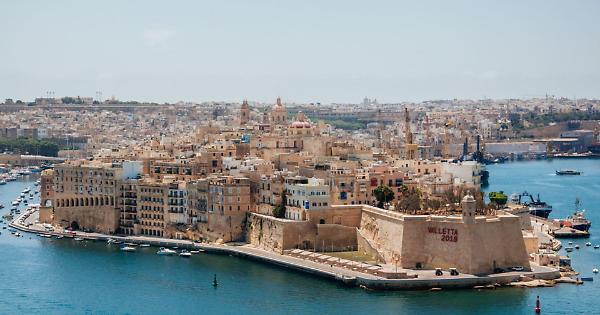
Malta, once the “Island of the Knights,” has become the new frontier for the Castelvetrano and Mazara del Vallo families. The strategy here is more sophisticated than the Las Vegas model. Rather than simply hiding money in chips, Cosa Nostra has attempted to purchase sovereignty itself. As far back as 1994, investigations revealed a plot to use one trillion lire to purchase the island of Manuel, a fortress built by the Knights of St. John.
The mechanics of this operation involved a network of “white-collar” facilitators. Intercepted communications at the Raphael Hotel in Rome exposed the involvement of Pietro Ferraro, a notary from Castelvetrano, and Giovanni Bastone, a mafia boss from Mazara del Vallo. They collaborated with Victor Balzano, a representative of Maltese organized crime, and high-ranking government officials in Malta to integrate criminal wealth into the island’s infrastructure.
This infiltration had a deadly cost. Journalist Dafne Caruana Galizia spent years uncovering the threads linking online gambling, political corruption, and the Sicilian mafia. Her murder in 2017 was the ultimate act of silence. Years later, agents from the Dia (Direzione Investigativa Antimafia) in Trapani, while tracking individuals like entrepreneur Carlo Cattaneo, discovered that the people linked to the Castelvetrano family were the same figures suspected of involvement in the journalist’s assassination.
Tracing these assets requires more than standard auditing. It requires forensic accountants capable of untangling “flying money” schemes across multiple borders and shell companies.
The Digital Frontier: Online Gambling as a Shield
The modern mafia does not rely solely on physical casinos. The shift toward online betting provides a layer of anonymity that physical venues cannot match. By controlling the platforms where bets are placed, criminal organizations can simulate gambling losses and wins to “clean” millions of dollars in minutes.

The risk extends beyond the criminal world. Legitimate investors in the Mediterranean gaming sector are finding themselves in a legal minefield. To protect their assets from being seized under anti-mafia laws, many are consulting international corporate lawyers to ensure their partnerships are untainted by organized crime.
| Jurisdiction | Primary AML Failure | Key Penalty/Outcome |
|---|---|---|
| Las Vegas (Wynn) | Proxy Betting / “Flying Money” | $130 Million Fine |
| Las Vegas (MGM) | General AML Inadequacies | $8.5 Million Fine |
| Malta | Political Infiltration / Online Betting | Journalistic Assassination / Dia Investigation |
The current landscape shows a terrifying synergy between the “old world” mafia of Sicily and the “new world” of digital finance. We spot this in the case of a Las Vegas CEO facing a potential 127-year sentence for laundering $4 million in Bitcoin, proving that the transition to cryptocurrency is the next logical step in the evolution of these routes.
The battle against money laundering is no longer a local police matter; it is a global war of attrition. As the Dia continues to peel back the layers of the Sicily-Malta connection, it becomes clear that the mafia does not disappear—it simply relocates. The danger lies in the silence of the jurisdictions that welcome this capital. Those who ignore the red flags today will find themselves defending their licenses in court tomorrow. For those navigating this precarious global environment, finding verified, ethical professionals through the World Today News Directory is the only way to ensure that your business remains on the right side of the law.