Moldova Bans Transnistrian Leader From Traveling After Putin Award
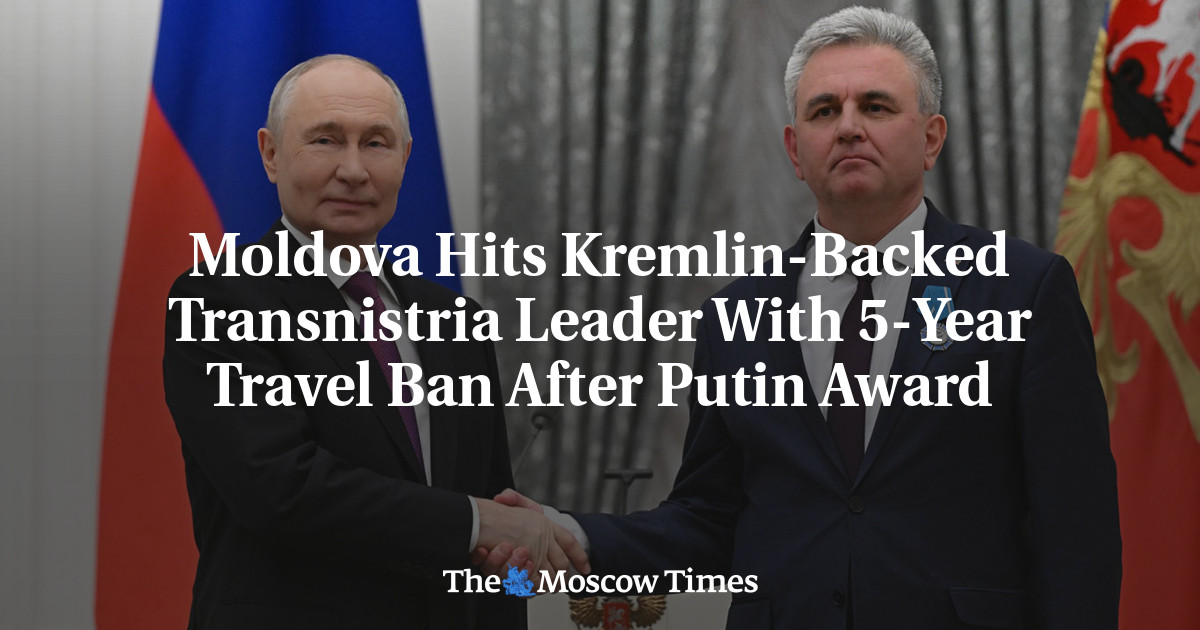
Moldovan authorities have imposed a five-year travel ban on Vadim Krasnoselsky, the leader of the breakaway Transnistria region, following his recent trip to Moscow to accept a state award from President Vladimir Putin. The move, announced by Moldova’s bureau for reintegration policies, follows the leader of the breakaway region accepting a state award from President Vladimir Putin and marks a tension between Chisinau and the Moscow-backed administration.
Putin Awards Order of Honor to Krasnoselsky
During a Kremlin ceremony held on Wednesday, President Vladimir Putin presented Vadim Krasnoselsky with Russia’s Order of Honor. According to The Moscow Times, Putin credited the Transnistrian leader with strengthening ties between the region and Moscow despite what the Russian president characterized as external pressure. In his remarks to Putin, Krasnoselsky described the separatist territory as being indisputably part of the Russian world, a term used to describe places with cultural and historical ties to Russia.
Chisinau Imposes Five-Year Travel Restrictions
In response to the visit, the Moldovan government declared that Krasnoselsky will face immediate restrictive measures, including a ban on leaving the country for the next five years. The bureau for reintegration policies stated that it is currently evaluating additional penalties while attempting to avoid a full-scale escalation of the conflict. The Moldovan government explicitly condemned the visit and the award as a Russian provocation designed to obstruct Moldova’s ongoing European integration efforts.

The situation remains fluid regarding the physical whereabouts of the Transnistrian leader. Although the travel ban was announced on November 5, it was not immediately clear where Krasnoselsky was located. Reports indicate that on the same day the Kremlin ceremony was publicized, Krasnoselsky posted a photograph of a military reburial ceremony within Transnistria, though he did not confirm his personal attendance at the event.
Moldova Pursues European Union Membership Amidst Regional Tensions
As reported by the Bureau for Reintegration, the visit to Russia occurred simultaneously with OSCE-facilitated discussions regarding natural gas supplies for the Transnistrian region during the winter. The bureau emphasized that the OSCE’s involvement remains essential for preventing further instability.
The political stakes are high as Moldova continues to pursue European Union membership, a process initiated following the 2022 Russian invasion of Ukraine. Igor Grosu, speaker of the Moldovan parliament and leader of the ruling party, has aligned himself with the government’s stance, characterizing the Kremlin’s actions as an intentional attempt to destabilize the nation. Transnistria, which relies heavily on Russian military and financial support, has hosted approximately 1,500 Russian troops since the collapse of the Soviet Union.
Upcoming Unrecognized Elections
The timing of these restrictions coincides with the lead-up to regional elections in Transnistria, which are scheduled for next month. While Krasnoselsky has held the separatist leadership position, he is not currently expected to seek a third term. People or groups caught in complicated political conflicts—or those dealing with the logistics of international travel bans and changing laws—often turn to lawyers or experts in international policy to avoid personal or organizational legal trouble.
For residents and entities operating near the border or within the Dniester region, the uncertainty surrounding these developments highlights the necessity of maintaining clear lines of communication with regional authorities. As the government in Chisinau weighs further measures, the focus remains on regional stability. The bureau for reintegration concluded its statement by reiterating its commitment to maintaining order without exacerbating the existing regional divide.