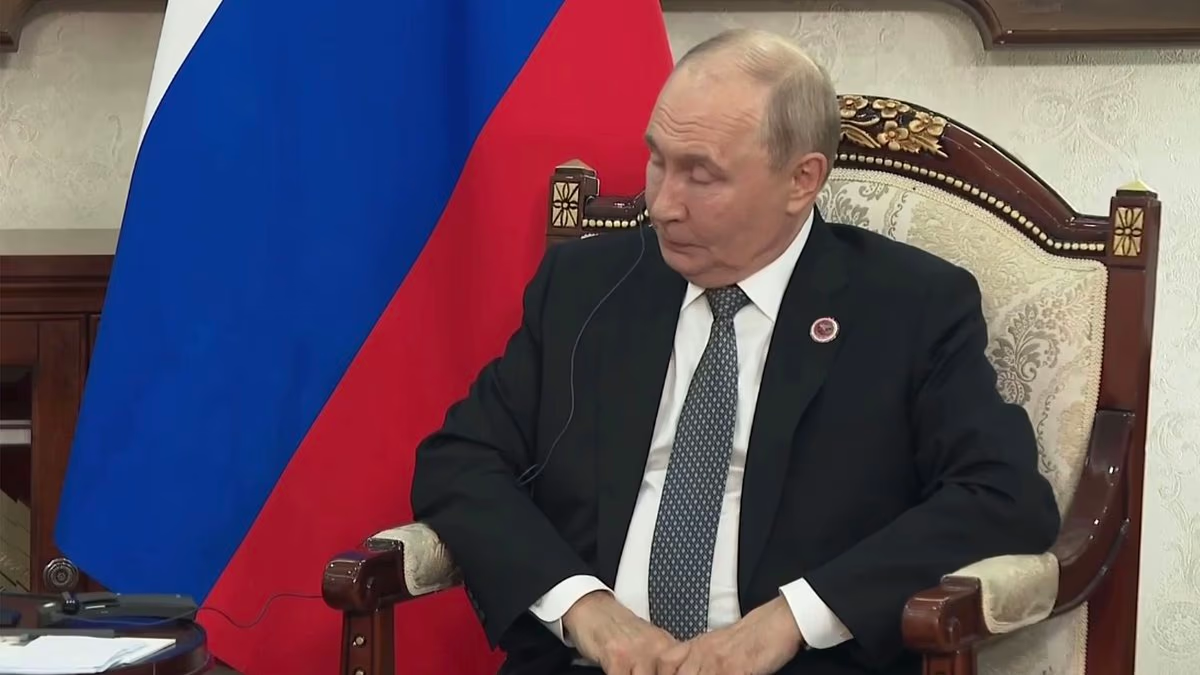
Modi Urges Putin to End Ukraine War and Pursue Path of Peace
Indian Prime Minister Narendra Modi urged Russian President Vladimir Putin to move away from the ongoing conflict in Ukraine toward a path of peace, emphasizing the foundational importance of democracy, diplomacy, and dialogue during a face-to-face meeting on the sidelines of a regional summit.
Diplomatic Rebuttal on the Regional Summit Sidelines
The high-stakes exchange occurred during a regional summit in Samarkand, Uzbekistan, bringing together leaders from the Shanghai Cooperation Organisation, including Russia, China, India, Pakistan, Iran, and four Central Asian nations. According to a readout provided by India’s Ministry of External Affairs, Modi told Putin directly that the current era is not an era for war.
“I know that today’s era is not of war and we have talked to you many times over the phone on the subject that democracy and diplomacy and dialogue are all these things that touch the world,” Modi stated during the bilateral discussions.
The public nature of the remarks highlights mounting diplomatic pressure on Moscow. Just a day prior to the meeting, Putin openly conceded that Beijing shared similar questions and concerns regarding the military campaign in Ukraine.
Strategic Realities and Supply Chain Pressures
India and China remain primary buyers of Russian petroleum exports, making their public reservations a critical factor for the Kremlin’s long-term economic strategy. At the same time, New Delhi maintains historic defense ties with Moscow, with Russia serving as India’s primary arms supplier since the Cold War era. Despite these deep military and trade links, New Delhi has consistently pressed for diplomatic resolutions.
Official statements from India’s Ministry of External Affairs confirmed that the discussions between Modi and Putin also addressed pressing global concerns. Both leaders evaluated ongoing strains impacting global food security, energy security, and the international availability of fertilizers amid broader geopolitical disruptions.
Battlefield Shifts and Humanitarian Realities
The diplomatic friction coincides with substantial battlefield reversals for Russian forces. Ukrainian military officials reported recapturing approximately 8,000 square kilometers of territory in recent weeks. Heavy shelling continues across southern and eastern regions, where local authorities recently uncovered at least 440 individual graves at a mass burial site in Izium within the liberated Kharkiv region.
Responding to Modi’s remarks, Putin acknowledged the Indian leader’s perspective. “I know about your position on the conflict in Ukraine and I know about your concerns. We want all of this to end as soon as possible,” Putin replied.
Both leaders ultimately agreed to maintain open communication channels as the geopolitical landscape continues to evolve. Whether these high-level discussions translate into concrete diplomatic breakthroughs remains to be seen, but the public shift in tone from key allies signals an increasingly complicated path forward for Moscow.