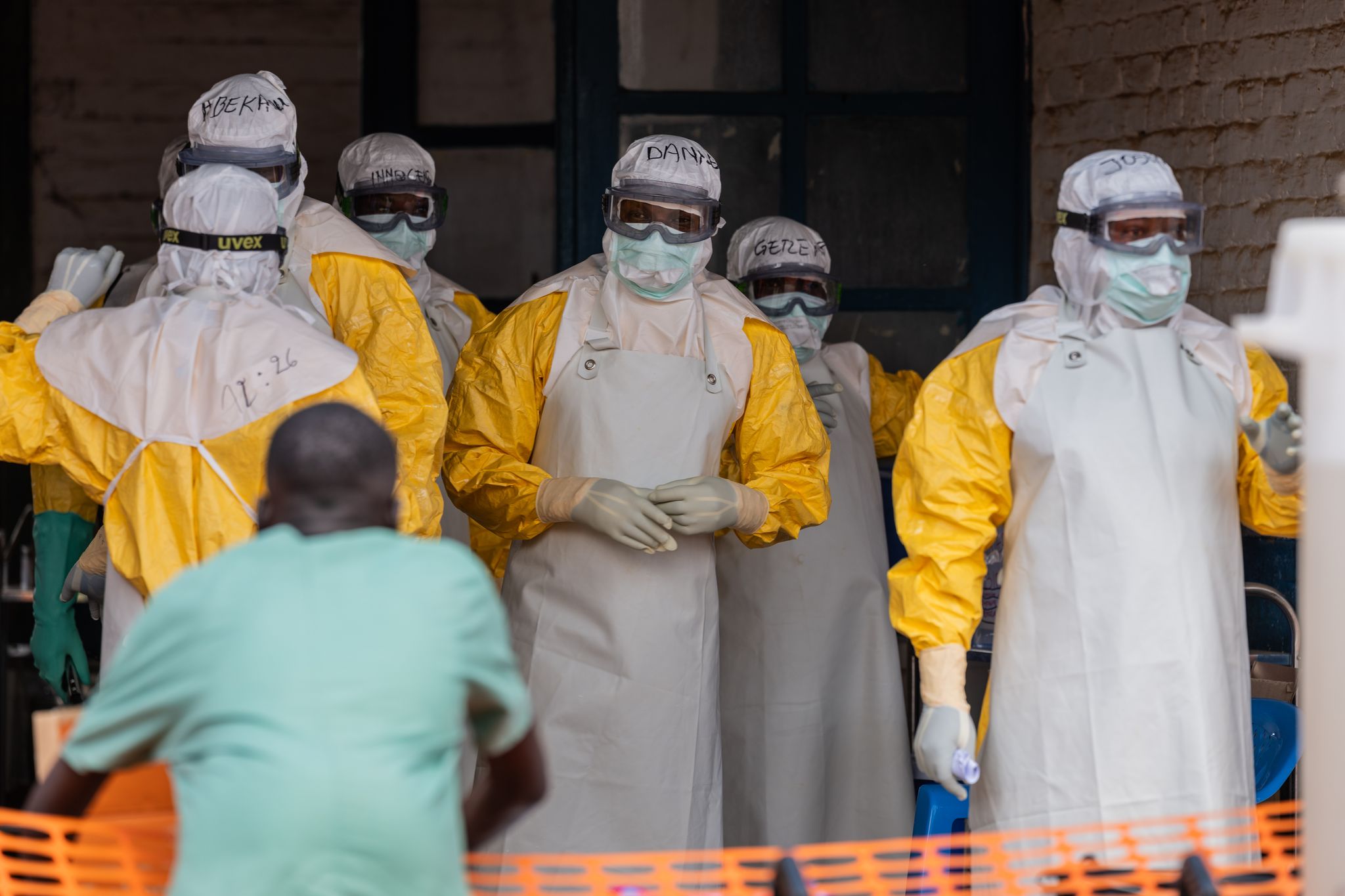
Models Warn of Potential Large-Scale Outbreak Without Public Health Intervention
Epidemiological modeling has reached a critical inflection point regarding the potential trajectory of Ebola virus disease (EVD) outbreaks. Current projections suggest that without the rapid mobilization of robust public health interventions, the clinical burden could escalate to an estimated 20,000 cases. This analysis explores the intersection of viral pathogenesis, the necessity of scalable containment, and the systemic requirements for modern health infrastructure to mitigate such a morbidity surge.
Key Clinical Takeaways:
- Mathematical models indicate a significant risk of exponential viral spread absent aggressive public health containment strategies.
- Early diagnostic intervention and the maintenance of cold-chain logistics for prophylactic measures remain the primary standard of care.
- Addressing systemic healthcare weaknesses is essential for regional preparedness and the prevention of catastrophic morbidity outcomes.
The Mechanics of Viral Pathogenesis and Transmission Dynamics
Ebola virus, a member of the Filoviridae family, remains a formidable challenge due to its high case-fatality rate and complex transmission dynamics. The virus triggers a profound systemic inflammatory response, often culminating in multiorgan failure and severe hemorrhagic manifestations. Understanding the pathogenesis requires a focus on the virus’s ability to evade the host immune response by antagonizing type I interferon signaling, which effectively suppresses the early antiviral state of the infected cell.
When modeling an outbreak of this magnitude, epidemiologists utilize stochastic compartment models to simulate the movement of the virus through susceptible, exposed, infectious, and recovered (SEIR) populations. As highlighted in research on global challenges to public health infrastructure, the fragility of local health systems—specifically concerning supply chains and human resource allocation—significantly exacerbates the risk of uncontrolled transmission. For regions currently assessing their outbreak response capabilities, engaging with board-certified infectious disease specialists is a critical step in auditing existing hospital protocols and surge capacity.
Infrastructure Resilience and the Failure of Containment
The transition from a localized cluster to a large-scale epidemic is often dictated by the efficiency of contact tracing and the speed of patient isolation. In settings where public health infrastructure is already strained, the risk of nosocomial transmission—infection occurring within a healthcare facility—increases exponentially. The current data underscores that “robust public health interventions” are not merely suggestions but foundational requirements to alter the trajectory of the disease.
“The efficacy of any containment strategy relies heavily on the integration of rapid diagnostic testing with social mobilization. Without a cohesive strategy to address both clinical care and community trust, the theoretical risk of widespread transmission remains an urgent concern for global health security,” notes an independent epidemiologist familiar with current outbreak modeling.
For healthcare institutions and regional health authorities, the necessity of maintaining rigorous infection control standards cannot be overstated. This involves the continuous training of staff on personal protective equipment (PPE) protocols and the implementation of robust waste management systems. Organizations looking to fortify their clinical governance and risk management frameworks often seek the expertise of healthcare compliance attorneys to ensure that their response protocols align with international regulatory standards during a public health emergency.
Clinical Triage and the Future of Prophylactic Research
The current clinical landscape is defined by the ongoing pursuit of effective therapeutic candidates and vaccines. While early-stage research is promising, the deployment of these interventions in resource-limited settings presents logistical hurdles that often outweigh the speed of scientific discovery. The reliance on cold-chain logistics for vaccine distribution necessitates a level of infrastructure that is frequently absent in high-risk zones, leading to significant gaps in the standard of care.
As we monitor the development of these interventions, the focus must remain on the scalability of diagnostic and therapeutic delivery. Patients and providers seeking guidance on the latest evidence-based protocols for managing high-consequence pathogens should consult with specialized public health consultants who can provide data-driven insights into regional health system fortification. The path forward requires a unified global effort to bridge the gap between laboratory research and frontline application, ensuring that the next generation of medical countermeasures reaches the populations at highest risk before the threshold of an epidemic is crossed.
The trajectory of this potential outbreak is not inevitable; it is a variable influenced by the intensity of the response. By prioritizing systemic resilience, investing in the training of specialized medical personnel, and adhering to the latest clinical guidelines, the global health community can shift the balance away from the projected surge toward a more controlled and manageable clinical outcome.
Disclaimer: The information provided in this article is for educational and scientific communication purposes only and does not constitute medical advice. Always consult with a qualified healthcare provider regarding any medical condition, diagnosis, or treatment plan.