
MLB’s ABS Challenge System: Rules, Strategy & What Teams Learned This Spring
The New York Yankees and San Francisco Giants ushered in a new era of Major League Baseball Wednesday night, as the automated ball-strike (ABS) challenge system debuted at Yankee Stadium. The system, years in the making and tested extensively in the minor leagues and spring training, allows players to challenge umpire calls on balls, and strikes.
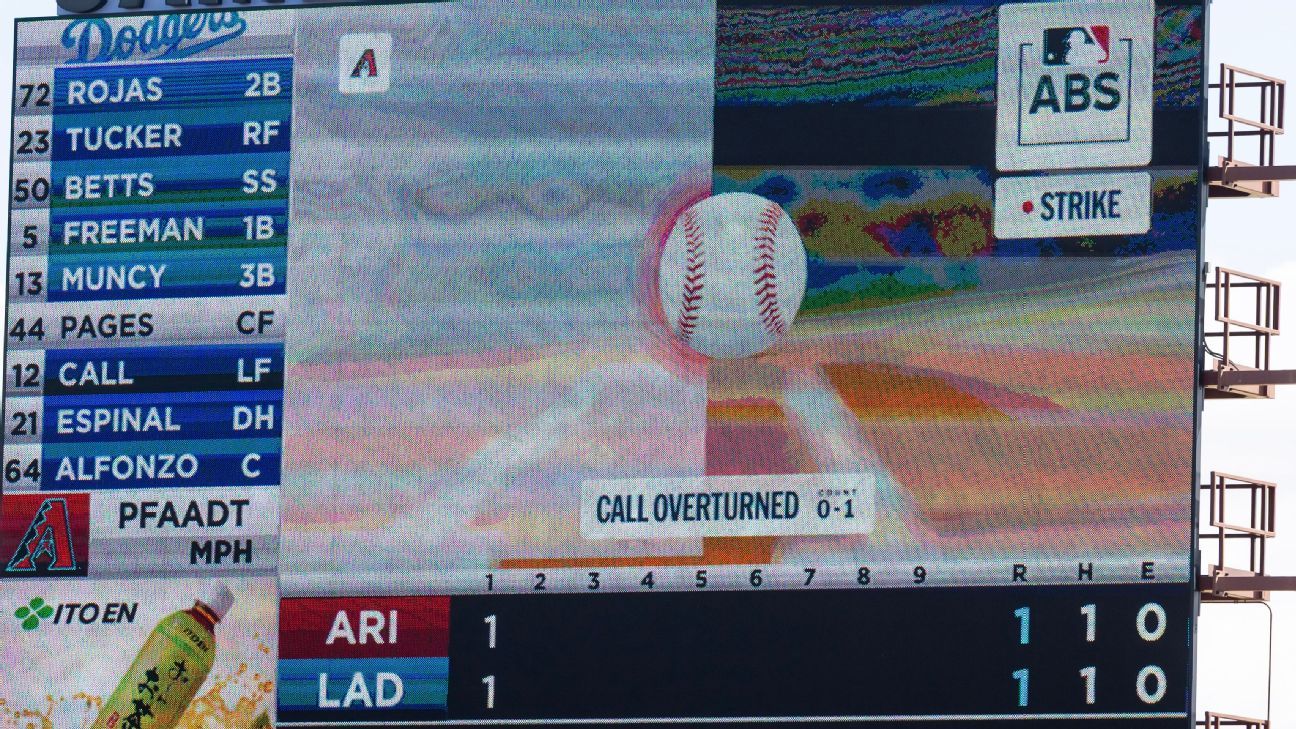
Each team began the game with two challenges. Players initiate a challenge by tapping their helmet or hat immediately after a pitch, prompting a review of the pitch via animation on the stadium videoboard and television broadcast. A successful challenge allows the team to retain its remaining challenges, while two unsuccessful challenges forfeit the ability to contest further calls for the remainder of the game.
According to data released by ESPN, spring training games in 2026 saw a 53% success rate for challenges overall. However, the success rate differed significantly between batters and the defense, with 45% of batter-initiated challenges being overturned compared to 60% for the defense. The Chicago Cubs demonstrated the highest overturn rate among hitters at 65%, while the St. Louis Cardinals led pitchers and catchers with a 75% success rate on defensive challenges. The Kansas City Royals’ hitters had the lowest success rate at 31%, and the Toronto Blue Jays were least successful on defense, at just over 50%.
The implementation of ABS has prompted significant strategic discussions among teams, particularly regarding who should be responsible for initiating challenges. While logic might suggest the pitcher, who just threw the ball, should be the primary challenger, several teams are leaning towards allowing catchers to craft the decision. Concerns center around the pitcher’s potentially compromised perspective immediately after a pitch and possible emotional investment in the outcome.
“Pitchers have shown limited ability to identify where the pitch actually was,” one anonymous team executive told ESPN. Another added, “I suppose it’s likewise human nature that if a pitcher taps his head, the catcher will also probably tap. Have seen that a couple times this spring.”
Despite some teams expressing openness to allowing pitchers to challenge, many are leaning towards a more cautious approach, suggesting they might limit the pitcher’s ability to challenge, or defer to the manager’s judgment. One executive stated, “We let them challenge during the spring, but I’m not so sure that’s a good idea when the games matter. I might just leave that up to the manager.”
Beyond the question of who challenges, teams are also developing strategies for *when* to challenge. A common theme emerging from spring training is a preference for reserving challenges for high-leverage situations – close games, late innings, and full counts. Several teams indicated they would be more selective with only one challenge remaining.
“Endeavor to hold challenges until later in game, more for just the leverage and strategy with only having two,” one executive said. “If you do want to use one early, make sure it’s a high-base-traffic situation.” Another executive simply stated, “No 0-0 count challenges.”
A key area of focus during spring training was the height of the strike zone, with players’ heights being meticulously measured – even in the morning to account for daily height fluctuations – to calibrate the system accurately. The system is based on a player’s height, not their stance, potentially favoring players with upright stances like Cody Bellinger, while potentially disadvantaging those with pronounced crouches.
“Height of the zone has been the most hot-button topic,” one executive said. “Players have asked a lot of questions about the height of the zone relative to stance. That’s been hard for them to internalize.” Umpires themselves acknowledge the challenges, with one major league umpire stating, “You can’t call anything high. Nothing.”
Despite the complexities, early data suggests umpires were generally accurate, with most overturned calls involving pitches that barely clipped the zone. Several executives praised the umpires’ performance, noting that many challenged calls were extremely close. However, some expressed a desire for more than two challenges per game, fearing teams could be left without recourse in crucial late-game situations.