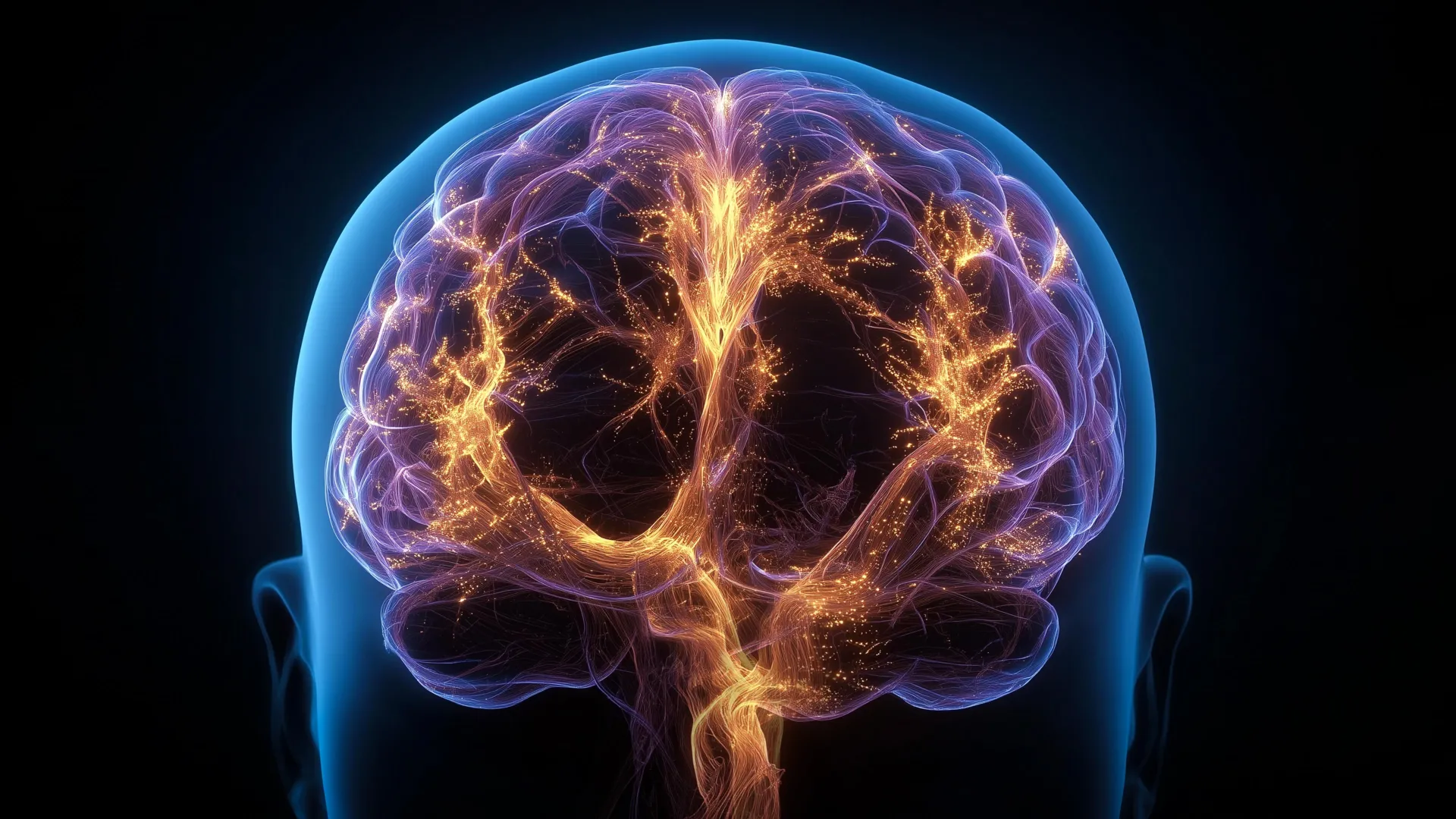
MIT Researchers Find Aging Weakens Brain’s Sleep Cleaning Waves
“We know that people age really differently,” Laura Lewis said of why some adults maintain healthy cognitive outcomes while others experience decline.
Massachusetts Institute of Technology researchers discovered that the brain’s cerebrospinal fluid flow during sleep becomes less effective as people age, according to a study published on Nov. 13, 2026, in Nature Aging.
The study found that waves of cerebrospinal fluid that wash waste out of the brain are substantially weaker in older adults. This reduced fluid movement is linked to declining slow electrical brain waves during non-REM sleep and changes in cerebral blood flow, according to the research.
Investigators compared younger participants aged 18 to 39 with older adults aged 60 to 84 during nighttime testing sessions. While younger adults generated large fluid waves alongside powerful slow brain waves, older participants showed markedly smaller fluid movements that could not be explained simply by getting less sleep overall.
Methodology and Scope
The study lists Sydney Bailes, Stephanie Williams, and B. Ashenagar as authors. Ashenagar among its authors, sought to address previous inconsistencies in scientific literature. While some earlier investigations suggested fluid movement declined with age, others reported increases, often because they failed to monitor the brain during sleep.
By recording participants as they transitioned from wakefulness into sleep, the team was able to observe the interplay of electrical rhythms, blood flow, and fluid motion directly.

Additional experiments during wakefulness revealed that aging impairs neurovascular coupling, meaning blood vessels do not widen as effectively to meet the brain’s oxygen demands. A statistical model indicated that these vascular and neural changes account for much of the drop in cerebrospinal fluid movement, though other biological factors are likely involved.
None of the study participants had a neurodegenerative diagnosis, but brain scans showed that older volunteers with greater gray matter atrophy experienced larger reductions in fluid movement. The team hopes to track participants over time to see whether these weakened cleaning waves serve as early warning signs for Alzheimer’s disease or other forms of dementia.
Researchers investigate age-related waste removal
To capture the complex interplay of brain activity, the team combined several sophisticated diagnostic techniques. By recording these signals as volunteers transitioned from wakefulness into sleep, the researchers were able to link physiological changes directly to the brain’s nightly maintenance cycle.
The study, led by Laura Lewis, the Athinoula A. Martinos Associate Professor of Electrical Engineering and Computer Science, was published in Nature Aging.
Data links physiological decline to aging
While the findings establish a clear correlation between aging and diminished cleansing waves, the researchers continue to explore what this means for cognitive health. If you were able to measure all of them, you might be able to break it apart into different explanations for why an individual’s CSF flow might be more or less impaired.
Laura Lewis, the Athinoula A. Martinos Associate Professor of the Institute for Medical Engineering and Science and the Department of Electrical Engineering and Computer Science, leads this study as the principal investigator. Her research focuses on uncovering the vital role of sleep in brain function by developing multimodal neuroimaging tools, including fast fMRI, to observe how electrical rhythms, blood flow, and cerebrospinal fluid motion interact.
Since joining MIT in early 2023, Lewis has dedicated her lab to researching the neural circuitry that controls sleep. By integrating high-precision measurements of brain activity, she aims to understand how these physiological systems work together to maintain a healthy brain, providing the diagnostic framework necessary to investigate why waste clearance mechanisms diminish during the aging process.
“Aging is so complex, and so many different things change, that it’s really hard to disentangle the individual factors,” said Sydney Bailes, a postdoctoral researcher in MIT’s Laboratory for Information and Decision Systems and co-lead author of the study.
“If you were able to measure all of them, you might be able to break it apart into different explanations for why an individual’s CSF flow might be more or less impaired.”