MIT Researchers Develop Nanoparticles to Reprogram Immune Cells Inside the Body to Fight Cancer and Autoimmune Diseases
Three of five mice with aggressive melanoma vanished their tumors entirely. A single injection in mice with autoimmune hepatitis wiped out the rogue T cells attacking their livers and let the damaged tissue heal.
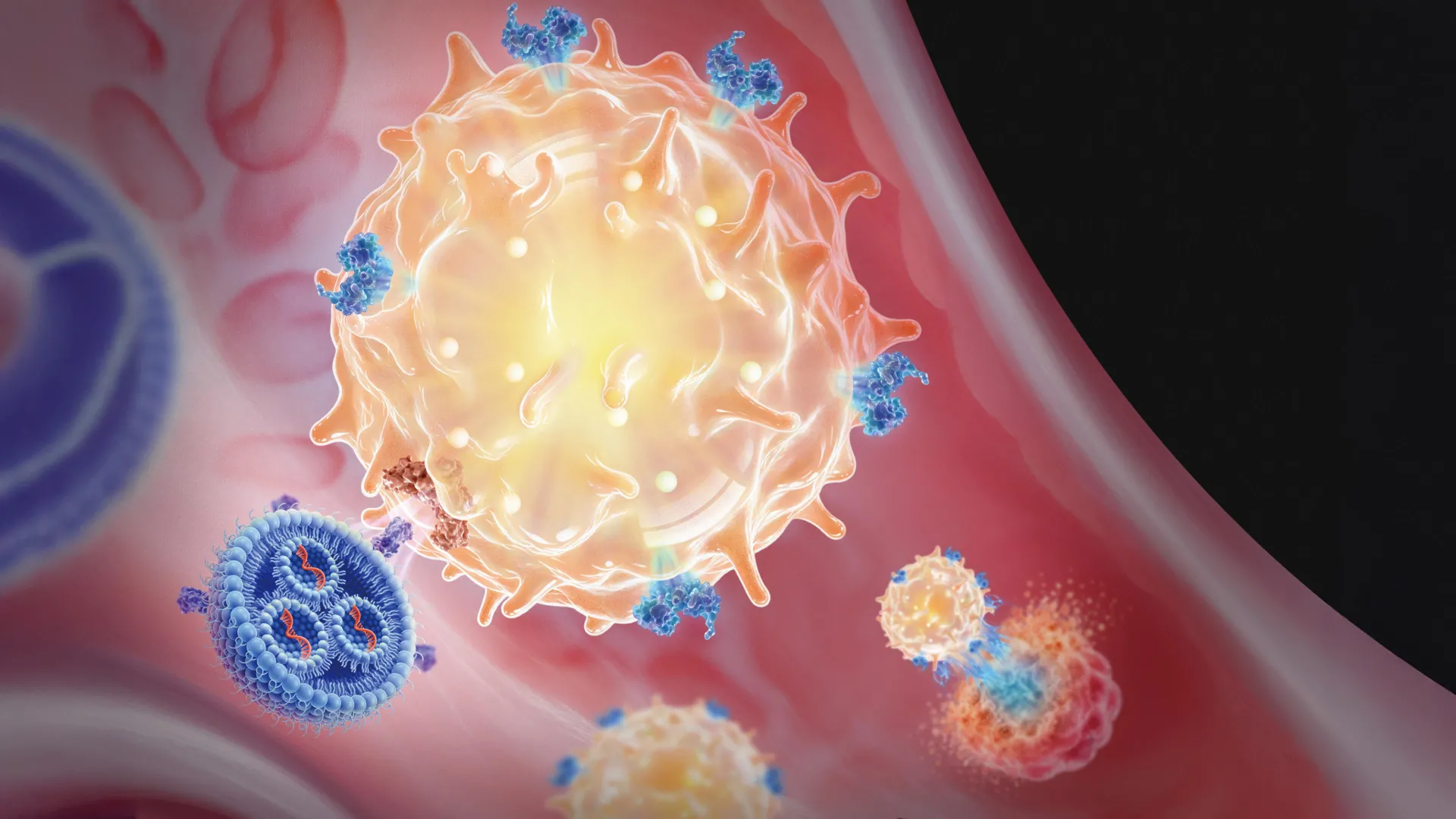
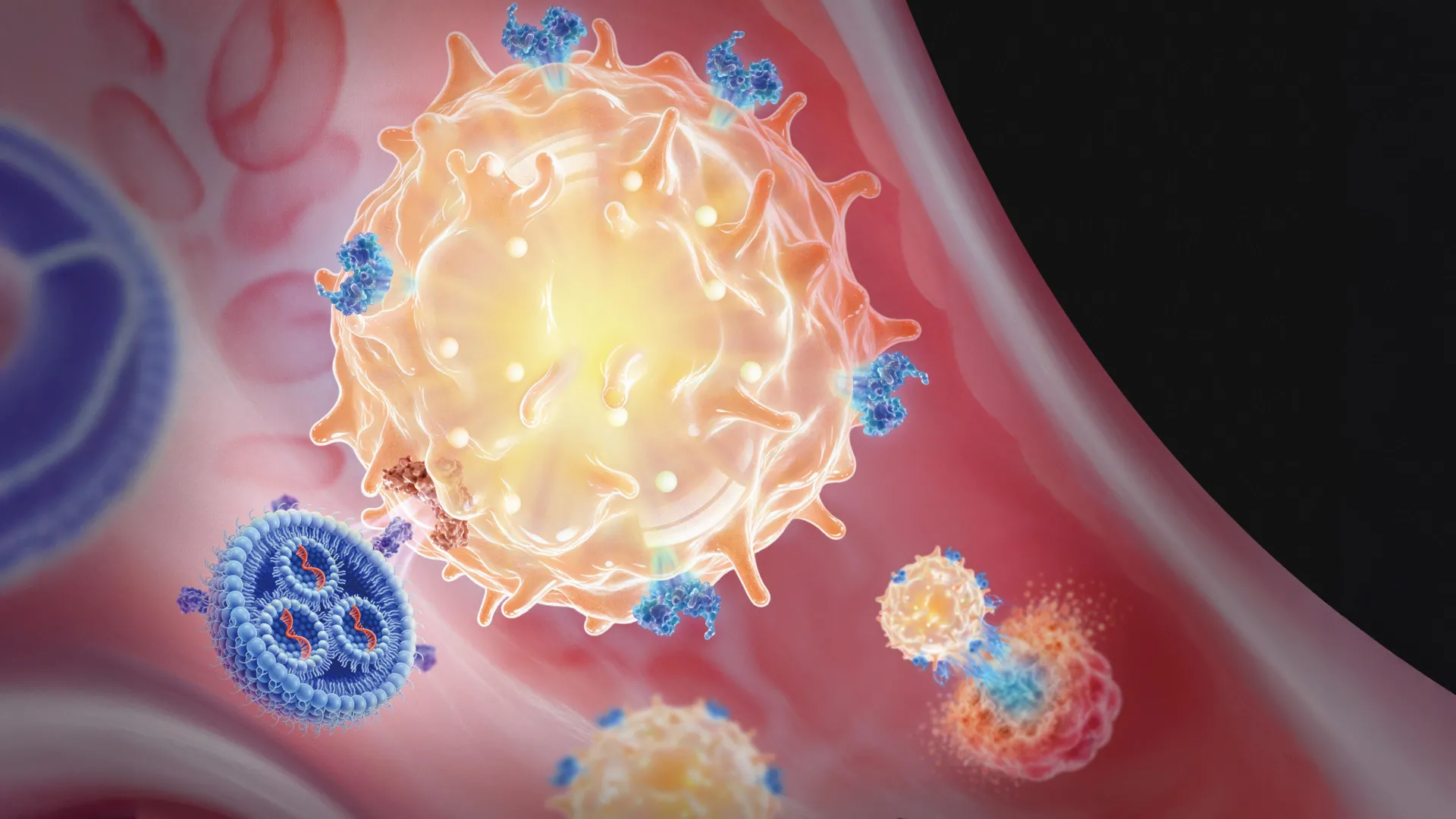
MIT researchers have engineered a way to turn a patient’s own immune cells into cancer fighters directly inside the body, bypassing the costly, weeks-long manufacturing process that has long bottlenecked cell-based immunotherapies. The work, published in Nature Biotechnology, uses specialized lipid nanoparticles to deliver genetic instructions straight to natural killer (NK) cells circulating in the bloodstream.
Current CAR T-cell therapies require doctors to extract a patient’s T cells, ship them to a specialized facility for genetic reprogramming, expand them by the billions, and infuse them back — a process that costs hundreds of thousands of dollars and takes weeks many patients do not have.
The MIT team, led by chemical engineering professor Daniel Anderson, took a different route: they built nanoparticles coated with antibody fragments that latch specifically onto NK cells. Once attached, the particles slip messenger RNA into the cells, instructing them to build chimeric antigen receptors (CARs) that recognize and destroy targeted diseased cells.
“The manufacturing challenges with CAR NK cells are significant,” Anderson said. “The idea here is you can deliver a nanoparticle that will modify your own NK cells with a CAR construct and teach them to attack tumor cells.”
In mouse models, the nanoparticles modified roughly 80 percent of the targeted NK cells. In mice bearing aggressive melanoma, three of five animals treated with the particles achieved complete remission. In humanized mice carrying T-cell lymphoma, five injections eliminated the tumors entirely.
The strategy also cleared a hurdle that plagues CAR T-cell therapy for T-cell cancers. Because engineered T cells and malignant T cells share surface markers, the therapy often attacks itself — a phenomenon known as fratricide. NK cells sidestep the problem: the engineered cells and the target cells are different types, so the modified NK cells do not destroy each other.
“NK cells can treat these T cell malignancies — not only T cell cancer, but also T cell autoimmune diseases,” said Yuang Chen, a postdoctoral researcher and lead author of the study.
In mice with autoimmune hepatitis, a single nanoparticle injection erased the autoreactive T cells and allowed the liver to regenerate. The researchers plan to explore whether the platform can be adapted for multiple sclerosis and rheumatoid arthritis.
No CAR NK cell therapy has yet received FDA approval, and the technique has not been tested in humans.
“This study is an excellent example of the power of nano delivery systems and their ability to potentially treat cancer and other diseases,” said Robert Langer, MIT’s David H. Koch Institute Professor.