Mississippi Democrats Demand Investigation Into 60,000 Voter Spike and Experian Data Use
“Mississippians did their part. They showed up to vote,” said Democratic state Rep. Kabir Karriem on Thursday, November 19, as his caucus demanded an investigation into a spike of nearly 60,000 voters listed as inactive on Mississippi’s rolls before this month’s midterm elections.
The Mississippi Legislative Black Caucus called for legislative oversight committees to investigate how data from Experian, one of the country’s three major credit reporting agencies, was folded into the state’s voter roll maintenance — and why the number of inactive voters climbed from 171,000 two years ago to more than 230,000 before the November midterms, according to Associated Press data and the secretary of state’s office. The caucus also wants a public hearing.
The timing gives the dispute its force. Democrat Scott Colom unseated Republican Sen. Cindy Hyde-Smith in a race separated by just over 8,000 votes with 99% of ballots counted, and statewide elections — governor, Legislature, state Supreme Court — come next year. Karriem, who chairs the caucus, said officials owe voters an answer to “the most basic question in our democracy: Did my vote count?”
What the caucus wants investigated
Karriem said the caucus wants three things established: how many voters were marked inactive, what guidance county officials received on using the Experian data, and why some provisional ballots cast by inactive-status voters were counted while others were not. The caucus is also pressing for early voting, online voter registration, a cure process for absentee ballots, and repeal or amendment of laws allowing third-party data in eligibility determinations.
“We need urgency, we need accountability and above all we need to restore public trust in our elections,” said Democratic state Rep. Zakiya Summers.
Karriem went further in comments to the Los Angeles Times, calling the effect “disenfranchisement called by another name” and saying, “We need answers to give to our constituents, because the question is still out there: Did my vote count?”
How credit data reached the voter rolls
Mississippi had long relied primarily on U.S. Postal Service change-of-address data to maintain its rolls. In 2025, Republican Secretary of State Michael Watson announced a partnership with Experian intended to “strengthen the integrity” of the state’s elections, giving county election officials access to credit and Social Security data to verify addresses alongside Postal Service records.
Under Mississippi law, officials must move voters whose addresses are questioned to inactive status at the same time they mail a confirmation card the voter can use to restore active status. That differs from Delaware, Maryland, Oklahoma and Rhode Island, where policies generally give voters time to respond before the switch, according to the MIT Election Data and Science Lab.
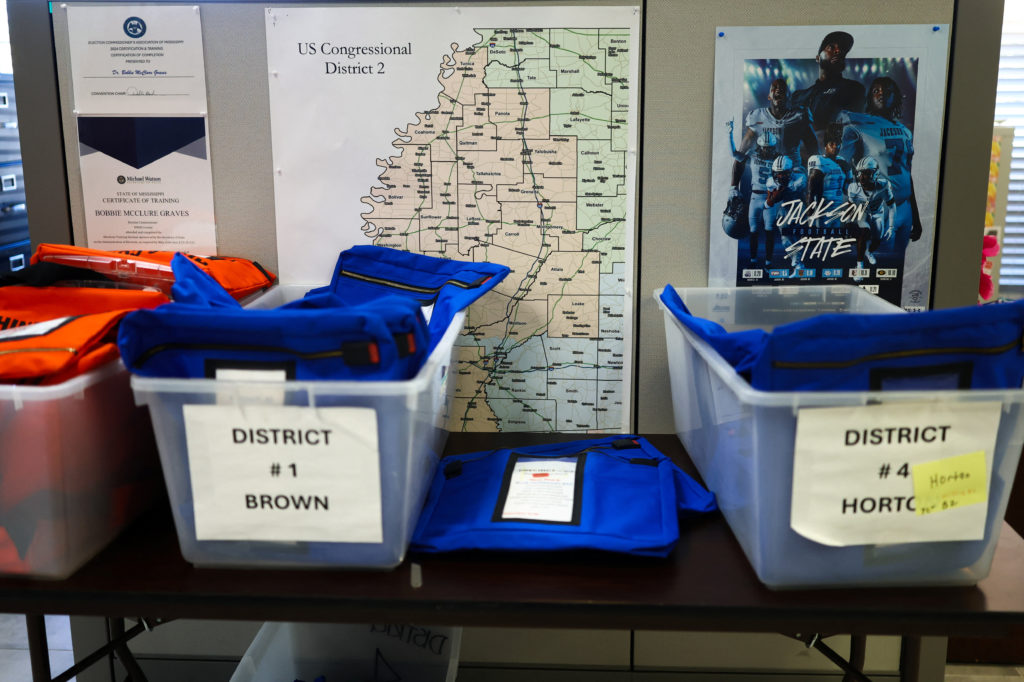
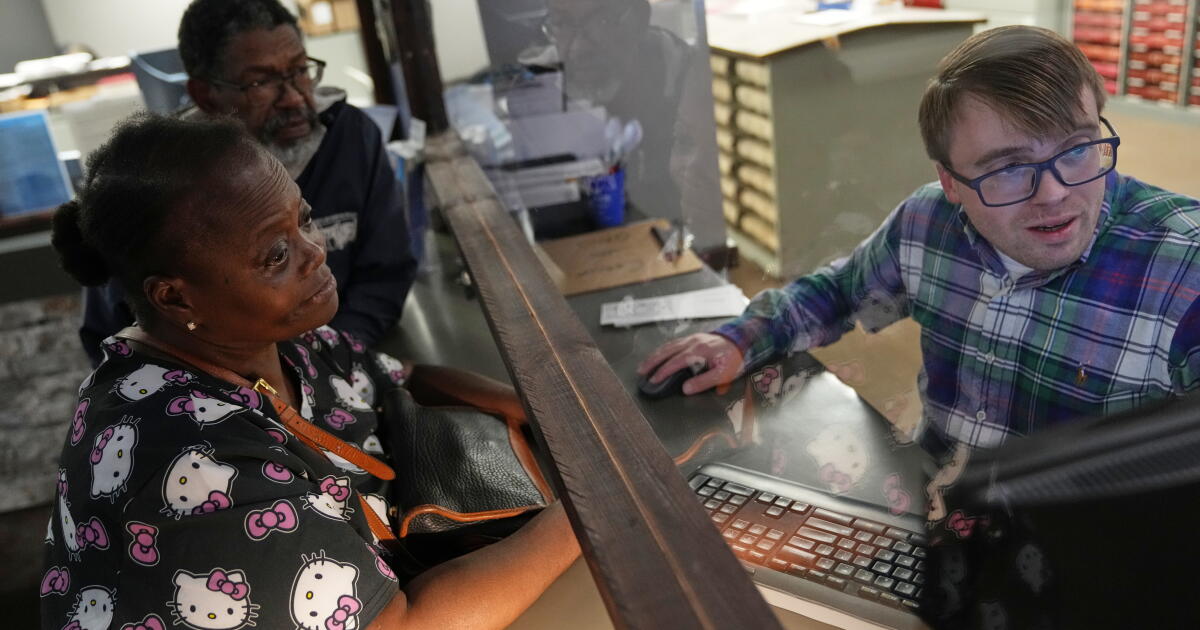
In Mississippi, voters might not learn they were inactive until they showed up to vote and had to cast a provisional ballot — an affidavit ballot in state terminology, reviewed by county election commissioners who approve or reject it.
The inactive-voter numbers
| Election | Voters listed inactive |
|---|---|
| 2022 midterms | 185,000 |
| 2024 presidential | 171,000 |
| Before 2026 midterms | More than 230,000 |
Elizabeth Jonson, a spokesperson for the secretary of state’s office, said the 230,000 figure was “accumulated over more than five years of maintenance by local officials” and that the state does not classify voters as inactive solely on Experian data. Watson said the rise this year was caused by integrating Experian data into the overall verification process.
Where the two sides disagree
Watson defended the maintenance outright. “I don’t apologize for cleaning voter rolls,” he said in an interview. “That is my job.” In a social media video, he said the state had already moved to a new vendor, Interactive Data, which draws on information from all three major credit bureaus, and told voters that any “mistakes” in the process could be corrected by casting a provisional ballot.

Experian, for its part, has not provided services to Mississippi since early 2025, according to company spokesperson Scott Anderson. “Decisions regarding voter registration policies, procedures and record updates are made solely by election officials in accordance with applicable local, state and federal laws,” he said.
The provisional-ballot numbers cut both ways. Jonson said 21,484 provisional ballots were cast this year, “nearly identical” to the 21,321 cast in 2024 despite higher presidential-year turnout, and the secretary of state’s office said 75% were approved statewide. But AP data shows the acceptance rate fell to 34% in Hinds County — majority-Black and home to Jackson, the capital — from 60% there in 2024. It is not clear whether the Experian data played any role in that drop.
What happens before the 2027 elections
State Rep. Cheikh Taylor, chair of the Mississippi Democratic Party, told the Los Angeles Times he intends to introduce legislation in the new year to increase transparency in how credit data verifies eligibility and to give flagged voters a chance to confirm their identities before deactivation.
He said he had seen no evidence Interactive Data’s product would differ much from Experian’s, and he hopes to win Republican support. “This is not a partisan issue,” he said. “The right to vote and the freedom to vote belongs to us all.” He noted the Legislature must move quickly with statewide elections on the 2027 calendar.
There is early Republican openness. State Sen. Jeremy England said legislation increasing transparency in the use of credit data could draw GOP votes. “I don’t think there was anything nefarious involved with it, but look, Mississippi also does have a dark past when it comes to elections,” England said. “It’s something we definitely need to look at more and make sure that we’re doing it in a better way.”
The story has drawn national attention as Democrats build on Colom’s Senate flip and hope to maintain their momentum going into next year’s race for governor; Republican Gov. Tate Reeves won his 2023 reelection bid by just 3 percentage points and will be termed out.
For now, the open questions outnumber the answers: the acceptance-rate gap in Hinds County is unexplained, the Interactive Data contract is untested, and the caucus’s hearing request has no scheduled date.
Karriem has held his District 41 seat in the Mississippi House since January 5, 2016, with his current term running to January 4, 2028. Before joining the Legislature, he served on the City Council for Ward 5 in Columbus, Mississippi, a post he took in 2009. He attended Hinds Community College and earned his bachelor’s degree from Mississippi State University.
Watson, in his social media video, put his position plainly: roll cleaning continues, mistakes get corrected at the ballot box, and the count proceeds.