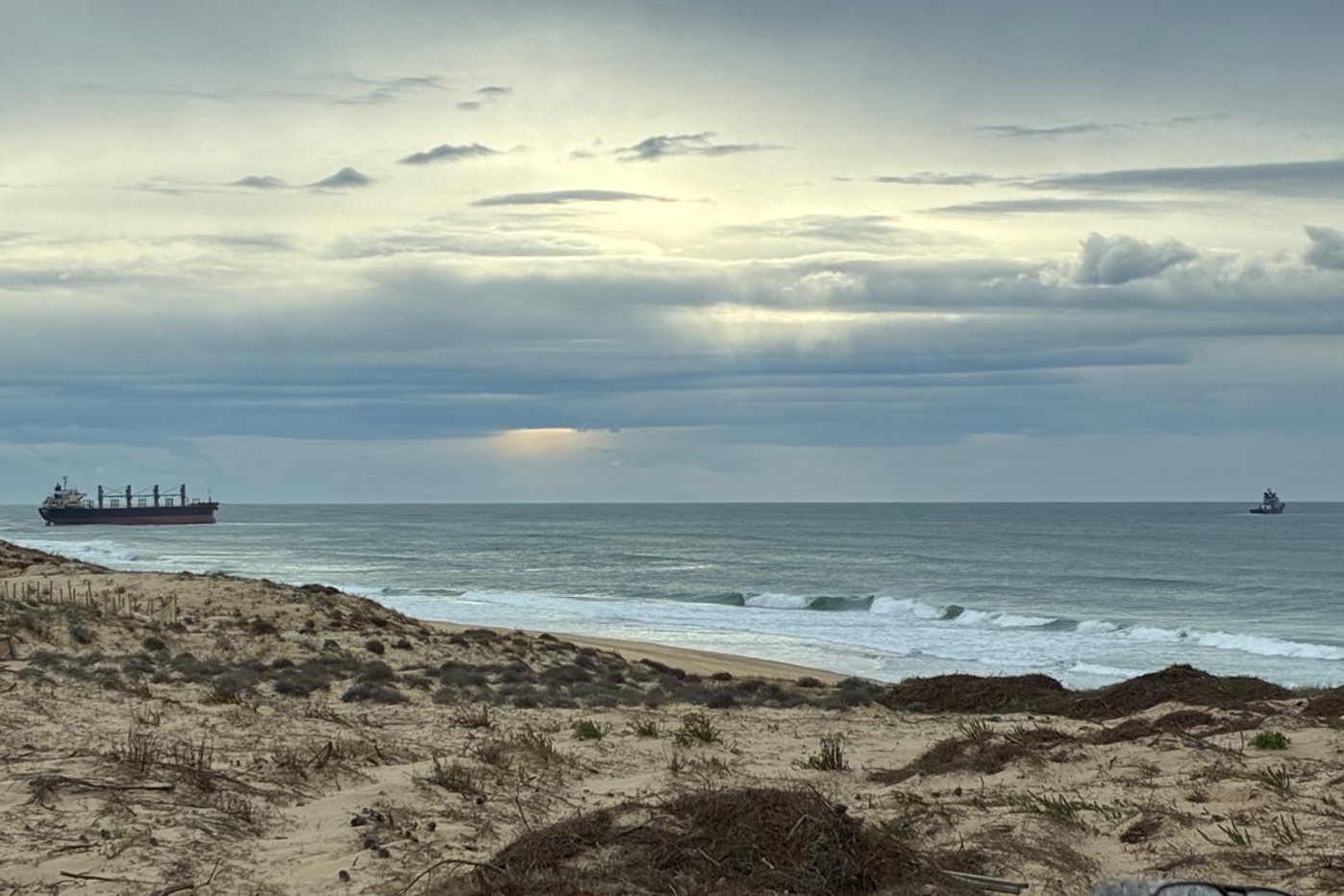
Miro G Bulker Refloated After Landes Grounding; En Route to Bordeaux Under Tow
The 28,200 deadweight tonnage bulk carrier Miro G is slated to reach Bordeaux on Thursday, November 26.
The 169-meter-long vessel, which measures 27 meters in width, is finally completing its transit after being stranded on the beach at Cap de l’Homy since the night of November 19.
While the ship remains in good condition with no detected pollution, the recovery proved difficult. A towing complication delayed the final transit, forcing a complex multi-agency operation to secure the ship and its 22 crew members. The vessel, which weighs 17,000 tonnes empty, refloated on Tuesday, November 24, during high tide after teams emptied its ballasts to lighten it.
The tug Abeille Bretagne could not approach directly due to insufficient depth, so a small launch ferried the tow line between the two ships. “We are not immune to running onto a sandbank offshore,” Captain Falhun said at midday, noting recent conditions had prevented surveys.
The vessel had been en route to Rouen when it became trapped by difficult weather conditions. Before the grounding, there was “a form of denial from the ship regarding its convergent route toward the coast, before complying with an emergency anchoring,” said Alexis Morel, director of CROSS Etel.
Officials activated the Biscaye mutual assistance plan between France and Spain to manage the crisis, marking only the fourth time the protocol has been used in its history. The operation drew on resources from CROSS, the SNSM, and pollution control specialists from Cepol and Cedre, with local fishermen also providing support.
Private fishing boats equipped with anti-pollution nets stood by to intervene near the coast if needed. According to the maritime prefecture, the manoeuvre aimed to guarantee the safety of technical teams winched aboard the cargo ship and to avoid pollution.
The scale of the effort was unusual for the rescue teams involved. The SNSM deployed a boat from the Bayonne station to stabilize the carrier against the heavy swell.
“It’s rare for us to intervene on a boat of this size,” said Vice-Admiral Philippe Dutrieux, the SNSM departmental delegate for Finistère, according to Le marin.
Vice-Admiral Marc-Antoine de Saint Germain, the maritime prefect of the Atlantic, confirmed that the mission’s primary objectives—protecting the crew and the coastline—were achieved. However, the legal fallout is only beginning. The Bordeaux court has opened a judicial investigation, with further inquiries expected from the maritime tribunal and the BEAMer to establish the cause of the grounding.
Regardless of the findings, the shipowner has been formally notified and remains financially responsible for all rescue operations conducted.
“We will continue to monitor the situation from an ecological and environmental standpoint.”
“À ce stade on n’a détecté aucune pollution.”