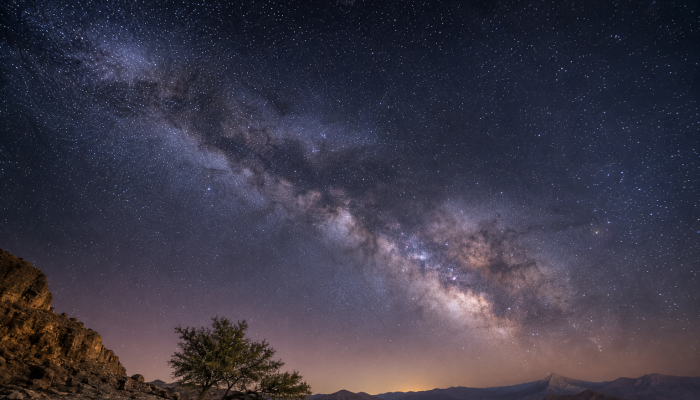
Milky Way and Perseid Meteor Shower Light Up Oman’s Skies
Shattered fragments from the Swift–Tuttle comet are illuminating the night skies over Oman in a celestial display that runs through August 24, according to reporting by Shabiba and Alkhaleej Services. The annual Perseid meteor shower reaches peak visibility from midnight Wednesday through the early dawn hours of Thursday, offering stargazers across the governorates a view of bright streaks cutting across the dark.
Comet Swift–Tuttle and its 133-year orbit
The cosmic phenomenon originates as Earth crosses orbital debris left behind by comets during their solar orbits, according to Ashwaq bint Nasser Al-Siyabi, deputy head of the membership affairs committee at the Omani Astronomical Society. Al-Siyabi explained that the Swift–Tuttle comet completes a solar orbit roughly every 133 years, carrying a nucleus measuring about 26 kilometers across.
Atmospheric friction at 59 kilometers per second
As Earth nears this dust trail, tiny particles no larger than a grain of sand pierce the atmosphere at a velocity of 59 kilometers per second, according to Alkhaleej Services. Intense friction with air molecules causes the debris to burn up instantly, creating brilliant lines of light.

Fireballs and rates of 80 to 100 meteors per hour
Perseids stand out from other annual meteor showers by producing a high volume of “fireballs,” which are exceptionally bright meteors that leave lasting visual impressions, as noted by Alkhaleej Services. Under ideal conditions, observers can spot between 80 and 100 meteors per hour, though rates drop significantly inside cities due to light pollution.
Radiant point viewing and the new moon advantage
Successful viewing depends on several core factors, according to Al-Siyabi. Stargazers need to locate the radiant point—the apparent origin of the meteors within the constellation Perseus in the northeastern horizon—while securing a sky free of light pollution. This year’s peak visibility benefits from a new moon, which provides darker skies for observation.