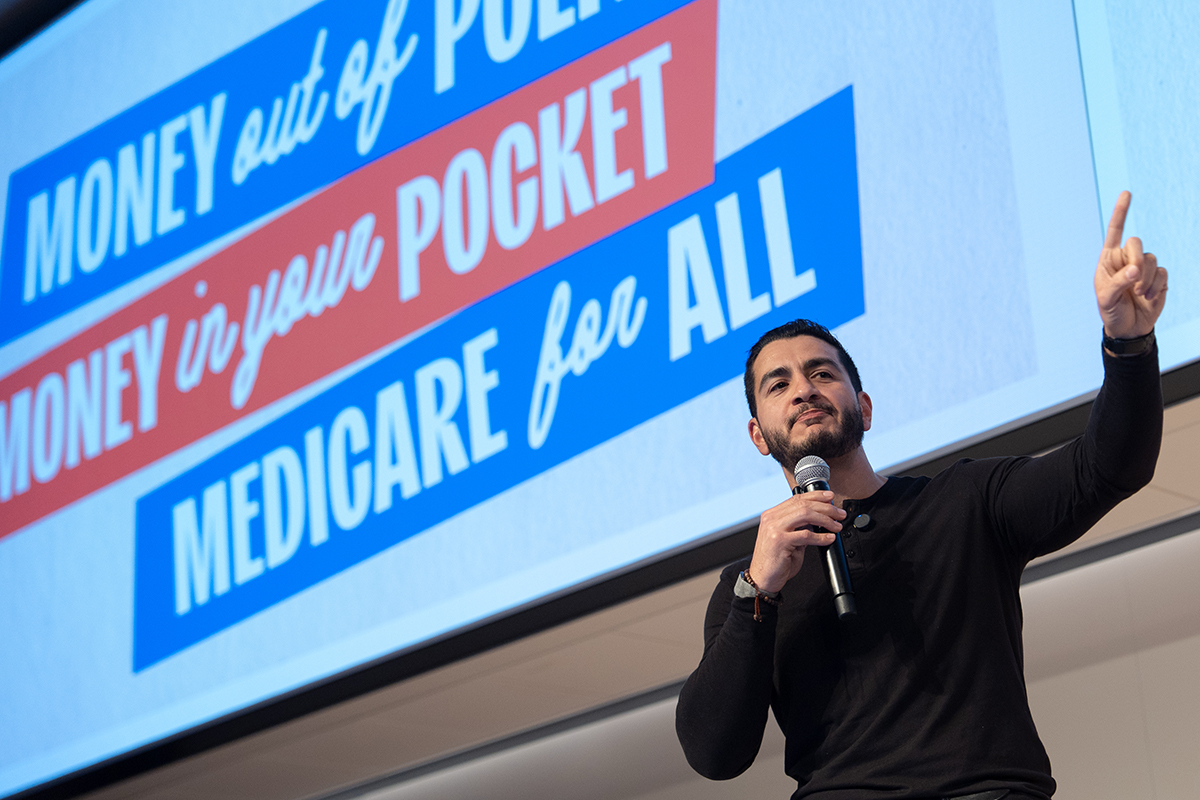
Mike Rogers and Abdul El-Sayed divide over Medicare for All costs
As the November 3, 2026, U.S. Senate election approaches in Michigan, Republican candidate Mike Rogers and Democrat Abdul El-Sayed are sharply divided over healthcare reform, specifically whether El-Sayed’s Medicare for All proposal would increase taxes and eliminate private insurance. Rogers asserts that the single-payer plan will drive up taxes and dismantle the existing system, while El-Sayed maintains his platform aims to guarantee universal healthcare and curb out-of-pocket costs.
- Policy experts note that funding a single-payer healthcare system would likely require new taxes, though some analyses suggest lower- and middle-class Americans could ultimately see reduced overall healthcare expenditures.
- El-Sayed’s campaign materials outline a system that eliminates premiums, copays, and most deductibles by making Medicare the universal public payer for all necessary care.
- While El-Sayed previously stated that Medicare for All would do away with private insurance entirely, he has more recently suggested that Congress could render private coverage unnecessary without explicitly banning it.
Evaluating Tax Claims and Financial Projections in Single-Payer Proposals
Republican U.S. Senate candidate Mike Rogers has repeatedly claimed on social media and in campaign materials that Abdul El-Sayed’s Medicare for All plan will raise taxes and break the healthcare system. In an August 27 post on X, Rogers wrote that El-Sayed’s plan “really means nothing for you,” while his campaign has promoted past audio clips regarding healthcare costs. While Rogers is correct that funding a nationwide single-payer system would likely necessitate new taxes, financial analysts note that his campaign omits broader context regarding overall healthcare spending and El-Sayed’s specific structural approach.
https://x.com/MikeRogersForMI/status/2093027752160968916
Independent economic analyses of federal single-payer proposals illustrate the scale of the financial transition. In 2020, the nonpartisan Urban Institute estimated that a federal Medicare for All model similar to U.S. Sen. Bernie Sanders’ proposal would cost $34 trillion over a ten-year period. John Holahan, a fellow at the Urban Institute, told Bridge Michigan that due to inflation, a single-payer healthcare plan could now cost close to double that 2020 estimate.
https://x.com/AbdulElSayed/status/2014355957761945966
At the same time, independent financial watchdogs have examined how those costs distribute across income brackets. In 2019, the nonpartisan Committee for a Responsible Federal Budget concluded that taxes on the wealthy and businesses would cover approximately 40 percent of total costs, meaning taxes on the middle class would likely need to rise to pay for the program. However, the group also noted that higher taxes do not automatically equate to higher overall costs, as many households could end up paying less in taxes under Medicare for All than they currently spend on private insurance premiums and cost-sharing.
El-Sayed has not specified a detailed, campaign-endorsed tax schedule or precise arithmetic by income bracket for his Senate proposal. However, he recently stated that he would hope to avoid raising taxes on most Michigan families, including those earning around $100,000 a year. Campaign spokesperson Cole Wozniak defended the platform in a statement to Bridge Michigan, emphasizing that El-Sayed aims to bring down costs and guarantee affordable healthcare for every American.
The Structural Shift in Private Insurance and Patient Coverage
Beyond fiscal projections, the debate centers on the future role of private health insurance. Rogers claims that El-Sayed’s proposal would eliminate private insurance, pointing to a 2020 podcast where El-Sayed stated that Medicare for All “does away with the private insurance market.” El-Sayed has since adjusted his stance, indicating that Congress could implement universal coverage that makes private insurance unnecessary rather than outright banning it.
Under the single-payer vision presented in El-Sayed’s campaign materials, Medicare would expand to cover all necessary healthcare, including vision, dental, and hearing. The model is designed to make coverage automatic and free at the point of care by eliminating premiums, copays, and most deductibles. Proponents argue this structure prevents coverage gaps during employment transitions and removes out-of-pocket burdens. Opponents, including Rogers, warn that the shift would alter provider payment rates, the role of insurers, and the way patients access care.
As the campaign continues toward the November 3 election to succeed retiring U.S. Sen. Gary Peters, voters are weighing competing visions for healthcare reform. While opponents emphasize the likelihood of broad tax increases and regulatory disruption, supporters argue that trading private premiums for publicly funded care can lower overall household expenditures and secure continuous coverage.
*Disclaimer: The information provided in this article is for educational and scientific communication purposes only and does not constitute medical advice. Always consult with a qualified healthcare provider regarding any medical condition, diagnosis, or treatment plan.*