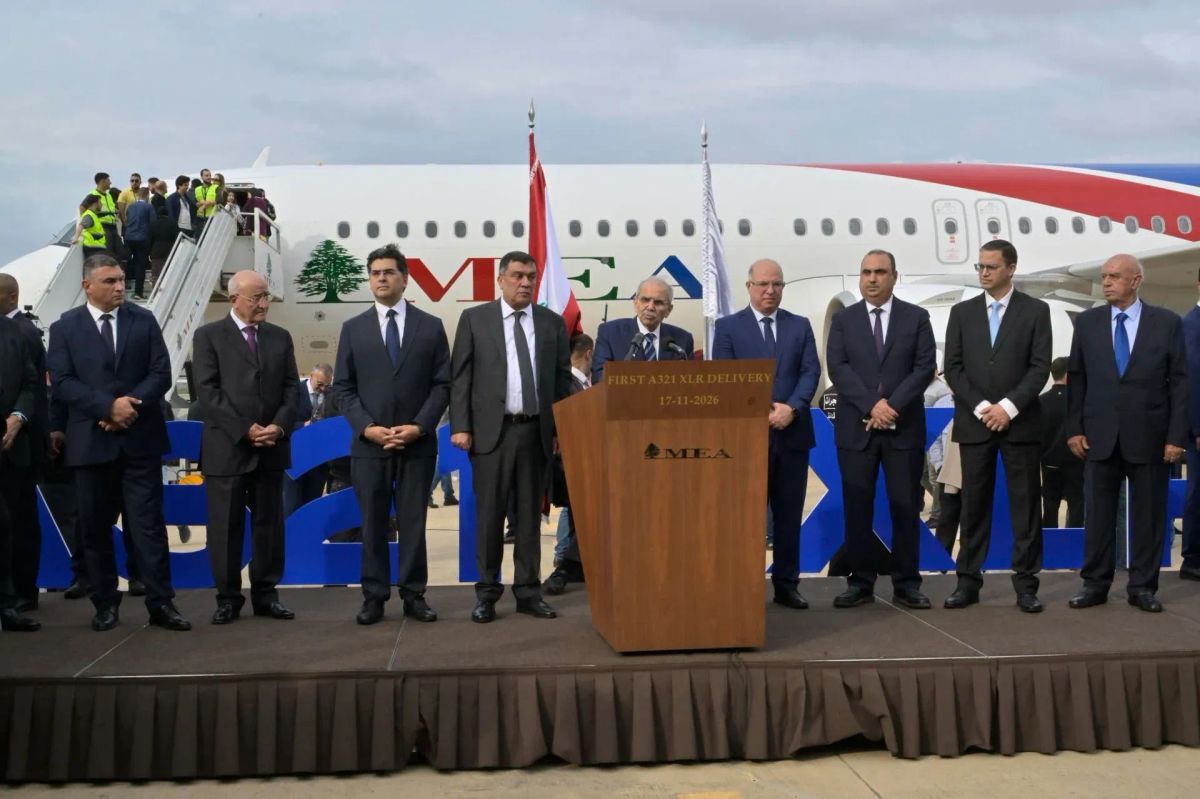
Middle East Airlines Takes Delivery of First A321XLR in Beirut, A330neo Due for New York Route
- First of four A321XLRs ordered; entry into service on existing routes such as Paris and London.
- Kinshasa route to resume; New York service targeted once widebodies arrive.
The decision to order the A321XLR dates to 2019, when Middle East Airlines became the world’s first carrier to sign for the type, جريدة اللواء الإلكترونية reported.
Delivery was delayed by supply-chain constraints and European certification requirements. Lease installments are paid from ticket sales, not the public budget, management told جريدة اللواء الإلكترونية. The XLR’s extra fuel tanks give it up to 11 hours of flight time, allowing non-stop sectors that previously required twin-aisle jets.
Captain Mazen Mohieddine, who ferried the aircraft from Hamburg, said the initial commercial deployment will stay on current A321 routes such as Paris and London, with African destinations added later at the commercial department’s discretion, according to Kataeb.org citing An-Nahar.
Middle East Airlines expects its first A330-900neo within two weeks, El-Hout said at the ceremony, adding that the carrier is “ready to fly to the United States when we receive the A330neo.” Three A330-900s are slated for 2027 delivery and a fourth in 2028, Kataeb.org reported.
The widebodies are a prerequisite for relaunching the Beirut–New York route, dormant for years, and for high-density sectors where the XLR’s 180–220 seats are insufficient. El-Hout also confirmed the resumption of flights to Kinshasa, a destination previously served with a technical stop.
The delivery ceremony became a platform for competing narratives. Salam called the arrival “an expression of confidence in this country and a will to invest in its future,” urging stability so that institutions “get the support they deserve,” MTV Lebanon reported. El-Hout emphasized safety and operational readiness, noting the airline holds a high operational-capability rating.
Critics on social media labeled the purchase “for the sake of Berri’s eyes,” referencing Parliament Speaker Nabih Berri, while passengers questioned fares that remain high relative to regional peers. جريدة اللواء الإلكترونية noted the controversy risked overshadowing the operational milestone. The airline has not published a fare breakdown; it attributes pricing to market conditions, airport charges, and the cost of maintaining a fleet that meets European safety standards.
Alkalima Online framed the delivery as a counterpoint to the power sector’s paralysis. The outlet recalled that Middle East Airlines was loss-making and fully leased in 2001, employing 3,500 staff with accumulated deficits exceeding $400 million. A restructuring under then-Prime Minister Rafic Hariri returned it to profit by 2003, with cumulative earnings later surpassing $1 billion. Meanwhile, Electricité du Liban has cost the treasury more than $40 billion over three decades despite Law 462, passed in 2002, mandating liberalization.
Private generators now supply two-thirds of demand at tariffs up to 54 cents per kilowatt-hour — roughly 950 percent above Dubai’s rate and 1,200 percent above Saudi Arabia’s, Alkalima Online reported.
“Middle East Airlines prepares to take four new Airbus jets without asking anyone’s permission,” the outlet wrote, “while the government returns to temporary fixes for electricity.”