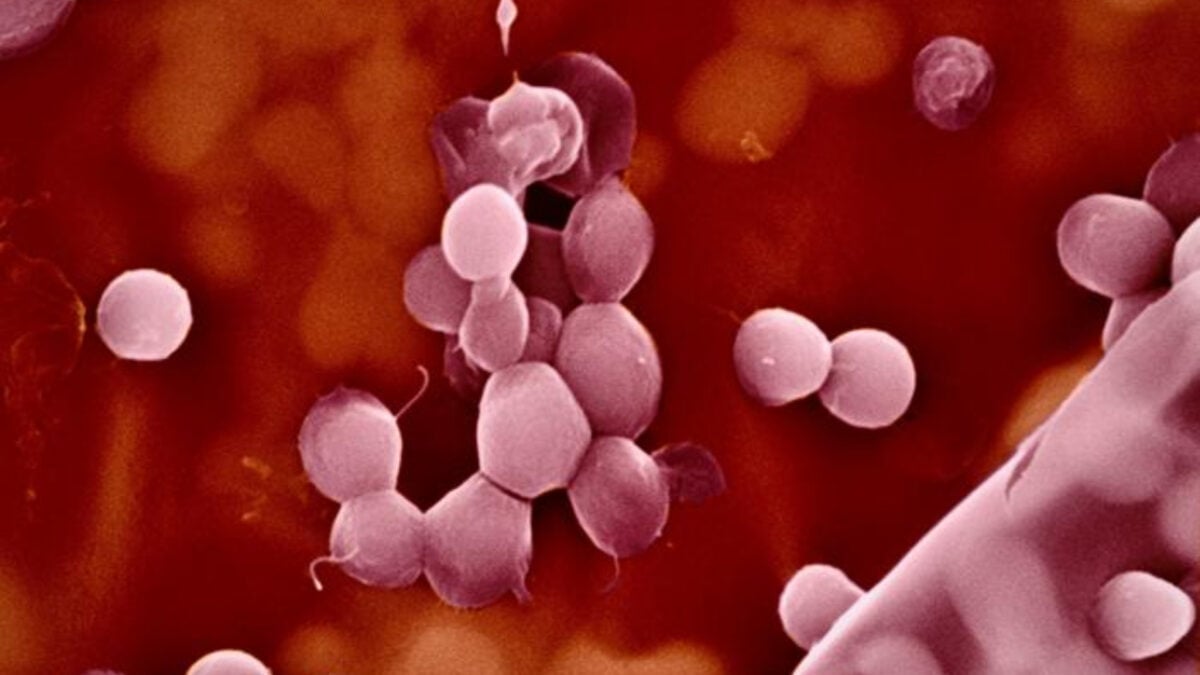
Microbes Thrive in Simulated Mars Conditions for 160 Days in New Study
Haloferax volcanii Thrives for 160 Days in Simulated Martian Conditions
- University of Florida researchers cultivated the terrestrial microorganism Haloferax volcanii for 160 days in an oxygen-free, carbon-dioxide-rich environment mimicking the Martian subsurface, Gizmodo reported.
- The microbes actively multiplied in brine seven times saltier than seawater when supplied with nitrates or perchlorates for anaerobic respiration.
- The findings could help scientists assess the risk of contaminating Mars with microbes carried from Earth and distinguish potential biosignatures from extinct cells from biological processes of living cells.
For 160 days, University of Florida researchers successfully cultivated Haloferax volcanii in an oxygen-free, carbon-dioxide-rich laboratory environment that recreated the extreme pressures and high salinity theorized to exist beneath the Martian surface, Gizmodo reported.
Mars is cold, dry, and almost airless, but researchers led by Adam Robinson placed the organisms in water seven times saltier than seawater under low atmospheric pressure, ZME Science reported. While previous experiments showed that Earth microorganisms could survive certain Martian stresses for hours or days, this new study demonstrates active growth and multiplication.
Microbes Use Nitrate or Perchlorate to Grow Without Oxygen
During the 160-day experiment, the microbes required specific chemical inputs to generate energy without oxygen. According to ZME Science, the cultures utilized either nitrate or perchlorate to respire, compounds that have been detected on Mars by NASA rovers like Curiosity and Phoenix, as DongA Science reported.

When researchers withheld both nitrate and perchlorate, the organisms remained viable but showed no measurable growth, helping scientists distinguish between survival and active reproduction, Phys.org noted. The growing low-pressure cultures formed dense structures known as biofilms, which researchers suggest helped the microbes retain moisture in the high-salinity solution without measurable water loss, according to DongA Science.
Implications for Planetary Protection and the Search for Life
The simulated environment tested in the laboratory has not yet been directly observed on Mars. “The environment that we’re mimicking in this experiment has not been observed on Mars, but is theorized to exist,” Adam Robinson said, as reported by Phys.org. Robinson added, “We are adding to the growing body of evidence suggesting that we should consider the possibility of life on Mars today.”

These findings, published on November 5 in Applied and Environmental Microbiology as noted by DongA Science, could help scientists assess the risk of contaminating Mars with microbes carried from Earth. Understanding how resilient microorganisms behave in extreme subterranean habitats helps researchers distinguish traces of ancient, extinct life from biological processes driven by living cells.
Related reading