Michaela Musilova returns from five-day mission at Jules’ undersea Lab
Aquanaut Michaela Musilova Returns to Earth After Five-Day Simulated Space Mission at Jules' Undersea Lab
The Tech TL;DR:
- Commander Michaela Musilova led a four-person crew during a five-day saturation dive at Jules' Undersea Lab in Key Largo, Florida, operating at 22 feet (7 meters) underwater.
- The mission tested cognitive response times under pressure, microgreens seed germination via varied pressure releases, and environmental sensor hardware built by students.
- Crew members completed underwater spacewalks and equipment maintenance while managing life support systems and saturation protocols before returning to the surface.
In a first-person essay, aquanaut and mission commander Michaela Musilova describes returning to Earth after completing a five-day saturation dive inside Jules' Undersea Lab near Key Largo, Florida. Living at a depth of 22 feet (7 meters), Musilova and her crew—consisting of Executive Officer Paul Bakken, Health & Safety Officer Dr. Brandy Nunez, and Mission Specialist Jenn Pint—spent the duration separated from the surface in a simulated space station environment known as the SEA STAR mission.
The crew chose the underwater laboratory to mimic the isolation and operational challenges of the International Space Station (ISS). Saturation allows aquanauts to live underwater for more than 24 hours without returning to the surface, causing human tissues to absorb the maximum possible amount of inert gas for that specific depth and pressure. Musilova writes that while the environment substituted space for a green alien water world, the team encountered comparable physiological hurdles, equipment testing demands, and technical constraints.
Executing Analog Space Research Under Pressure
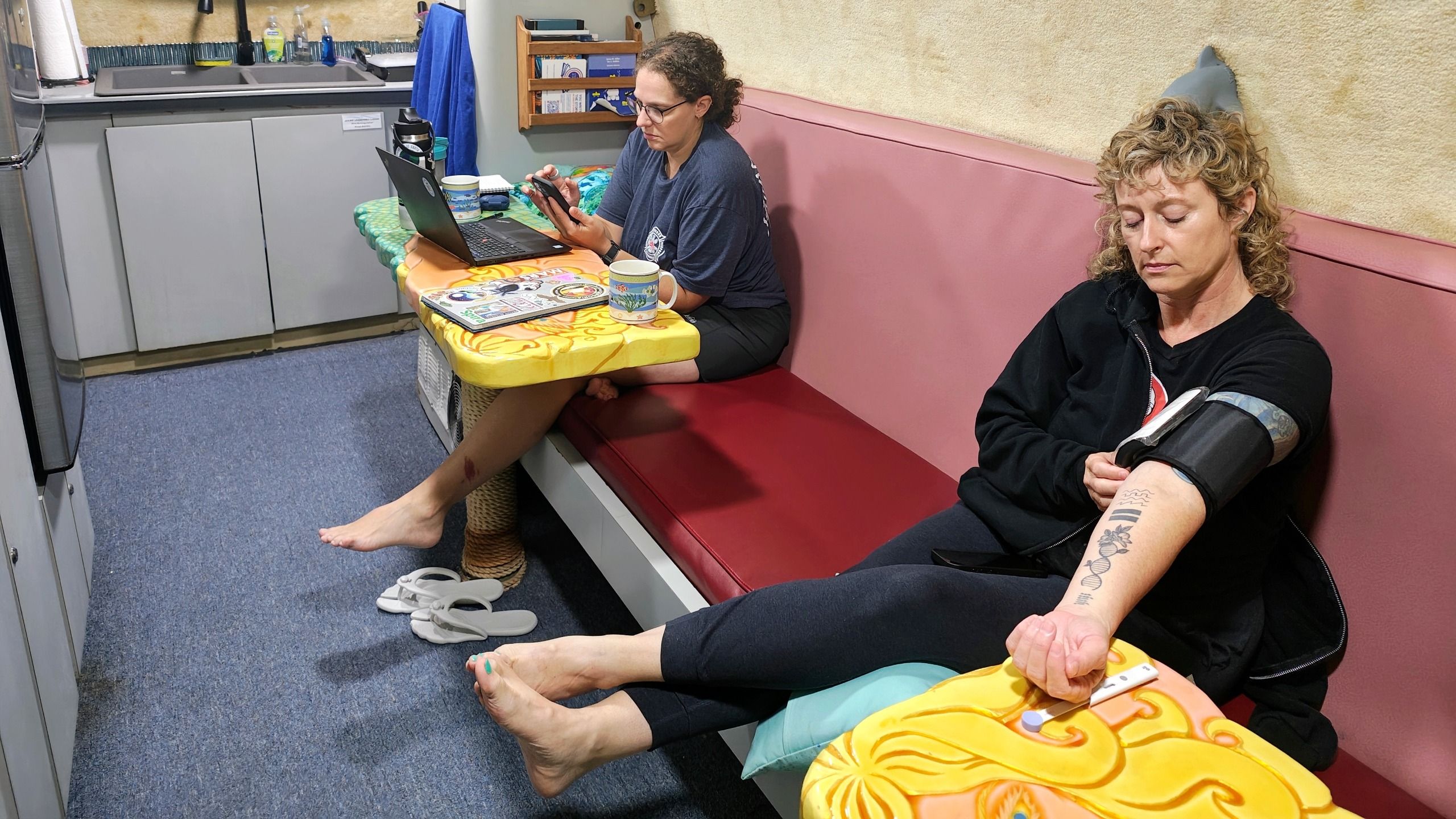
The crew managed multiple scientific and technical projects designed for long-duration space exploration. Musilova directed a cognitive study in collaboration with the Center for Hyperbaric Medicine at the Faculty of Medicine of the University of Ostrava and City Hospital Ostrava in the Czech Republic, evaluating whether human reaction times and cognitive abilities change under pressure. According to the essay, the entire crew noted slower response times during the underwater deployment compared to before it.
Health & Safety Officer Dr. Brandy Nunez oversaw a botanical study examining how microgreens seeds reacted to pressure changes. Kale and super salad mix seeds were transferred into the habitat using gradual and sudden pressure release settings. Post-harvest analysis confirmed that seeds subjected to rapid pressure drops suffered visible barotrauma. Meanwhile, Executive Officer Paul Bakken tested the internal pressure management of logistical transfer containers subjected to environmental shifts. Mission Specialist Jenn Pint collaborated with Interstellar Performance Labs to develop a taxonomy for mapping environmental and crew interaction variables during analog space operations.
Hardware Testing and Educational Outreach Underwater
Beyond human physiology and botany, the crew deployed environmental sensors engineered by high school and university students in Slovakia. These hardware instruments gathered telemetry data on habitat living conditions to supplement the ongoing cognitive research. Crew members also conducted neutral buoyancy experiments during scuba dives, though low visibility and the constant acoustic hum of life support systems required strict safety protocols.
The mission incorporated remote educational outreach. The aquanauts called Cosmic Region, a simulated space station located in Slovakia, providing a tour of the undersea habitat. During the call, crew members exited the facility into the surrounding lagoon to execute a simulated spacewalk, demonstrating work during the mission and the operation of an underwater vacuum device used for local environmental conservation work.
Decompression and Return to Surface Operations
Concluding the five-day deployment required meticulous adherence to dive safety schedules. The four crew members donned scuba gear, breathed the pressurized undersea air one final time, and navigated a deliberate detour through the surrounding lagoon to allow their bodies to adjust safely to lower pressures. After breaching the surface, the aquanauts encountered high Florida temperatures alongside the return of normal atmospheric pressure and fresh air.