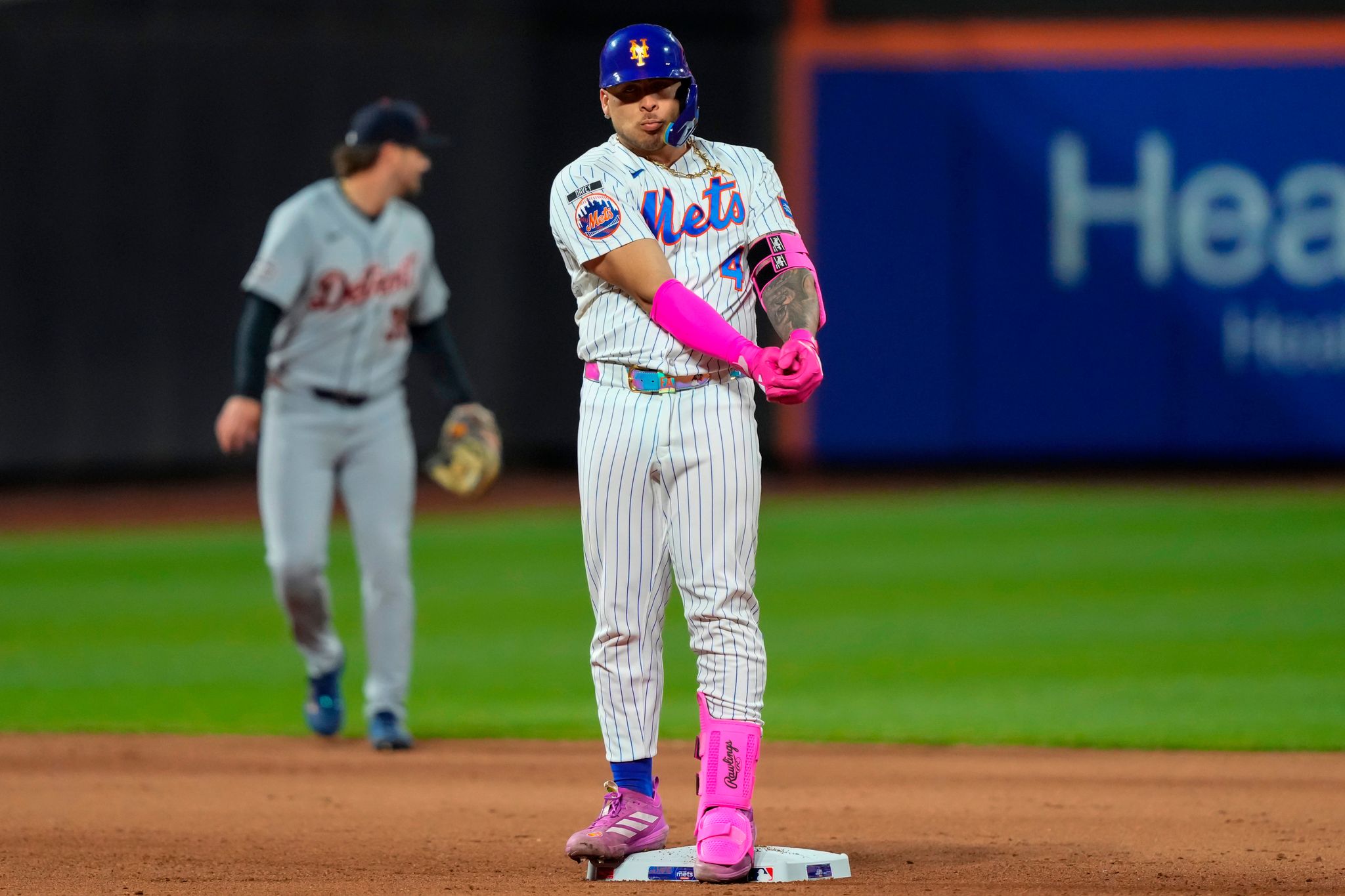
Mets’ Francisco Álvarez to Undergo Knee Surgery for Meniscus Tear
The physical toll of professional catching is among the most grueling in athletics, requiring a constant cycle of deep flexion and explosive lateral movement. For New York Mets catcher Francisco Alvarez, this physiological demand has culminated in a torn meniscus in his right knee, necessitating surgical intervention to restore joint stability.
Key Clinical Takeaways:
- Francisco Alvarez will undergo surgery to repair a torn meniscus in his right knee following an MRI diagnosis on Wednesday.
- The expected recovery window is six to eight weeks, though the timeline remains subject to post-operative clinical findings.
- This injury represents the fourth major setback for the 24-year-old in three seasons, following previous thumb and hamate bone fractures.
The injury occurred during the sixth inning of a game against the Detroit Tigers on Tuesday, when Alvarez twisted his leg awkwardly while fouling off a pitch. The immediate recognition of the injury by manager Carlos Mendoza and trainer Joe Golia underscores the acute nature of the trauma. In the high-stakes environment of Major League Baseball, a meniscus tear is more than a structural failure; It’s a disruption of the knee’s primary shock-absorption system. For a player who has been limited to 213 games since the start of 2024, this latest morbidity highlights a concerning pattern of musculoskeletal fragility.
The Pathogenesis of Meniscal Tears in Elite Athletes
The meniscus consists of two C-shaped pieces of fibrocartilage—the medial and lateral menisci—that act as buffers between the femur and the tibia. The pathogenesis of a tear typically involves a combination of axial loading and rotation. When a player twists their leg while the foot is planted, the shear forces can exceed the tensile strength of the fibrocartilage, leading to a structural breach. In Alvarez’s case, the awkward twist during a swing provided the exact biomechanical catalyst for this failure.
Clinical literature suggests that the location and type of the tear—whether it is a radial, longitudinal, or bucket-handle tear—dictate the surgical approach and the subsequent recovery trajectory. Because the inner two-thirds of the meniscus are avascular (lacking blood supply), they have a limited capacity for spontaneous healing. This often makes surgical intervention the standard of care to prevent long-term joint degeneration and the early onset of osteoarthritis.
“The challenge with meniscal injuries in high-impact athletes is not just the initial repair, but the restoration of proprioception and joint kinematics to prevent compensatory injuries in the opposite limb,” notes the consensus among sports medicine specialists documented in peer-reviewed orthopedic literature.
For athletes experiencing chronic joint instability or acute ligamentous failure, immediate intervention by board-certified orthopedic surgeons is critical to ensure that the surgical technique—whether a partial meniscectomy or a meniscus repair—aligns with the patient’s long-term functional goals.
Surgical Intervention and the Recovery Continuum
Mendoza has indicated a hopeful return window of six to eight weeks, which aligns with typical protocols for meniscal surgery. However, the recovery process is not linear. The initial phase focuses on edema control and the restoration of range of motion. Following the surgical repair, the focus shifts to neuromuscular re-education to ensure the knee can handle the eccentric loads associated with the catching position.
The complexity of this recovery is compounded by Alvarez’s medical history. Having previously suffered from multiple torn thumb ligaments and a fractured left hamate bone, his body has undergone repeated cycles of inflammation and atrophy. This cumulative trauma can impact the systemic recovery rate and potentially complicate the rehabilitation of the right knee. The goal is to avoid the “injury-reinjury cycle” that has limited the 24-year-old’s ability to maintain a full season of health since his rookie year in 2023.
To optimize this transition, elite athletes rely on a multidisciplinary approach. Integrating specialized physical therapists who utilize evidence-based loading protocols is essential for returning to play without compromising the integrity of the surgical site.
Evaluating the Long-term Clinical Outlook
The broader clinical concern for Alvarez is the intersection of his development and his durability. Through 37 games as the starting catcher, he posted a .241 average with a .710 OPS, but the lack of consistent playing time prevents the neurological and physical adaptation required for Major League mastery. When an athlete misses significant time, they lose “game feel”—the subconscious synchronization of timing and reaction.
Research published via PubMed on athletic recovery indicates that psychological resilience is as vital as physical healing. The frustration of repeated setbacks can lead to a cautious approach to movement, which paradoxically increases the risk of further injury due to altered biomechanics. The Mets’ medical staff must balance the urgency of his return with the biological reality of tissue healing.
Much of the current research into accelerated meniscus recovery is funded by national health grants and sports science initiatives, such as those supported by the National Institutes of Health (NIH), focusing on biologic scaffolds and stem-cell augmentation to improve the healing of avascular zones in the cartilage. While these are emerging therapies, the current standard remains mechanical repair followed by rigorous, phased rehabilitation.
The Trajectory of Sports Medicine and Joint Preservation
As we move toward more personalized sports medicine, the focus is shifting from simply “fixing” a tear to optimizing the entire kinetic chain. Alvarez’s history suggests a need for a comprehensive biomechanical audit to determine if underlying movement patterns are contributing to his susceptibility to injury. The goal is to move beyond reactive surgery and toward proactive joint preservation.
The road to recovery for Francisco Alvarez will be a litmus test for the Mets’ medical protocols. If the six-to-eight-week window is met without a relapse, it will signal a successful stabilization of his right knee. However, the long-term objective remains a full, healthy season—a milestone that has eluded him since 2023. For those navigating similar orthopedic challenges, seeking guidance from vetted sports medicine clinics is the most reliable path to ensuring a safe and sustainable return to peak physical performance.
Disclaimer: The information provided in this article is for educational and scientific communication purposes only and does not constitute medical advice. Always consult with a qualified healthcare provider regarding any medical condition, diagnosis, or treatment plan.