Methanogen Biochemistry: Mapping Microbial Metabolism for Sustainable Biofuels | NSF Grant Awarded
LINCOLN, Neb. — A $1.1 million grant from the National Science Foundation will enable researchers at the University of Nebraska–Lincoln to map the biochemical processes within Methanosarcina acetivorans, a microorganism that produces methane, a potent greenhouse gas. The project, led by Professor of Biochemistry Nicole Buan, aims to understand how these microbes thrive on minimal energy and could pave the way for engineering them to produce renewable energy sources.
Methanogens, despite their microscopic size, play a significant role in the global carbon cycle, existing in diverse environments ranging from wetlands to the human gut. Buan’s research focuses on the surprisingly efficient metabolism of these organisms, which operate on a remarkably small energy budget. “You can’t engineer it unless you know what’s there in the cell,” Buan said, emphasizing the need for fundamental research to unlock the potential of methanogens for sustainable biotechnologies.
The research will focus on identifying the interactions between enzymes and proteins that drive the metabolism of Methanosarcina acetivorans. Buan’s team will begin with the enzyme Mer, or methylene tetrahydromethanopterin reductase, and systematically trace the metabolic pathways, determining whether protein connections are permanent or dynamic. This approach differs from traditional molecular biology, which often focuses on individual components, and instead prioritizes understanding the interconnectedness within the cell.
According to Buan, methanogens are uniquely capable of thriving in extreme conditions, including oxygen-free environments and high salinity. “They figured out how to seemingly break the laws of thermodynamics to make copies of themselves while making the high-energy fuel methane; they go from chemicals to a whole other living cell. That’s what I think is fascinating,” she stated. The microbes’ simplicity – utilizing basic inputs like carbon dioxide, hydrogen, and acetate – belies a highly specialized metabolic process.
The research will be conducted in sealed tubes, allowing scientists to precisely track molecular inputs and outputs. This controlled environment will facilitate the development of mathematical models that describe how methanogens convert chemicals into growth and replication. These models could potentially be used to simulate the evolution of cells on early Earth and predict microbial behavior in different environments, including the possibility of life on Mars.
Buan’s strategy leverages unique resources available at the University of Nebraska–Lincoln, including the CryoEM Core Facility, the Morrison Microscopy Core Research Facility, and the Nebraska Center for Biotechnology. The university also possesses specialized expertise in handling and genetically modifying methanogens, a capability shared by only a handful of laboratories worldwide. “We’re one of the very few that can do genetics and synthetic biology in these microbes,” Buan noted.
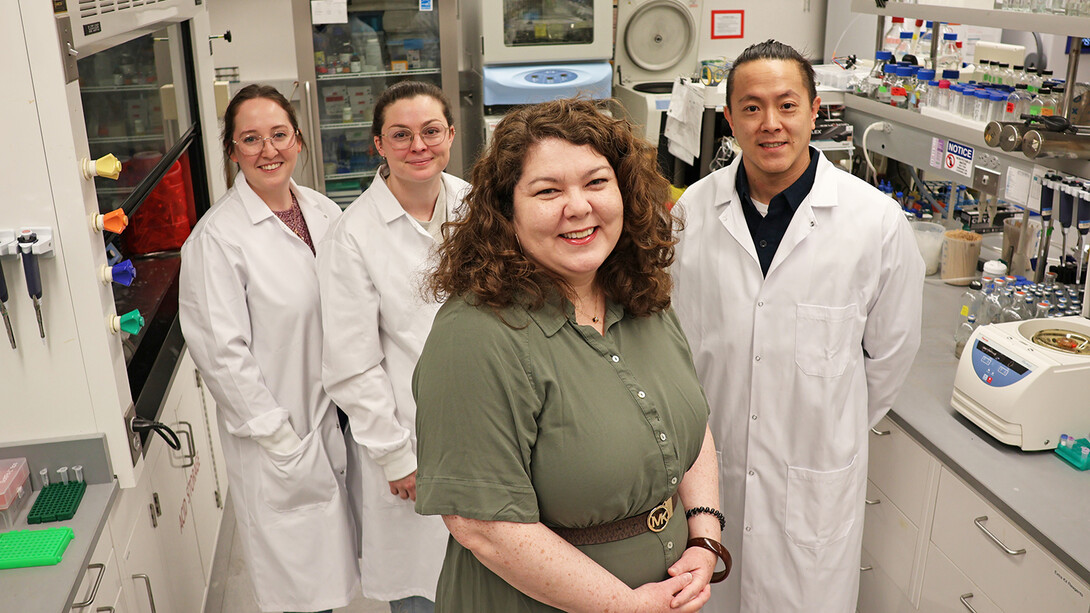
The project emphasizes collaboration, drawing on expertise in computational modeling, mathematics, chemistry, physics, and computer science. Buan also highlighted the crucial role of her students and postdoctoral researchers in conducting the detailed laboratory work. “It’s truly a team effort,” she said. “It’s really the amazing care, effort and attention to detail that my trainees put into their work that makes it possible for our research to have real-world impact in the future.”
The ultimate goal of the research is to engineer methanogens to produce sustainable biofuels and chemicals, with potential applications ranging from Nebraska farms to future astronaut habitats. The team plans to use the map of enzyme linkages to guide these engineering efforts.