Meta Unveils New Business AI Agents Amid Growing Data Center Backlash
Meta’s AI Agent Pivot: Architectural Realities for Small Business
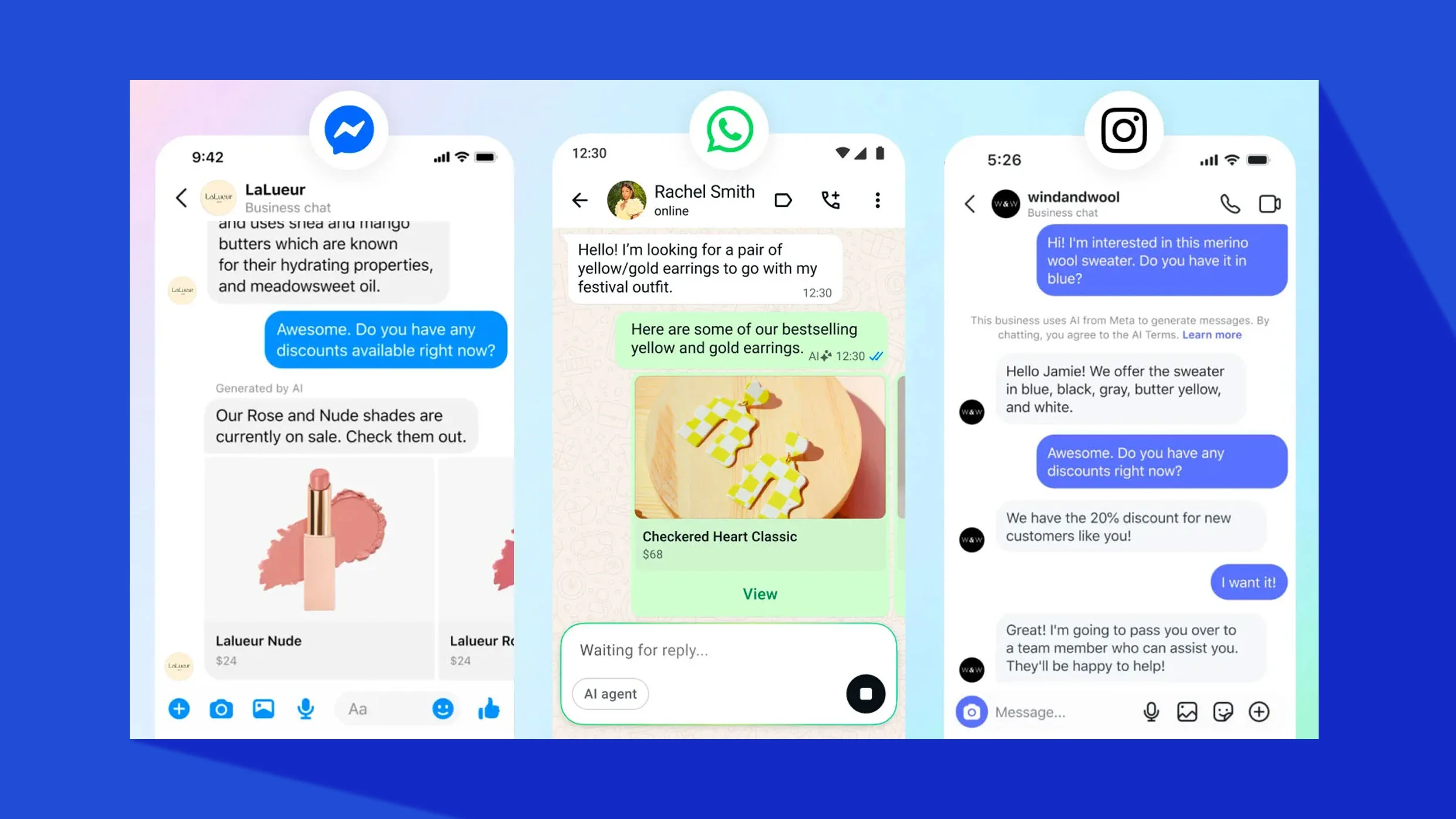
Meta is signaling a shift toward autonomous commercial AI agents integrated directly into its messaging stack. By extending the utility of WhatsApp, Instagram, and Messenger through a new Business Agent Platform, the company is attempting to bridge the gap between social engagement and transactional support. For the enterprise architect, this represents a move toward high-latency, event-driven customer interaction models that prioritize platform stickiness over modular system design.
The Tech TL;DR:
- System Integration: The new Business Agent Platform facilitates API-level hooks into third-party stacks like Shopify and Zendesk, enabling automated lead qualification and support workflows.
- Security Surface Area: Increased agent autonomy correlates with elevated risk profiles; businesses must implement stringent data guardrails to prevent PII leakage and ensure SOC 2 compliance.
- Deployment Strategy: Small-to-medium enterprises (SMEs) can now leverage existing social ad traffic to trigger automated messaging threads, bypassing traditional web-based support portals.
The API Architecture and Integration Workflow
The core of this initiative is the Business Agent Platform, designed to interoperate with existing CRM and e-commerce infrastructure. By abstracting the complexity of LLM orchestration, Meta provides a framework for businesses to manage stateful conversations. However, the technical debt associated with such integrations is non-trivial. When an agent is granted the authority to modify records in a backend system like Zendesk, the potential for cascading failures—or “hallucinated” data entry—increases exponentially.
For developers looking to interface with these agents, the implementation requires a robust understanding of webhook handling and JSON payload validation. Below is a conceptual cURL request illustrating how a business might push a status update to a customer session via the Meta API, assuming the agent has qualified a lead:
curl -X POST https://graph.facebook.com/v22.0/me/messages -H "Authorization: Bearer [ACCESS_TOKEN]" -H "Content-Type: application/json" -d '{ "messaging_product": "whatsapp", "recipient_type": "individual", "to": "[CUSTOMER_PHONE_NUMBER]", "type": "template", "template": { "name": "lead_qualification_followup", "language": { "code": "en_US" } } }'
Integrating these agents effectively requires more than just API connectivity; it necessitates a rigorous approach to continuous integration and containerization. Businesses must ensure that their backend services can handle the asynchronous load generated by high-frequency messaging. If your infrastructure is currently struggling with legacy bottlenecks, This proves time to consult with a Managed Service Provider (MSP) to audit your cloud-native readiness before scaling these agent-led interactions.
The Cybersecurity Paradox: Guardrails vs. Autonomy
As Meta pushes for deeper automation, the “black box” nature of frontier models presents a significant challenge for enterprise security teams. According to industry standards for LLM deployment, any agent with write-access to sensitive databases must be siloed within a restricted environment. We are seeing a trend where firms are engaging Cybersecurity Auditors to perform penetration testing on their agent endpoints, specifically targeting prompt injection vulnerabilities that could bypass existing business logic.
“The danger isn’t just the AI making a mistake; it’s the lack of observability when the agent acts as an intermediary. Without rigorous logging and deterministic fallback protocols, you’re essentially handing the keys to your CRM to a probabilistic engine.” — Lead Systems Architect, Global FinTech Infrastructure
The reliance on these agents also raises questions about data sovereignty. As documented in the official Meta developer communications, the transition to centralized Meta Accounts aims to streamline access, but it also consolidates the identity of the user across an entire ecosystem of apps. For the CTO, this necessitates a reassessment of how your firm manages identity and access control (IAM) when your customer support layer is effectively outsourced to an external model provider.
Comparing the Ecosystems: Meta vs. Traditional SaaS
To evaluate whether this shift makes sense for your organization, consider the following structural comparison:

| Feature | Meta Business Agents | Standard SaaS Support (Zendesk/Intercom) |
|---|---|---|
| Integration Point | Native Social Messaging | Web Widgets / API-first |
| Latency | Dependent on Meta’s Graph API | Highly Configurable / Low-Latency |
| Data Privacy | Meta-governed (End-to-End Encrypted) | Enterprise-Controlled / Self-Hosted |
While Meta’s approach offers immediate reach, the trade-off is a loss of granular control over the UI/UX and data logging. For companies requiring strict data residency or industry-specific compliance (such as HIPAA or GDPR-heavy environments), off-loading support to a third-party social agent may present a regulatory hurdle that requires a Software Development Agency to build custom middleware, ensuring that PII is scrubbed before it ever touches the Meta agent’s context window.
The Path Forward
Meta’s move is a pragmatic attempt to monetize its massive user base by turning “click-to-contact” ads into high-conversion autonomous funnels. However, the architectural reality is that these agents are only as good as the backend APIs they serve. As these systems move from experimental to mission-critical, the focus must remain on observability, security, and the ability to gracefully degrade to human support when the agent hits a logic wall. Do not treat these agents as a “set and forget” solution; treat them as a high-risk, high-reward extension of your production code.
Disclaimer: The technical analyses and security protocols detailed in this article are for informational purposes only. Always consult with certified IT and cybersecurity professionals before altering enterprise networks or handling sensitive data.