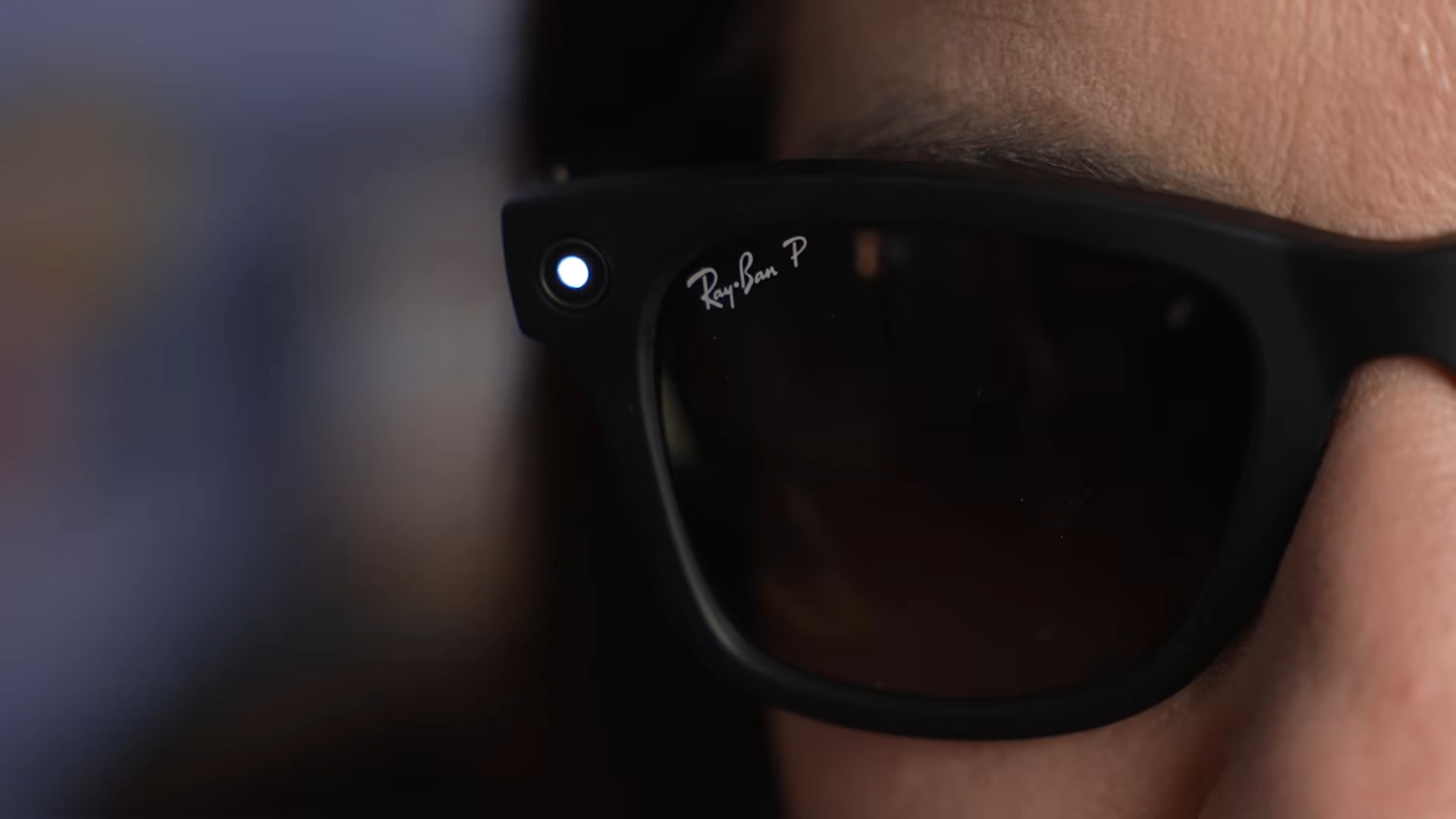
Meta Smart Glasses Face Recognition Code Found in Ray-Ban Meta AI App – What It Means for Privacy
The Architectural Implications of NameTag: Analyzing Meta’s Latency-Sensitive Face Recognition
The discovery of latent code within the Meta AI companion app—internally designated as “NameTag”—signals a significant shift in the operational architecture of wearable augmented reality. While Meta maintains that the technology remains in an exploratory phase, the presence of these hooks in a production-ready binary with over 50 million downloads suggests the infrastructure for biometric identification is already staged for deployment. For the enterprise and developer communities, this isn’t merely a feature update; it is an escalation in the demand for edge-side compute, NPU efficiency, and robust, cross-platform privacy protocols.

The Tech TL;DR:
- Meta has embedded unreleased facial recognition code, referred to as NameTag, within its public-facing Meta AI application.
- The codebase, identified in recent investigations, indicates that core components for real-time biometric identification were integrated into the app package as early as January.
- The feature is not currently active, yet it highlights the potential for high-latency cloud-to-edge biometric processing workflows in consumer smart glasses.
The “NameTag” Workflow: An Analysis of Edge-to-Cloud Biometric Pipelines
From an engineering perspective, the integration of facial recognition into a wearable form factor like the Ray-Ban Meta glasses necessitates a complex, asynchronous pipeline. To achieve acceptable user experience, the system must perform feature extraction locally—likely leveraging the onboard Neural Processing Unit (NPU)—before transmitting a hash or metadata payload to the backend for identity verification. This architecture introduces significant cybersecurity concerns, specifically regarding the integrity of the end-to-end encryption and the potential for unauthorized data exfiltration.

If Meta were to push this feature, they would be navigating a precarious balance between low-latency inference and strict adherence to SOC 2 compliance standards. Developers monitoring the traffic of these devices should be looking for signs of persistent socket connections to Meta’s inference servers. The following pseudo-code illustrates how a developer might inspect the API traffic associated with such a feature, utilizing standard curl patterns to intercept potential endpoint hits:
# Intercepting potential NameTag API handshake curl -v -H "Authorization: Bearer [TOKEN]" -X POST https://graph.meta.ai/v1.0/biometric/query -d '{"feature_id": "temp_hash_0x882", "mode": "nametag_discovery"}' “The risk here isn’t just the data collection; it’s the expansion of the attack surface. When you put a facial recognition engine on a wearable, you’re effectively turning every user into a mobile sensor node. If the binary is already on the device, the delta between ‘exploratory’ and ‘operational’ is just a remote feature flag toggle.” — Lead Cybersecurity Architect, Infrastructure Security Group.
Evaluating the Threat Landscape: Privacy vs. Performance
The current hardware limitations of smart glasses—constrained by thermal throttling and battery capacity—make local-only processing difficult. This necessitates a dependency on cloud-based containerization for intensive tasks. For organizations, this underscores the critical need for specialized cybersecurity auditors who can verify whether biometric data is being stored in ephemeral memory or persisted to long-term database storage. The lack of clarity regarding data retention policies for NameTag, as noted in reports by WIRED, creates a massive liability for enterprise environments where these devices may be worn during sensitive meetings.

| Metric | Current Baseline | NameTag Implementation (Est.) |
|---|---|---|
| NPU Utilization | Moderate (Voice/Audio) | High (Real-time Computer Vision) |
| Data Transmission | Encrypted Audio/Metadata | Encrypted Biometric Vectors |
| Privacy Model | User-Controlled | Centralized Identity Registry |
Security teams should consult with enterprise software development agencies to establish strict device-management policies. If your firm utilizes these glasses for field operations, you must ensure that hardware-level modifications—such as the disabling of recording LEDs—are mitigated by physical tamper-evident seals and regular firmware integrity audits. For those looking to harden their internal networks against unauthorized wearable telemetry, refer to the OWASP Mobile Application Security Testing Guide to understand how to reverse-engineer and audit binary packages for unlisted features.
Infrastructure Resilience and the Path Forward
As we look toward the potential rollout of NameTag, the industry must prepare for the inevitable pushback regarding privacy-by-design principles. Meta’s reliance on the Meta AI app as a distribution vector for these features means that security updates and privacy patches are inextricably linked to the app’s release cycle. This creates a “black box” scenario where the end user has little visibility into what code is dormant versus active.
For CTOs and technical leads, the directive is clear: Treat wearable hardware as an insecure endpoint until proven otherwise. Whether through network-level traffic analysis or hardware-level forensic investigation, maintaining a clear view of your environment is paramount. If you are managing a fleet of these devices, now is the time to engage with managed service providers who specialize in IoT security and endpoint governance to ensure that your corporate perimeter remains intact.
Disclaimer: The technical analyses and security protocols detailed in this article are for informational purposes only. Always consult with certified IT and cybersecurity professionals before altering enterprise networks or handling sensitive data.