
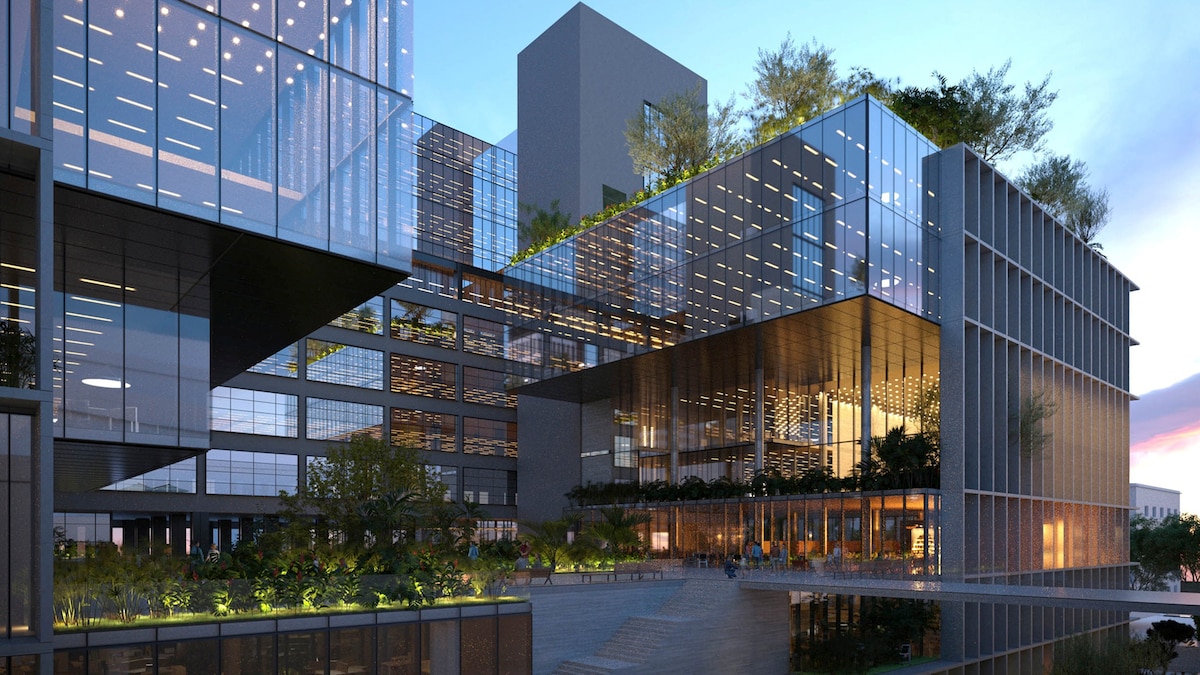
Mercado Libre and IRSA Invest Over $50 Million in New Buenos Aires Office Building
IRSA and Mercado Libre have finalized a US$50 million joint venture to construct a 15,000 m² corporate headquarters in Buenos Aires’ Saavedra district. This strategic expansion, part of Mercado Libre’s broader US$3.4 billion investment plan, signals a definitive shift in Argentine commercial real estate from traditional micro-centers to mixed-use northern hubs, prioritizing hybrid workforce infrastructure and long-term asset appreciation over short-term liquidity.
The migration of corporate capital in Buenos Aires is no longer a tentative drift; it is a structural realignment. For decades, the Microcentro held a monopoly on prestige, but the arithmetic of modern logistics has turned that advantage into a liability. Congestion, outdated infrastructure, and the prohibitive cost of retrofitting heritage buildings for hybrid work have driven yield-seeking capital northward. The newly announced agreement between IRSA, Latin America’s largest real estate developer, and Mercado Libre, the region’s e-commerce titan, to develop a premium office complex within the Polo DOT ecosystem is the clearest signal yet that the market has corrected. This is not merely a lease; it is a US$50 million vote of confidence in the northern corridor’s ability to sustain high-density corporate operations.
The Capital Allocation Strategy
At first glance, a US$50 million commitment might seem modest against the backdrop of Mercado Libre’s announced US$3.4 billion investment plan for Argentina in 2026. Though, in the context of commercial real estate development, this capital deployment is highly concentrated. By securing 12,000 m² of the proposed 15,000 m² surface area, Mercado Libre is effectively pre-leasing 80% of the asset before the first pile is driven. This de-risks the project for IRSA, allowing the developer to leverage the anchor tenant’s credit rating to secure favorable financing terms for the remaining 3,000 m² of speculative inventory.
The financial logic here is sound. In an inflationary environment like Argentina’s, hard assets denominated in USD provide a critical hedge. For Mercado Libre, locking in a 30-month construction timeline starting March 2026 fixes their occupancy costs in a volatile market. They are trading short-term liquidity for long-term balance sheet stability. This move mirrors the strategies of global tech giants who have pivoted from flexible lease agreements to owned or long-term leased assets to control their operational expenditure (OpEx) trajectories.
However, executing a development of this magnitude requires more than just capital; it demands rigorous legal and structural oversight. As cross-border joint ventures become more complex, corporations are increasingly relying on specialized commercial real estate legal counsel to navigate zoning regulations and tax incentives specific to the City of Buenos Aires. The Polo DOT area, while booming, operates under specific municipal codes regarding mixed-use density that differ significantly from the financial district.
Redefining the Corporate Campus
The physical design of the new Zetta complex extension reveals a deeper understanding of post-pandemic labor dynamics. Juan Martín de la Serna, President of Mercado Libre Argentina, noted that while remote work persists, the physical office must now serve a different function. “We want to consolidate a work environment that fosters innovation, well-being, and culture,” de la Serna stated, emphasizing that the new space is designed to “potentiate the encounter between teams.”
“The office is no longer a place for individual productivity; it is a tool for cultural cohesion. If the real estate doesn’t facilitate collision and collaboration, it is a stranded asset.”
This philosophy drives the inclusion of amenities that blur the line between workplace and lifestyle—padel courts, nap rooms, and gaming zones. These are not frivolities; they are retention tools. In a tight labor market for high-level engineering talent, the quality of the physical environment is a key differentiator. IRSA’s CIO, Jorge Cruces, framed this as the evolution of the “urban ecosystem,” where the boundary between the shopping mall, the office, and the home dissolves. This mixed-use approach maximizes foot traffic and ensures the asset remains vibrant beyond the traditional 9-to-5 window, thereby increasing the net operating income (NOI) potential for the retail components of the Polo DOT.
Infrastructure and the Supply Chain of Talent
Location remains the primary driver of value, and Saavedra’s position at the nexus of the General Paz and the Pan-American Highway offers a logistical advantage the Microcentro cannot match. For a company like Mercado Libre, which relies on the seamless movement of goods and people, accessibility is paramount. The area has transitioned from a peripheral residential zone to a strategic corporate hub, driven by the scarcity of developable land in established neighborhoods like Belgrano and Núñez.
Yet, the rapid densification of Saavedra presents its own challenges. The influx of thousands of high-income workers strains local infrastructure, from transit to utilities. To mitigate this, developers are increasingly engaging integrated facility management firms early in the design phase. These partners ensure that the building’s operational backbone—HVAC, security, and waste management—can handle the load of a “24/7 ecosystem” without degrading the tenant experience. The cost of neglecting this layer of planning often manifests in higher vacancy rates down the line, as tenants flee buildings that cannot support their operational intensity.
Market Implications and Future Yield
The IRSA-Mercado Libre deal sets a new benchmark for Class A office space in northern Buenos Aires. By anchoring the Polo DOT with a tech giant, IRSA effectively creates a gravitational pull for ancillary services and smaller tech tenants who wish to cluster near the ecosystem’s core. This agglomeration effect typically drives up rental rates in the surrounding sub-market by 15-20% over a three-year horizon.
For investors watching the Argentine market, this transaction validates the resilience of the commercial real estate sector despite macroeconomic headwinds. It suggests that while consumer discretionary spending may fluctuate, the infrastructure required to support the digital economy remains a priority for capital allocation. The 30-month construction window places the completion date in late 2028, positioning the asset to capture the next cycle of corporate expansion.
As the dust settles on this announcement, the broader lesson for the C-suite is clear: real estate strategy is now inextricably linked to talent strategy. Companies that view their office footprint as a static cost center will identify themselves at a competitive disadvantage. Those that treat it as a dynamic platform for innovation, supported by robust corporate strategy consultants and agile design partners, will secure the human capital necessary to dominate the next decade. The map of Buenos Aires has been redrawn, and the capital is flowing north.